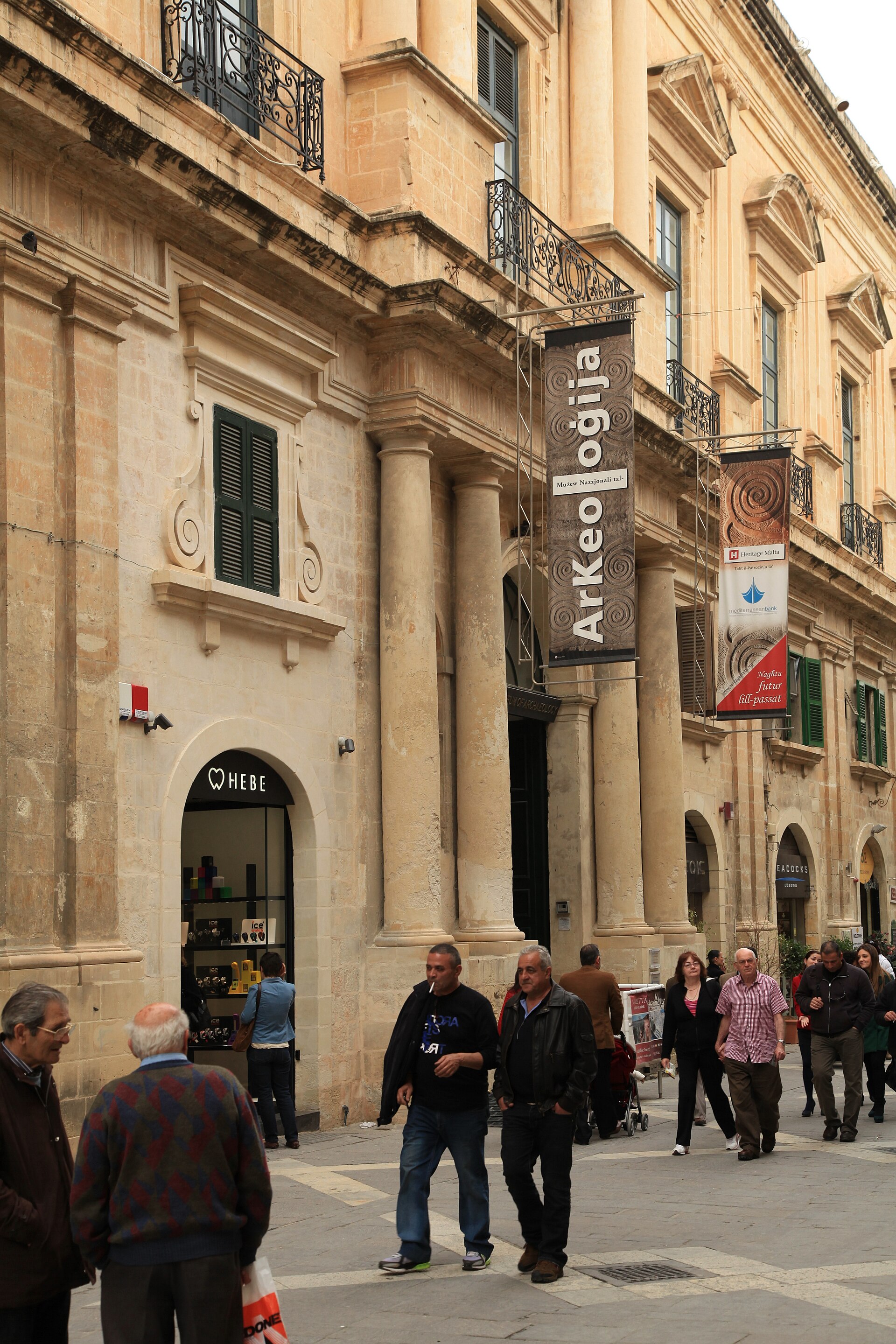
The National Museum of Archaeology in Valletta is one of those rare places where Malta’s layered past feels almost tangible. Housed in a 16th-century building originally constructed for the Order of St. John, the museum occupies a grand structure on Republic Street, designed by the architect Girolamo Cassar. The building itself is a relic of an era when Valletta was being transformed into a fortified stronghold, its thick limestone walls and vaulted ceilings still carrying the weight of history. Stepping inside, you leave behind the bustle of the modern city and enter a space where time moves differently—quieter, slower, as if the past is still lingering in the air.
The museum’s most compelling exhibits belong to Malta’s prehistoric era, a time when the islands were home to one of the world’s earliest known temple-building civilizations. The artifacts on display—carved stone figures, delicate pottery, and tools made from bone and flint—offer a glimpse into a society that thrived here over five thousand years ago. Among the most famous pieces is the Sleeping Lady, a small clay figurine discovered in the Ħal Saflieni Hypogeum. Her relaxed posture and enigmatic expression have fascinated archaeologists for decades, though her true purpose remains a mystery. Was she a deity, a symbol of fertility, or something else entirely? The museum doesn’t provide answers, but the questions she raises are part of what makes her so intriguing. Nearby, other artifacts—jewelry, ritual objects, and fragments of temple decorations—hint at the daily lives of people who built monumental structures like Ġgantija and Ħaġar Qim without the use of metal tools or the wheel.
The Ħal Saflieni Hypogeum, a UNESCO-listed underground sanctuary, is one of the most extraordinary sites connected to the museum’s collection. Discovered in the early 20th century, this labyrinth of chambers carved into soft limestone was likely used for both burials and rituals. The museum displays human and animal bones found within its depths, along with offerings that suggest a complex belief system centered on life, death, and perhaps rebirth. Some scholars believe the hypogeum was a place of ancestor worship, while others argue it may have been tied to a fertility cult. The truth is lost to time, but the artifacts—delicate carvings, red ochre-stained bones, and carefully arranged burial goods—make it clear that this was a place of deep significance. Walking through the museum’s exhibits, you begin to understand why Malta’s prehistoric sites continue to puzzle and inspire researchers.
Malta’s strategic position in the Mediterranean meant it was never isolated for long. The museum’s collection traces the islands’ encounters with other cultures, from the Phoenicians who established trading posts here in the 8th century BCE to the Romans who later absorbed Malta into their empire. Phoenician artifacts—amphorae, jewelry, and intricately decorated pottery—reveal a society of skilled sailors and merchants who left their mark on the islands. The Roman period is represented by coins, statues, and everyday objects like oil lamps and glassware, but the real standouts are the mosaics. These intricate floor designs, some still vibrant with color, showcase the craftsmanship of local artisans who blended Roman techniques with their own traditions. One particularly striking piece depicts a scene of marine life, a nod to Malta’s enduring connection to the sea.
The medieval era is less prominently featured, but the museum still offers insights into the period when the Knights of St. John ruled the islands. Their arrival in the 16th century transformed Malta into a fortified bastion of Christendom, and the exhibits here reflect that shift. Suits of armor, cannons, and coins minted by the Order tell the story of a society organized around defense and faith. A detailed model of Fort St. Angelo, one of the knights’ key strongholds, illustrates how Valletta and its surrounding harbors were designed to withstand sieges. The documents on display—decrees, letters, and maps—reveal the Order’s administrative grip on the islands, as well as the tensions that simmered between the knights and the local population. It’s a reminder that Malta’s history wasn’t just shaped by external invaders but also by the complex dynamics of power within its own walls.
Beyond its historical artifacts, the museum also preserves fragments of Malta’s more recent past. Paintings from the 19th century capture the islands’ landscapes and people at a time when British rule was reshaping daily life. These works, often romanticized, show a Malta that was both familiar and foreign—narrow streets lined with limestone houses, fishermen mending their nets, and women in traditional dress. The museum also includes examples of decorative arts, from intricately carved furniture to delicate lacework, highlighting the skill of Maltese craftspeople who adapted foreign influences into their own styles. These pieces serve as a bridge between the ancient and the modern, showing how Malta’s identity has always been a blend of outside forces and local resilience.
What makes the National Museum of Archaeology special is its ability to make history feel immediate. The building itself, with its cool stone floors and high ceilings, is part of the experience. The exhibits are arranged thoughtfully, allowing visitors to move chronologically through Malta’s past or linger over particular periods that catch their interest. There’s no rush here—just the quiet hum of footsteps on stone and the occasional murmur of visitors discussing what they’ve seen. The lighting is soft, designed to protect the artifacts while still allowing them to be seen in detail. It’s easy to lose track of time, especially when standing in front of something as evocative as the Sleeping Lady or a Roman mosaic that’s survived for two thousand years.
For those who visit Malta’s archaeological sites afterward—whether the towering temples of Ġgantija or the underground chambers of the Hypogeum—the museum provides essential context. It’s one thing to stand in the shadow of a 5,000-year-old megalith, but it’s another to understand the people who built it, the tools they used, and the beliefs that drove them. The museum doesn’t claim to have all the answers, and that’s part of its charm. Instead, it invites visitors to engage with the mysteries of Malta’s past, to wonder about the lives behind the artifacts, and to see the islands not just as a destination but as a place with a story that’s still unfolding. Whether you’re a history enthusiast or simply curious about the world, it’s a reminder of how much can be contained within a single room—or a single island.