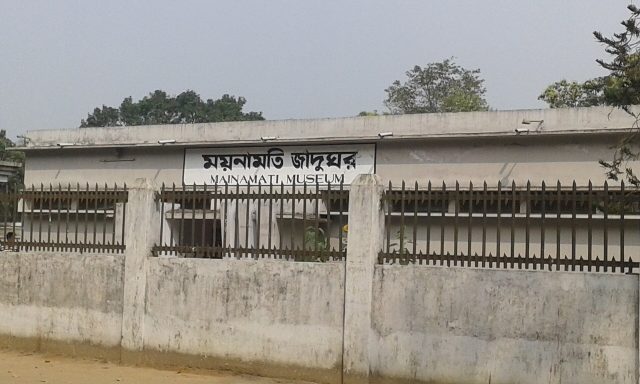
Mainamati is one of those rare places where the past doesn’t just linger in books or museums but rises from the earth itself. Tucked away in the quiet hills near Comilla, this archaeological site unfolds like a forgotten chapter of Bangladesh’s history, its ruins whispering stories of a time when these lands were part of a thriving Buddhist kingdom. The remains here span centuries, from the 7th to the 12th, a period when Mainamati was not just a religious center but a beacon of learning, drawing scholars and pilgrims from across Asia.
The most striking feature of Mainamati is its monasteries, built with a simplicity that belies their significance. The largest, Shalban Vihara, once housed over a hundred monastic cells arranged around a central courtyard, a layout designed for both solitude and community. The monks who lived here followed strict routines, meditating in the shadow of the great stupa that once dominated the space. Excavations have revealed bronze Buddha statues, fragments of palm-leaf manuscripts, and everyday objects like pottery and coins, offering glimpses into their disciplined lives. These artifacts suggest that Mainamati was more than a retreat—it was a university of its time, where knowledge was as revered as faith.
The architecture here is unpretentious yet enduring. The buildings were constructed from fired bricks, a material that has withstood the test of time, emerging from the soil with surprising clarity. Some walls still bear terracotta plaques depicting scenes from Buddhist lore or the rhythms of daily life—farmers tending fields, merchants trading goods, or monks in quiet contemplation. The stupa at Kutila Mura, though now reduced to its foundations, retains a sense of grandeur in its circular design, a silent testament to the devotion of those who built it.
Mainamati’s golden age was tied to the Deva dynasty, a line of Buddhist rulers who governed this region between the 8th and 12th centuries. Under their patronage, the site flourished as a spiritual and cultural hub, its monasteries funded by royal decree. But like many centers of learning in South Asia, its decline came with the arrival of Muslim conquerors in the 13th century. Buddhism faded from the region, and the monasteries were gradually reclaimed by the forest, their stories buried until British archaeologists rediscovered them in the early 1900s.
Today, walking through Mainamati feels like stepping into a different era. There are no crowds, no modern distractions—just the quiet rustle of leaves and the occasional call of a bird. The site is well-maintained but not overly polished, allowing visitors to imagine how it might have looked centuries ago. Locals treat the ruins with reverence, and on some days, you might encounter pilgrims paying their respects, their presence a reminder that Mainamati’s legacy is still alive in the traditions it once nurtured.
Getting here is straightforward. From Comilla, it’s a short bus or taxi ride through lush countryside, the journey itself a pleasant prelude to the history that awaits. The best time to visit is between November and February, when the weather is mild and the surrounding greenery is at its most vibrant. Nearby, small cafes serve simple meals, and local markets offer handmade crafts, though the real draw remains the ruins themselves.
What makes Mainamati special is its ability to make history feel tangible. Unlike grand monuments built for power or prestige, these structures were created for contemplation and study. They speak of a time when faith and knowledge were intertwined, when this corner of Bangladesh was a crossroads of ideas. For anyone curious about the region’s past, Mainamati offers more than just ruins—it offers a connection to the people who once walked these paths, their beliefs and aspirations still echoing in the quiet of the hills.