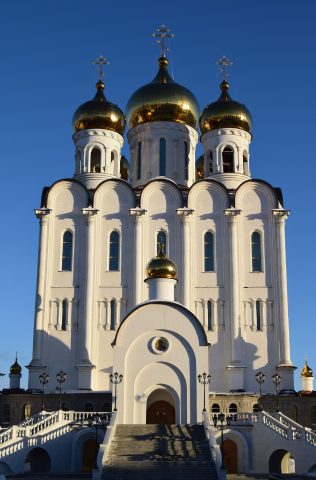
Magadan’s Musical and Drama Theatre isn’t just a place to watch a play or listen to music—it’s a quiet witness to the city’s past and a living part of its present. Built in the mid-20th century, when Magadan was more than just the gateway to the Kolyma region, the theatre became a rare pocket of warmth in a harsh northern landscape. For those who came here—whether by choice or circumstance—it offered a few hours of respite from the cold and isolation. The building itself is unassuming, far from the grand theatres of Moscow or St. Petersburg, but that’s part of its charm. It feels like a place made for locals, where the audience isn’t just a crowd but a community.
The architecture is simple and practical, much like the city itself. From the outside, it looks like a typical Soviet-era structure—columns, high windows, nothing extravagant. Inside, though, there’s a sense of intimacy. The auditorium isn’t vast, but it’s well-designed, with good acoustics that work just as well for a string quartet as for a dramatic performance. The seats are comfortable, the lighting soft, and the stage versatile enough to host everything from classical plays to musicals. There’s no pretension here, just a focus on what matters: the connection between the performers and the audience.
The theatre’s repertoire reflects the tastes and history of Magadan. You’ll find Russian and international classics, modern plays, and musical performances, but there’s always a nod to the North. Some productions explore the region’s past, telling stories of those who built the city or singing songs about the Kolyma. For locals, the theatre isn’t just entertainment—it’s a way to preserve their history and pass it on. Even when the subject matter is difficult, the approach is thoughtful, leaving audiences with a sense of shared experience rather than heaviness.
The actors and staff here treat the theatre like a second home. Many came to Magadan from other cities but stayed because they found something meaningful in this place. The performances feel personal, as if the actors are sharing pieces of themselves. That authenticity resonates with the audience. While guest performers occasionally take the stage, most of the work is done by local actors who understand what their community wants and how to speak to them. There’s a warmth to the productions that you don’t always find in larger theatres.
Beyond plays and concerts, the theatre serves as a gathering place for the city. The stage has hosted creative evenings, discussions, and even reunions for veterans reminiscing about their youth. It adapts to Magadan’s rhythm—busier in the long, dark winters when people crave light and company, but still active during the brief northern summer. For many, it’s a place to meet friends, catch up on news, or simply spend an evening in a welcoming space.
The theatre’s story is intertwined with Magadan’s own. It weathered the city’s boom years in the Soviet era and the struggles of the 1990s, when culture often took a backseat. Yet it endured because people needed it. Today, despite the challenges the city faces, the theatre keeps going. It doesn’t chase trends or try to shock—it just does what it’s always done, and that’s enough.
To an outsider, the Magadan Musical and Drama Theatre might seem like any other provincial theatre. But for locals, it’s a piece of their identity, a place where the past and present come together. It’s where the spirit of the Kolyma is kept alive, not through grand gestures but through the quiet, steady work of art and memory. If you find yourself in Magadan, stepping inside for a performance might give you a glimpse of what it really means to live in the North.