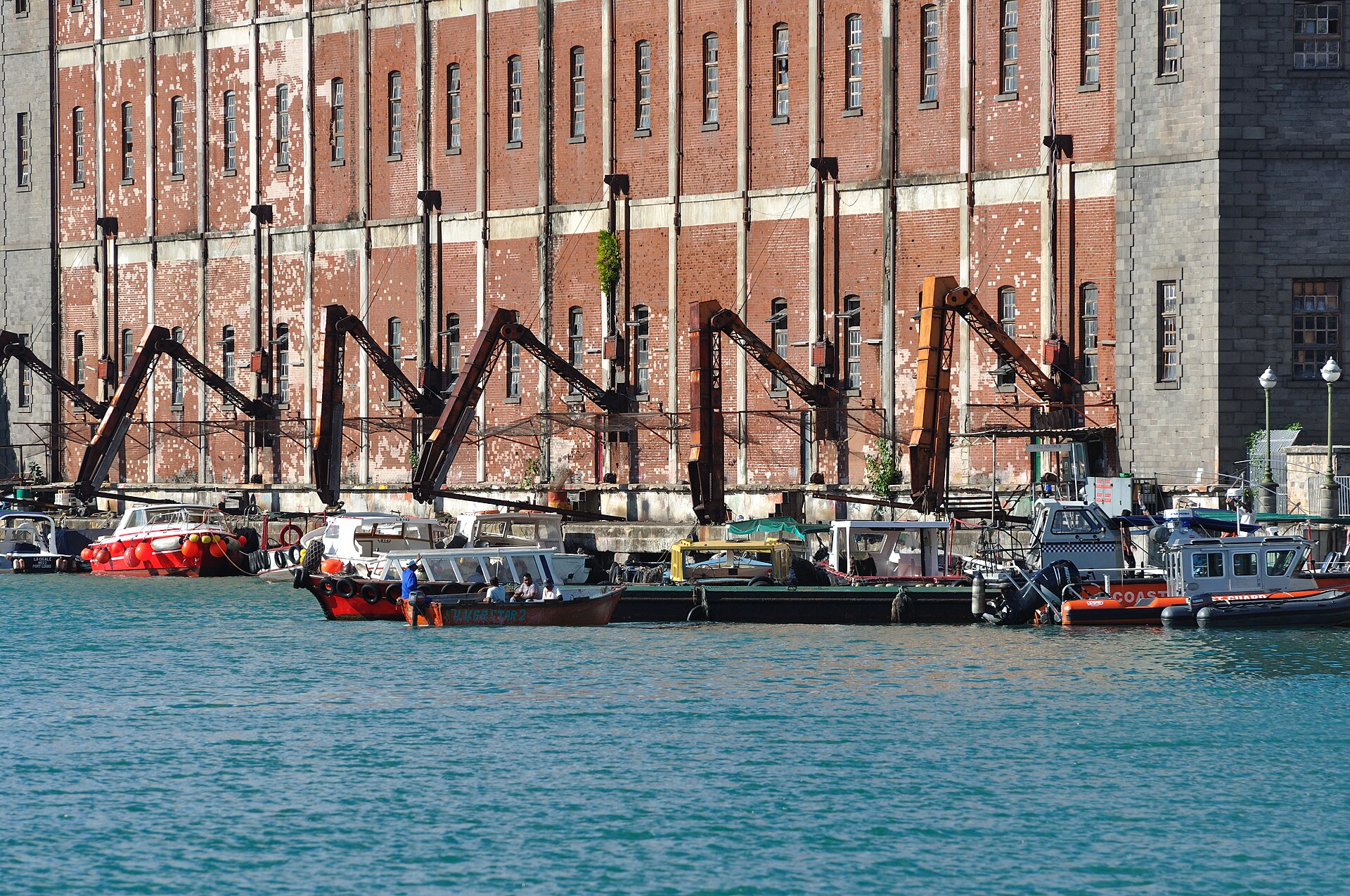
Mahébourg’s waterfront is where the town quietly meets the sea, a place where the island’s past and its everyday rhythms flow together without fanfare. There’s no grand promenade here, no crowds of visitors snapping photos—just the unhurried pulse of coastal life, woven into the narrow streets and the salt-stained air. Low houses in faded pastels line the lanes, their wooden shutters and tiled roofs bearing the marks of time. They lead down to a small harbor where fishing boats drift in with the morning tide, their hulls heavy with the day’s catch. The water isn’t just a backdrop; it shapes everything—the way the light reflects off the waves, the way the breeze carries the scent of fish and damp wood, the way the town wakes and sleeps with the rhythm of the ocean.
Mahébourg was born from the sea. In the 18th century, it was a bustling port where ships from Europe, Africa, and Asia converged, their holds filled with goods that would shape the island’s destiny. The Dutch and French East India Companies anchored here, and later, the darker trade of enslaved people passed through its docks. The waterfront was the heart of it all—sugar, spices, and human cargo shipped out; fabrics, weapons, and wine brought in. Today, only a few old warehouses and piers remain, their weathered stone a quiet testament to that era. But the atmosphere lingers. Walk along the quay, and it’s easy to imagine the clamor of long-ago mornings—the shouts of dockworkers, the creak of ropes, the hum of a market where fortunes were made and lives were traded.
The architecture here tells its own story, a blend of French colonial design and Creole practicality. The buildings are modest, built to withstand the heat and the occasional cyclone, with thick walls of local basalt that give the streets a dark, earthy hue. Many have wooden balconies with delicate latticework, a nod to the merchants and officials who once lived here. Now, these same buildings house small cafés, spice shops, and guesthouses, their facades barely changed from the days when Mahébourg was one of Mauritius’ most important ports. The shutters are still painted in soft blues and greens, the roofs still sag slightly under the weight of years, and the air still carries the faint scent of old wood and salt.
The market by the waterfront is where the town’s daily life unfolds in its most unfiltered form. It starts before dawn, when fishermen haul in their catch—tuna, octopus, and the occasional lobster—spread out on tables under the first light. By mid-morning, the stalls are piled high with lychees, mangoes, and the small, knobby fruits that grow only on the island. The best vanilla in Mauritius is sold here, its dark, fragrant pods passed from hand to hand like something precious. The vendors know their regulars, calling out greetings, offering tastes, sharing stories. There’s no hard sell, just the easy rhythm of people who’ve been trading here for generations. If you linger long enough, someone might press a piece of fresh coconut into your hand or explain how to tell when a pineapple is perfectly ripe.
The harbor isn’t a postcard-perfect marina. It’s a working place, where fishing boats set out before sunrise and return by midday, their nets still glistening with seawater. The fishermen here are craftsmen, their knowledge passed down through families—where to find the best tuna, how to read the weather in the shape of the clouds, which tides will bring the biggest catch. Sometimes you’ll see them mending nets on the dock or scrubbing the hulls of their boats, their hands rough from years of salt and sun. For visitors, it’s a rare glimpse of the island as it really is, not the polished version sold in brochures. There are no yachts or luxury restaurants, just the quiet, steady work of people who depend on the sea.
As evening falls, the waterfront softens. The light turns gold, then pink, then a deep, bruised purple as the sun sinks below the horizon. The air cools, and the scent of grilled fish drifts from the small cafés that line the quay. Locals gather here to eat, to talk, to watch the boats come in. There’s no need for loud music or bright lights—the sound of the waves and the murmur of conversation are enough. You might order a plate of *vindaye*, a local dish of pickled fish with mustard and turmeric, or sip a cup of vanilla tea while the last of the fishing boats glides into the harbor. The pace slows, as if the town itself is taking a deep breath after the day’s work.
This isn’t a place you visit for grand sights or Instagram moments. It’s where you come to feel the real Mauritius—the one that existed long before the resorts and the tour buses. Mahébourg doesn’t perform for visitors. It simply is, a town that has always looked to the sea for its livelihood, its stories, its sense of time. The waterfront isn’t just a pretty view; it’s the thread that ties everything together—the history, the people, the way the island breathes. If you want to understand what Mauritius was like before the world discovered it, this is where you’ll find it. Not in the museums or the guided tours, but in the quiet corners of the market, in the salt on your skin after a walk along the quay, in the way the fishermen nod as they pass by. It’s all here, waiting to be noticed.