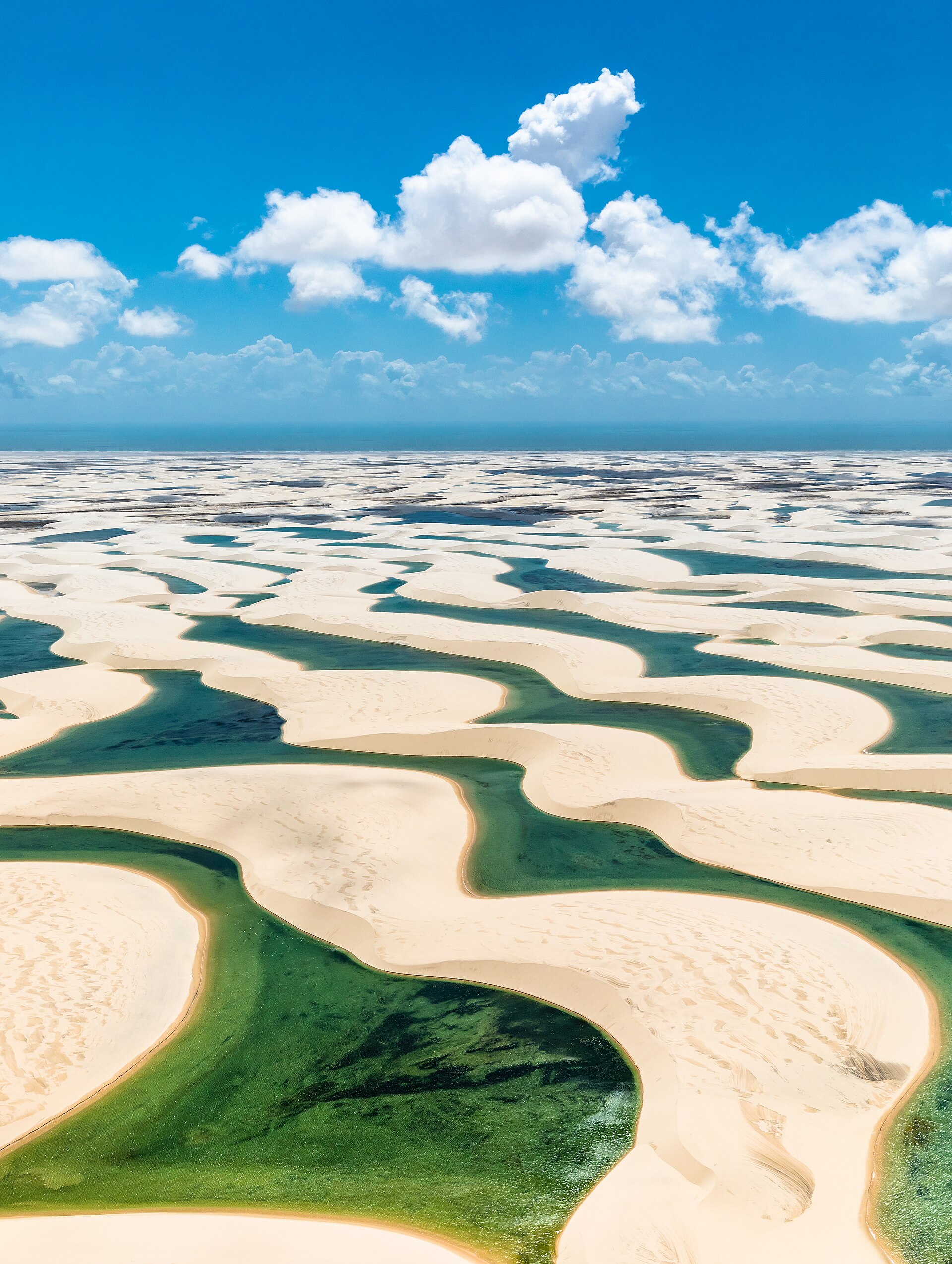
The Lençóis Maranhenses is one of those rare places where the landscape feels like a dream half-remembered. Stretching across hundreds of square miles, endless white sand dunes rise and fall like waves frozen in time, their curves interrupted by pools of rainwater so clear they mirror the sky. This isn’t a desert, though it might look like one at first glance. It’s something far more unusual—a place where water and sand exist in delicate balance, creating a scene that feels both ancient and fleeting. Located in Brazil’s northeastern state of Maranhão, the national park lies just beyond the quiet town of Barreirinhas, which serves as the gateway to this otherworldly expanse.
The best time to visit is during the rainy season, from January to June, when the dunes transform. Rainwater collects in the depressions between the sand, forming lagoons that range from shallow puddles to deep, turquoise pools. The contrast is striking—bright white sand against vivid blue water, the colors shifting with the light. By July, the dry season begins, and the lagoons slowly evaporate, leaving behind only the wind-sculpted dunes. Each season offers a different experience, but the months when water and sand coexist draw the most visitors. Even then, the park never feels crowded; its vastness ensures that solitude is always within reach.
The name Lençóis Maranhenses translates to "the bedsheets of Maranhão," and it’s an apt description. From a distance, the dunes do resemble vast sheets of linen spread across the land, their folds and creases shaped by the wind. Up close, the illusion fades, but the sense of wonder remains. The landscape appears barren at first, yet life persists here in unexpected ways. Birds like the scarlet ibis and the white-browed guan nest in the sparse vegetation, while lizards and small mammals have adapted to the harsh conditions. Even the lagoons aren’t as lifeless as they seem—some fish species have evolved to survive the dry months by burying themselves in the damp sand until the rains return.
The origins of this landscape trace back thousands of years. The sand itself is the result of erosion from ancient mountains, carried by rivers to the Atlantic coast and then pushed inland by winds and ocean currents. Over time, the interplay of water and wind sculpted the dunes into their current form. For the region’s Indigenous peoples, the Lençóis Maranhenses has long been more than just a natural wonder. Some communities still rely on traditional fishing and hunting methods, timed to the seasonal rhythms of the park. Their knowledge of the land runs deep, passed down through generations.
There are no grand monuments or ornate buildings here, and that’s part of the appeal. The small settlements on the park’s edges, like Caburé and Atins, feel suspended in time. Houses built from clay and wood, roofed with palm fronds, blend seamlessly into the surroundings. Life moves at a slower pace, dictated by the rise and fall of the tides and the changing seasons. Locals fish in the rivers, cultivate small plots of land, and craft goods from natural materials. Their warmth and unhurried hospitality make a visit feel less like tourism and more like an invitation into a way of life that hasn’t changed much in decades.
Exploring the Lençóis Maranhenses is less about ticking off sights and more about immersing yourself in the rhythm of the place. Walking across the dunes, you might stumble upon a hidden lagoon, its water so still it reflects the clouds above. Swimming in these pools feels like stepping into a mirage, the cool water a stark contrast to the sun-baked sand. As the day winds down, the sky often ignites in shades of orange and pink, casting long shadows across the dunes. The silence here is profound, broken only by the wind or the distant call of a bird. For many, this is the real draw—not just the scenery, but the chance to disconnect from the noise of modern life and simply be present.
Yet it’s important to remember that the Lençóis Maranhenses is a fragile ecosystem. The national park was established in 1981 to protect this unique environment, and visitors are encouraged to tread lightly. Sticking to marked paths, avoiding litter, and respecting wildlife are small but essential ways to help preserve the landscape. Local guides, many of whom grew up in the area, offer tours that balance adventure with responsibility. They know the best routes, the safest spots for swimming, and the times of day when the light makes the dunes glow.
Barreirinhas, the town where most journeys into the park begin, is worth a visit in its own right. Straddling the Preguiças River, it’s a place where life revolves around the water. Boats drift along the river, fishermen mend their nets on the banks, and the scent of grilled fish fills the air at the riverside markets. The town has a laid-back charm, untouched by mass tourism. Here, you can sample regional dishes like *arroz de cuxá*, a rice dish flavored with a tangy herb, or *peixe na telha*, fish baked in clay. The river isn’t just a backdrop—it’s the heart of the community, hosting festivals and gatherings that celebrate the region’s culture.
The Lençóis Maranhenses isn’t a place you can fully capture in photographs or words. It’s something you experience—the way the sand shifts under your feet, the way the light plays across the water, the way the wind carries the sound of the ocean even when you’re miles inland. There are no luxury resorts or crowded attractions here, just the raw beauty of nature in its purest form. For those who seek more than just a vacation, who want to feel a sense of connection to the earth and its rhythms, this is a destination that lingers in the memory long after the journey ends.