Laguna Beach in Mindelo isn’t just a stretch of sand—it’s where the ocean and the city merge as if they’ve always belonged together. There are no sprawling resorts here, no rows of sun loungers or uniformed staff waiting to cater to every whim. Instead, there’s a wide expanse of black volcanic sand, framed by jagged rocks and palm trees that lean toward the water. The Atlantic crashes against the shore with a raw, rhythmic force, the wind carrying the sharp tang of salt and the faint promise of distant horizons. This is a place for those who value authenticity over comfort, where the sea’s wild energy sets the tone.
Mindelo itself is a city of contrasts, and Laguna Beach embodies that duality perfectly. On one side, it’s part of a working port—ships load cargo, cranes groan under their weight, and the air hums with the sounds of industry. On the other, it’s a quiet retreat where locals unwind after a long day. Fishermen mend their nets on the sand, children kick soccer balls near the water’s edge, and elders cast their lines from the rocks. There’s no rush here, no forced hospitality. Time moves at the pace of the tides, unhurried and deliberate.
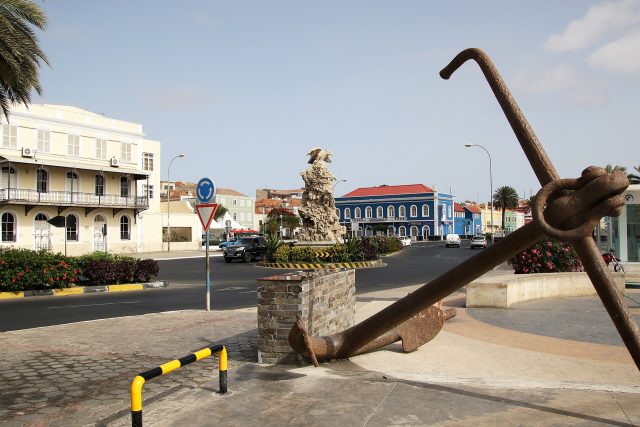
The beach’s history is woven into Mindelo’s own past. In the 19th century, the city became a crucial coaling station for ships crossing between Europe and South America, and Laguna Beach was where sailors would step ashore before the long voyage ahead. Back then, the shore was lined with warehouses and bustling with activity. The port eventually shifted, but the beach remained, a place where the city still meets the sea. Today, the remnants of that industrial era—rusted anchors, weathered piers—dot the landscape, quiet reminders of a time when Mindelo was a vital stop on the Atlantic route.
The architecture around Laguna Beach tells its own story. Nearby, colonial-era buildings stand with peeling paint and high ceilings, relics of a period when Mindelo was one of the busiest ports in the Atlantic. Many of these structures now sit empty or serve as modest homes, their faded grandeur adding a layer of charm to the area. They feel frozen in time, a testament to the city’s role as a crossroads of cultures and histories. As you walk along the shore, you’ll notice how these old buildings coexist with newer cafes and bars, creating a striking blend of past and present.
Swimming here isn’t always easy—the currents are strong, and the waves can be rough—but that’s part of the appeal. Laguna Beach is a favorite spot for surfers and bodyboarders, with local teens often riding the waves on makeshift boards. For those willing to brave the water, the experience is exhilarating, though even if you prefer to stay on shore, there’s plenty to do. You can wander along the water’s edge, collecting shells, or simply sit on the sand and watch the ocean’s relentless dance. The water is clearest in the morning, when the light catches it just right, turning the surface into a shifting mosaic of blues and greens.
As evening falls, the beach transforms. The sky ignites with hues of orange and violet as the sun dips below the horizon, and the ocean begins to shimmer under the fading light. Locals gather around small fires on the sand, pulling out guitars to play morna, the soulful traditional music of Cape Verde. The melodies, filled with longing and nostalgia, blend with the sound of the waves, creating an atmosphere that lingers long after the last note fades. Sometimes, impromptu gatherings turn into full-blown celebrations, with drummers setting the rhythm and everyone—young and old—joining in the dance.
Despite its popularity with locals, Laguna Beach has managed to stay off the radar of mass tourism. There are no crowded beaches, no loud nightclubs, no vendors hawking trinkets. This is a place for those who want to experience Mindelo as it truly is—a city where life moves at its own pace, and people greet you with a smile or a story. If you come at dawn, you’ll see fishermen returning with their catch, the sun rising slowly over the horizon, casting a golden glow on the black sand and rocks. It’s a sight worth waking up early for.
The area around the beach offers plenty to explore as well. Nearby, a market bustles with activity, selling fresh fish, tropical fruits, and local spices. You’ll also find handmade souvenirs—woven baskets, shell jewelry, and paintings by local artists. Wandering through the market is a great way to soak in the city’s rhythm and color. A short walk away, a fort overlooks the bay, offering sweeping views of the harbor and the city beyond. From this vantage point, you can see how Mindelo’s life revolves around the sea, its heartbeat synchronized with the tides.
Laguna Beach isn’t the kind of place that leaves you indifferent. It doesn’t fit the postcard image of a tropical paradise, and that’s precisely what makes it special. There’s no artificial polish here, just raw, unfiltered beauty. It’s a beach where you can simply exist—listening to the waves, watching the sunset, chatting with locals, or sitting in silence, absorbing the atmosphere. Mindelo doesn’t give up its secrets easily, and Laguna Beach is one of them. The kind that stays with you long after you’ve left.