Nestled in the heart of the Tyrolean Alps, the small town of Schwaz has long been known for its silver mines, which once supplied wealth to the region and shaped its identity. Yet in the late 20th century, something unexpected emerged here—an attraction that redefined the town’s quiet charm. The Swarovski Crystal Worlds is not a conventional museum, nor is it merely a showcase of luxury goods. It is a surreal journey into a world where glass, light, and imagination collide, crafted by one of the most renowned names in crystal craftsmanship.
The idea for Crystal Worlds took shape in 1995, as Swarovski celebrated its centenary. The company’s origins trace back to Daniel Swarovski, a Bohemian inventor who revolutionized crystal cutting in the late 19th century. His precision-cut stones quickly became a sensation across Europe, evolving into a global symbol of elegance and craftsmanship. To mark its 100th anniversary, Swarovski sought to create more than just a display of its products. The result was a visionary space designed by artist André Heller, blending art, architecture, and fantasy into an immersive experience.
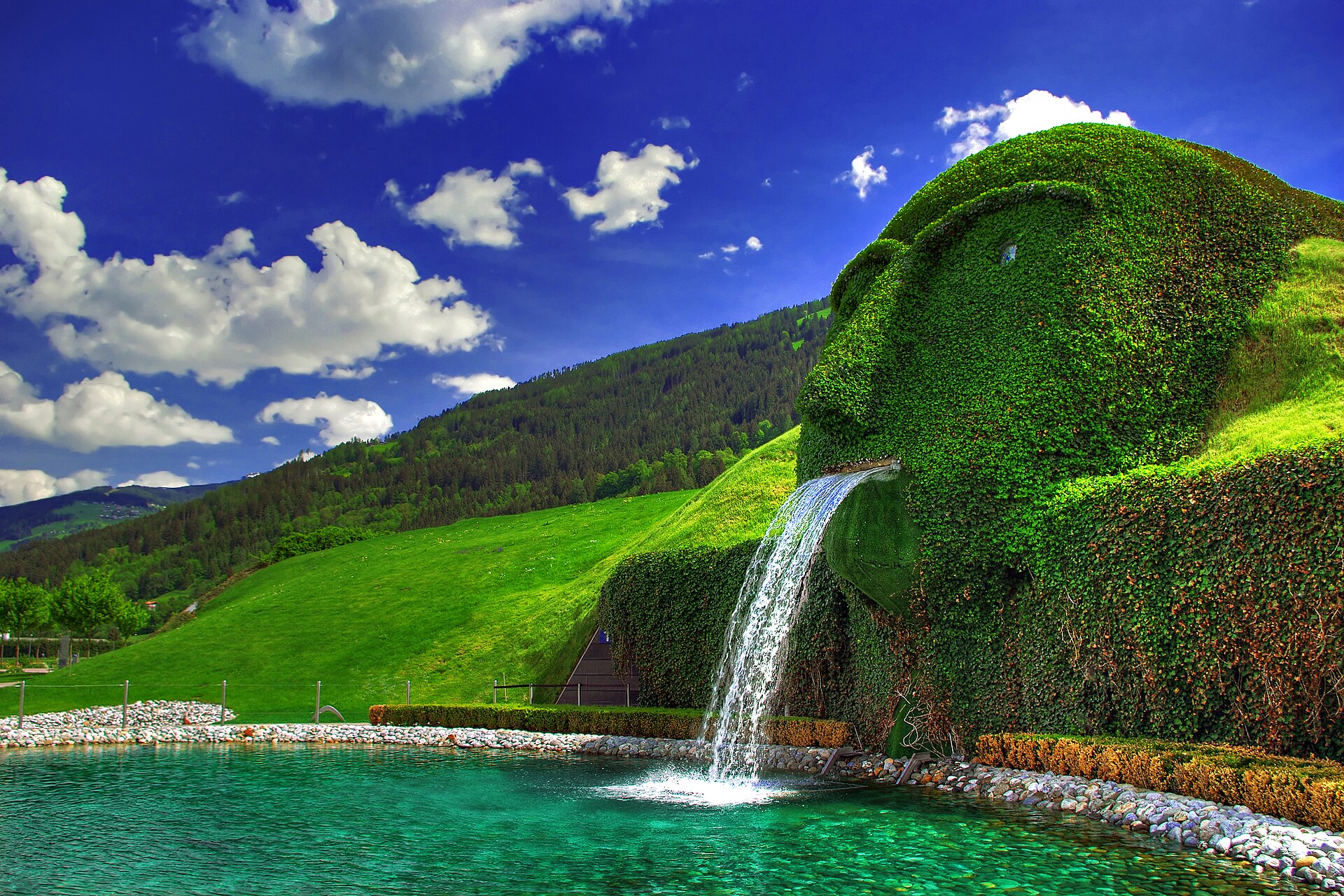
The entrance itself is a striking sight—a colossal grass-covered head with shimmering fountain eyes, as if guarding a portal to another dimension. Stepping inside, visitors enter a labyrinth of seventeen themed chambers, each offering a distinct interpretation of crystal. Unlike traditional museums, where exhibits sit behind glass, here the crystals are woven into the very fabric of the space. One room might evoke an underwater realm, with glass fish suspended in a play of light, while another transforms into a cosmic void, where crystal planets hang in the darkness.
At the heart of the experience is the world’s largest Swarovski crystal, a dazzling fifty-kilogram gem that draws crowds eager to admire its flawless facets. Yet Crystal Worlds is more than a spectacle of size and sparkle. It also serves as a platform for contemporary artists who incorporate crystals into their work. Brian Eno’s sound-and-light installation envelops visitors in an otherworldly ambiance, while Yayoi Kusama’s signature polka-dot patterns take on new life when rendered in glass. The boundaries between art and craft blur, inviting visitors to see crystals not just as objects, but as mediums of expression.
Beyond its permanent collection, Crystal Worlds hosts rotating exhibitions that explore everything from haute couture to avant-garde installations. Crystals become embroidery on haute couture gowns or structural elements in modern sculptures, demonstrating their versatility. Occasionally, the space transforms into a stage for concerts and performances, where the unique acoustics of the chambers enhance the experience. The on-site café offers a quiet retreat with views of the Tyrolean hills, while the gift shop provides a chance to take home a piece of the magic—though the real souvenir is the memory of the visit itself.
Despite its commercial roots, Crystal Worlds avoids feeling like an extended advertisement. Instead, it feels like a tribute to a craft that has thrived for over a century. Swarovski’s mastery of glasswork is evident in every detail, from the precision of the cuts to the interplay of light and reflection. There is no room for imperfection here; every crystal, every beam of light is deliberately placed to create an illusion of wonder. It’s a place where craftsmanship meets artistry, and where visitors are encouraged to lose themselves in the beauty of it all.
Schwaz itself remains a tranquil town, its narrow streets and historic buildings untouched by the influx of visitors. Crystal Worlds has brought new energy to the area, yet it hasn’t disrupted the town’s peaceful rhythm. Locals take pride in the attraction, seeing it as a bridge between tradition and modernity. In summer, the green head of the entrance blends seamlessly with the surrounding hills, while winter transforms the scene into something even more enchanting—snow dusting the grassy facade, lights twinkling against the alpine backdrop.
A visit to Crystal Worlds is less about following a set path and more about surrendering to the experience. There are no rigid museum rules here; photography is encouraged, some installations invite interaction, and the atmosphere is one of curiosity rather than reverence. It’s a place for those who appreciate beauty in its smallest details and aren’t afraid to let their imagination wander. After all, crystals have long been associated with magic, light, and purity—and in Schwaz, that magic feels tangible. Whether you come for the art, the craftsmanship, or simply the chance to step into a world of shimmering fantasy, the journey leaves an impression that lingers long after you’ve left.