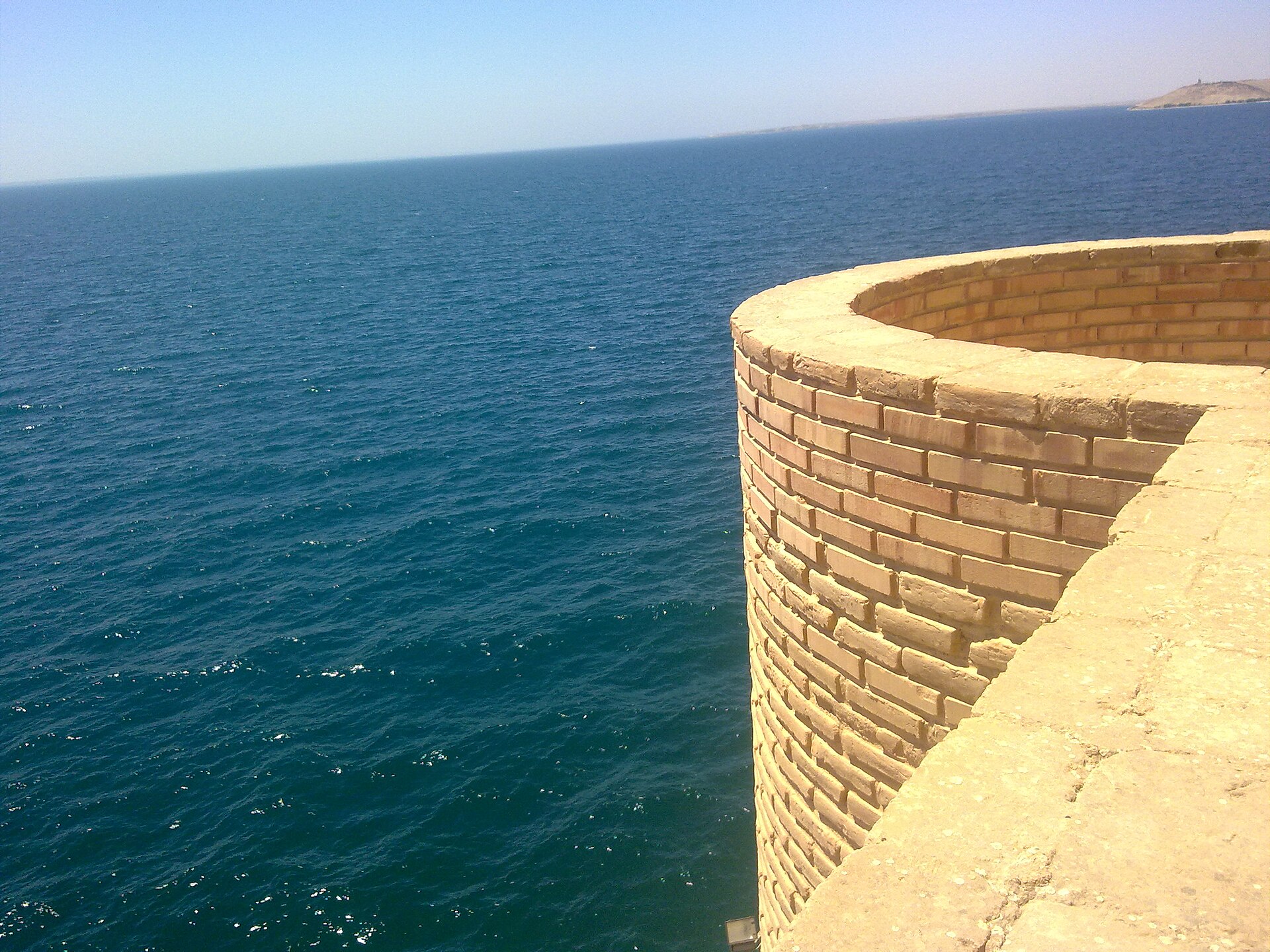
Perched on the eastern bank of the Euphrates River, the Fortress of Jaabar stands as a silent witness to centuries of history, its weathered stones bearing the marks of empires, wars, and the slow passage of time. Built during the 12th century by Nur ad-Din, a prominent Muslim ruler of the Seljuk era, the fortress was strategically positioned to control the river’s flow and the vital trade routes that crisscrossed the region. Its location on a small hill overlooking the vast waters of Lake Assad, formed by the Al-Thawra Dam, adds to its imposing presence—a stark contrast to the arid landscapes that surround it.
The architecture of Jaabar is a testament to the military ingenuity of its builders. Constructed primarily from black basalt and limestone, the fortress features thick, sloping walls designed to withstand sieges and repel invaders. The outer perimeter is reinforced by massive towers, some still standing despite the ravages of time, while the inner courtyard reveals the remnants of living quarters, storage rooms, and a small mosque. The most striking feature is the keep, a central structure that once served as the last line of defense. Its high walls and narrow windows were built not just for protection but to intimidate, a reminder of the power that once emanated from this remote outpost.
Over the centuries, Jaabar changed hands multiple times, each new ruler leaving their mark on its structure. The Ayyubids, who succeeded the Seljuks, expanded the fortress, adding new fortifications and reinforcing its defenses. Later, the Mamluks and Ottomans used it as a military stronghold, though by then its strategic importance had begun to wane. The fortress was eventually abandoned, left to the elements and the occasional traveler who ventured into this remote corner of Syria. Today, its ruins tell a story of resilience, a place that has outlasted the empires that built it.
Visiting Jaabar is like stepping into a different era. The journey there takes you through the vast, open landscapes of northern Syria, where the Euphrates carves its way through the desert, creating a ribbon of green in an otherwise barren expanse. The lake formed by the Al-Thawra Dam stretches out below the fortress, its waters shimmering under the relentless sun. The silence here is profound, broken only by the occasional cry of a bird or the whisper of the wind through the ruins. It’s a place where history feels tangible, where every stone seems to hold a memory of the past.
The fortress is not just a relic of military history; it’s also a symbol of the region’s cultural and architectural heritage. The intricate carvings and inscriptions found on some of the walls hint at the artistic sensibilities of its builders, while the layout of the fortress reflects the practical needs of a garrison stationed in a hostile environment. The small mosque within the walls, though now in ruins, speaks to the daily lives of those who once called Jaabar home—soldiers, merchants, and perhaps even families who lived under the constant threat of conflict.
For those who make the journey, Jaabar offers more than just a glimpse into the past. It’s a place that invites reflection on the passage of time and the impermanence of human endeavors. The fortress has survived wars, earthquakes, and the slow erosion of neglect, yet it remains standing, a monument to the endurance of stone and the stories it carries. The views from its highest points are breathtaking, offering a panoramic sweep of the Euphrates Valley and the distant hills that fade into the horizon. It’s a reminder of how landscapes shape history and how history, in turn, shapes the land.
Despite its remote location, Jaabar has not been entirely forgotten. Archaeologists and historians have studied its ruins, piecing together its past from the fragments that remain. For travelers willing to venture off the beaten path, it offers a rare opportunity to experience a place untouched by modern development, where the past is not just preserved but alive in the very air. There are no crowds here, no souvenir shops or guided tours—just the quiet dignity of a fortress that has stood the test of time.
The journey to Jaabar is not an easy one, but for those who undertake it, the rewards are immeasurable. It’s a place that demands patience and curiosity, where the act of exploration itself becomes part of the experience. The road winds through small villages and open plains, past fields of wheat and olive groves that have sustained generations of Syrians. The fortress, when it finally comes into view, is a striking sight—a dark silhouette against the bright sky, its walls rising like the bones of some ancient creature. It’s a place that lingers in the memory long after you’ve left, a quiet guardian of the Euphrates and the stories it has witnessed.