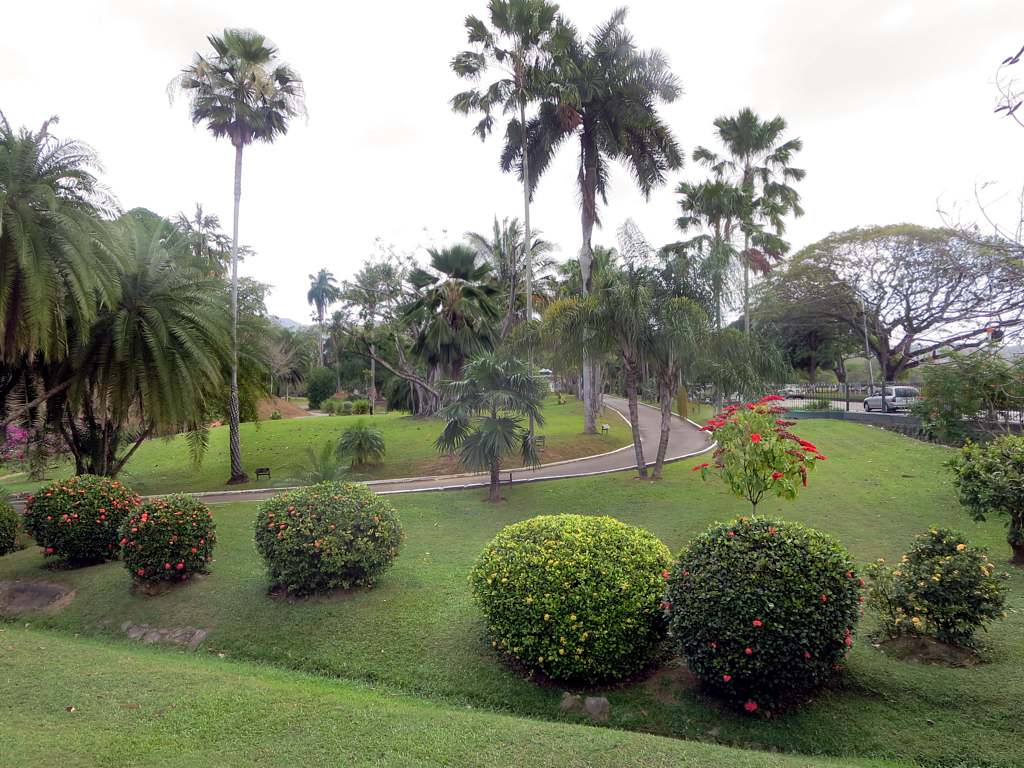
The Royal Botanic Gardens in Port of Spain is one of those places where time seems to slow down just enough to let you notice the details—the way sunlight filters through the canopy of a massive samaan tree, the quiet rustle of leaves in the breeze, or the sudden flash of color from a hummingbird darting between flowers. Established in 1818, these gardens are among the oldest in the Western Hemisphere, and their history is as layered as the soil beneath the towering trees. Originally conceived as a private collection for the British colonial governor, the gardens gradually opened to the public, becoming a place where science, leisure, and everyday life intersected. Over the centuries, they’ve survived hurricanes, political shifts, and urban expansion, yet they remain a green refuge in the heart of Trinidad’s bustling capital.
Walking through the gardens, you quickly realize they’re more than just a collection of plants. The layout feels deliberate, almost like a conversation between nature and human design. Wide, shaded paths guide you past beds of heliconias, their vibrant blooms nodding in the humid air, while towering palms and ancient hardwoods create a sense of enclosure, as if the city beyond the gates doesn’t exist. One of the most striking features is the collection of samaan trees, some of which have stood here for well over a century. Their sprawling branches form natural arches, casting dappled shadows on the grass below. It’s easy to imagine generations of Trinidadians picnicking under these trees, escaping the heat of the day or simply seeking a moment of quiet.
The gardens also hold a quiet significance in the island’s history. During the colonial era, they played a role in the global movement of plants, serving as a testing ground for species brought from Africa, Asia, and the Americas. Some of the trees and shrubs here were part of early agricultural experiments, including those tied to the sugar and cocoa industries that once dominated Trinidad’s economy. Today, you can still find remnants of that past—a few old cocoa trees, for instance, their pods hanging like forgotten ornaments, or the occasional breadfruit tree, a species introduced to the Caribbean in the late 18th century as a cheap food source for enslaved people. These plants are living artifacts, their presence a subtle reminder of the complex forces that shaped the island.
Beyond their historical weight, the gardens are a place of everyday beauty. Locals come here to walk, to sit on the benches scattered along the paths, or to bring children who run ahead, chasing lizards or marveling at the bright flowers. On weekends, the atmosphere is especially lively, with families spreading out blankets for picnics or groups of friends gathering near the small ponds where water lilies bloom. The gardens are also a favorite spot for photographers, drawn by the contrast of manicured lawns against the wild tangle of tropical foliage. Even the air feels different here—thicker, warmer, scented with the earthy perfume of damp soil and blossoms.
One of the most intriguing parts of the gardens is the orchid house, a modest structure tucked away near the center. Inside, the air is cooler and more humid, the perfect environment for the delicate blooms that line the shelves. Trinidad is home to hundreds of orchid species, many of them native to the island’s rainforests, and the collection here offers a glimpse of that diversity. Some of the flowers are so intricate they look like they’ve been painted by hand, their petals striped or spotted in ways that seem almost unreal. The orchid house is a quiet space, often overlooked by visitors in a hurry, but it’s worth lingering in—especially in the early morning, when the light is soft and the flowers are at their most vibrant.
The gardens aren’t just about plants, though. They’re also a haven for wildlife, much of it small and easily missed if you’re not paying attention. Hummingbirds flit between the flowers, their wings a blur as they hover near nectar-rich blooms. Lizards dart across the paths, their scales catching the light, while butterflies drift lazily in the warm air. If you’re lucky, you might spot a mongoose slipping through the undergrowth or hear the distinctive call of a kiskadee, one of Trinidad’s most common birds. The gardens are a reminder that even in an urban setting, nature finds a way to thrive, adapting to the presence of people without entirely surrendering to it.
Over the years, the Royal Botanic Gardens have become a kind of living museum, a place where the past and present coexist. The old stone walls near the entrance, weathered by time, hint at the gardens’ long history, while the newer additions—a children’s play area, a small café—reflect their ongoing role in the community. There’s a sense of continuity here, as if the gardens have always been part of Port of Spain’s rhythm, a place where people come to pause, to breathe, to remember what it’s like to be surrounded by something green and growing. It’s not a grand or flashy attraction, but that’s part of its charm. The gardens don’t demand attention; they simply offer a space to slow down and notice the world around you.
For visitors, the Royal Botanic Gardens are an easy escape from the energy of Port of Spain. The city’s streets can be loud and chaotic, filled with the sounds of traffic, music, and the constant hum of activity. But here, the noise fades into the background, replaced by the rustle of leaves and the occasional call of a bird. It’s a place where you can wander without a plan, letting curiosity guide you from one path to the next. Whether you’re interested in botany, history, or just the simple pleasure of a quiet walk, the gardens have something to offer. And perhaps that’s their greatest appeal—they don’t try to impress. They just exist, patient and enduring, a green oasis in the middle of the city.