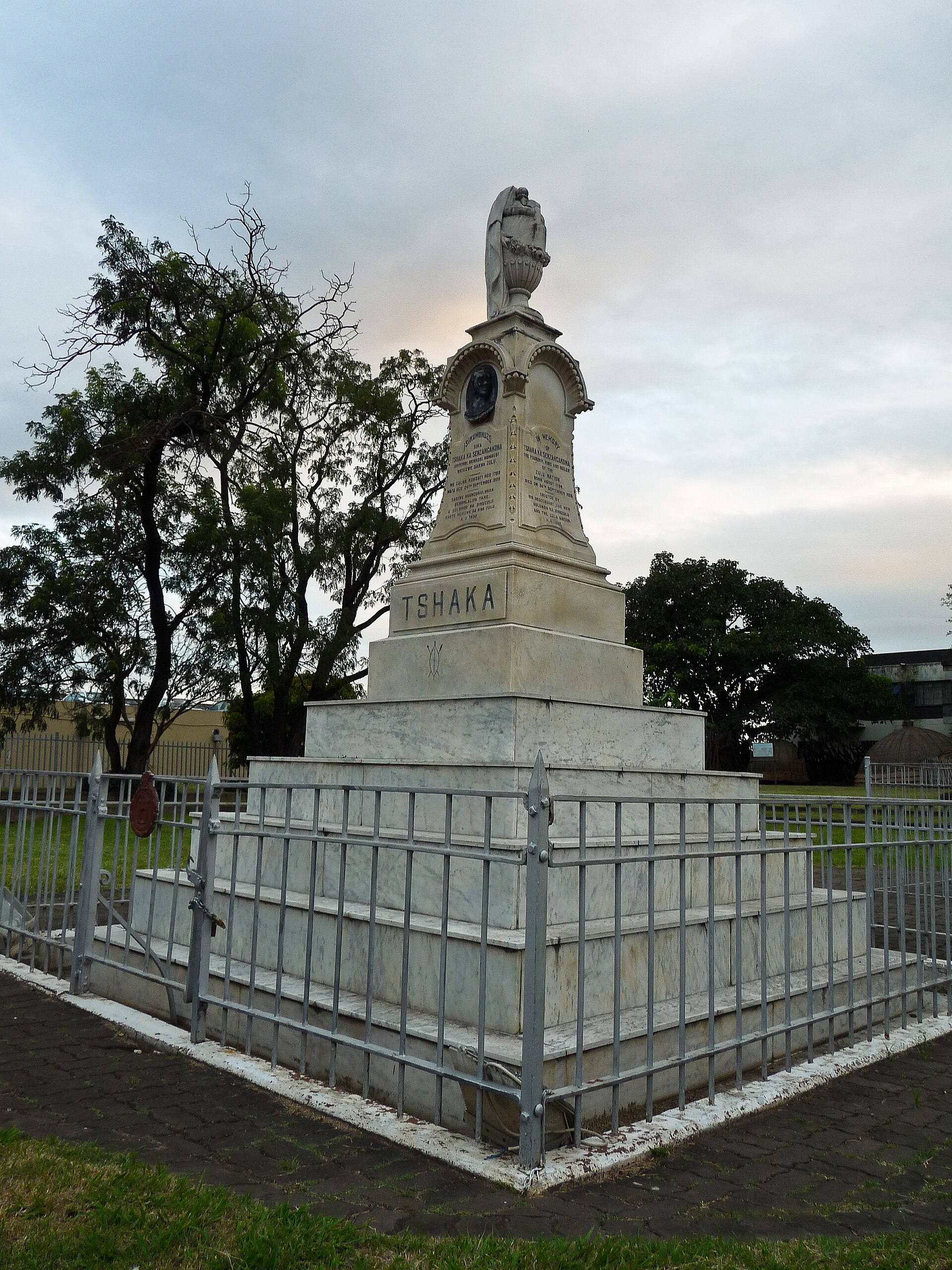
King Shaka Memorial stands quietly on the rolling hills near KwaDukuza, a place where history feels closer than anywhere else in South Africa. This is not just a monument to a man, but to an era that reshaped the region. Shaka Zulu, the warrior king who ruled in the early 19th century, is still a living presence here, his name woven into the stories told by elders and the songs sung at gatherings. The memorial itself is modest—no grand arches or towering structures, just a statue of Shaka in traditional regalia, spear in hand, shield at his side. The simplicity of the design makes it feel more like a place of reflection than a tourist attraction, a spot where the past lingers in the rustling grass and the distant hum of the wind.
Shaka’s legacy is one of transformation. Before his rule, the Zulu people were scattered clans, often at odds with one another. He united them, not just through force, but by reshaping their society—reforming military tactics, introducing new weapons, and creating a sense of shared identity. His kingdom became one of the most powerful in southern Africa, a force that both resisted and adapted to the encroaching colonial powers. The memorial, opened in 1932, was one of the first official recognitions of his impact, a rare acknowledgment of African leadership in a time when colonial narratives dominated South Africa’s history.
The site itself is small, a neatly kept park with a few trees and benches where visitors can sit and take in the surroundings. The statue, though not monumental in size, captures something essential about Shaka—his presence is commanding, not because of its scale, but because of what it represents. Nearby, plaques offer brief explanations of his life and achievements, though they only scratch the surface. To truly understand the significance of this place, it helps to arrive with some knowledge of Zulu history. Without it, the memorial might seem like just another statue in a quiet park. But for those who know the stories, it becomes a focal point, a place where the past feels tangible.
KwaDukuza, the town where the memorial is located, was once a key center of the Zulu kingdom. Founded in the 19th century, it was a place of political power and cultural significance. Today, it’s a quiet town, far removed from the bustle of South Africa’s major cities. The pace of life here is slow, and the people are welcoming, often eager to share stories about their heritage. The memorial is just one of many historical sites in the area, but it stands out as a place of deep meaning for the Zulu people. It’s not uncommon to see locals paying their respects, leaving offerings or simply sitting in silence, honoring a man who shaped their identity.
Visiting the memorial is a brief experience, but an immersive one. There are no crowds, no guided tours rushing you along—just the open space and the weight of history. You can walk the paths, read the plaques, and sit on one of the benches, letting the atmosphere settle over you. The hills around KwaDukuza were once battlefields, the stage for the conflicts and alliances that defined Shaka’s reign. Standing here, it’s easy to imagine the landscape as it was two centuries ago, alive with the movements of armies and the decisions of kings.
For many South Africans, Shaka is more than a historical figure; he’s a symbol of resilience and ingenuity. His story is a reminder that the history of this country didn’t begin with colonialism or apartheid. Long before European settlers arrived, African societies had built complex kingdoms, rich cultures, and enduring traditions. The memorial doesn’t just commemorate Shaka—it honors the broader legacy of the Zulu people, a legacy that continues to shape South Africa today.
The memorial is not a place for grand gestures or dramatic revelations. It’s a quiet space, one that invites contemplation rather than spectacle. There are no flashy exhibits or interactive displays, just the statue, the land, and the stories that have been passed down through generations. For those who take the time to visit, it offers something rare: a chance to connect with history on a personal level, to see the past not as a distant abstraction, but as something real and immediate.
If you find yourself in KwaZulu-Natal, the memorial is worth the trip. It’s not the kind of place that will dominate your itinerary, but it’s the kind that stays with you long after you’ve left. Here, history isn’t confined to textbooks or museum displays—it’s alive in the land, in the stories, and in the quiet dignity of the memorial itself. It’s a place that reminds you that South Africa’s past is far richer and more complex than the narratives often told about it, and that the Zulu kingdom, with all its triumphs and struggles, remains a vital part of the country’s identity.