Walk up the dirt path from Cusco, and the city’s noise fades quickly. By the time you reach Qenqo, the only sounds are wind through the rocks and your own footsteps. The Inca carved this place into limestone more than 500 years ago. Now, it waits—half-ruined, half-revealed.
The name means "zigzag" in Quechua. Maybe it describes the underground passages that twist beneath the main outcrop. Maybe it’s the shape of the stone itself, worn smooth by time but still jagged where the Inca left their marks. Either way, the name fits. This isn’t a straight path. It’s a puzzle.
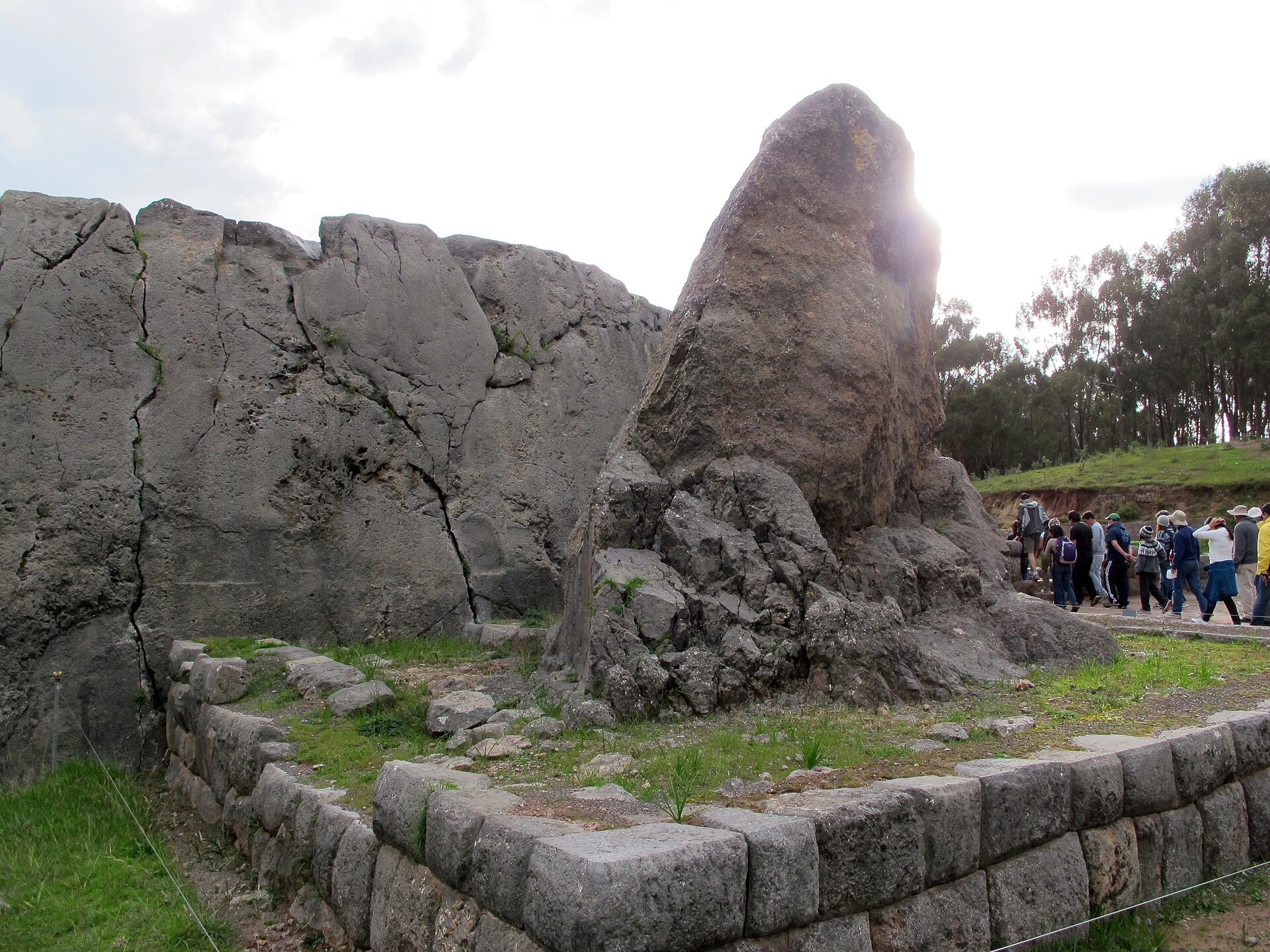
A massive limestone monolith dominates the site. Steps climb its surface. Channels spiral across it like veins, shallow grooves that once carried liquid—chicha for ceremonies, or something else. At the center, a cave opens into a small chamber. Inside, a low altar. No one knows what it held. Mummies? Offerings? The Inca didn’t write it down. What’s left is guesswork and the weight of the stone.
The terraces and walls around the monolith are built with the same precision as Sacsayhuamán. Stones fit together without mortar, their edges so tight you can’t slide a knife between them. Some walls curve into a semicircle, like an amphitheater. Was it for rituals? For watching the sky? The Inca tracked solstices and stars. On a clear day, shadows from the rocks stretch in deliberate patterns, as if marking time.
Qenqo wasn’t alone. It was part of a network of sacred sites linked by pathways. Pilgrims, rulers, and priests walked these routes, moving between rituals. Some say this was where warriors proved themselves. Others think it was a place of judgment, where the living spoke to the dead. The truth is gone. What remains is the silence.
Machu Picchu has its crowds. Qenqo has space. No vendors, no guided tours, no lines. Just the wind and the occasional bird. From the higher terraces, the valley spreads out below. The same mountains the Inca saw still stand in the distance. That’s why they chose this place. It feels like the edge of something bigger.
The Spanish took stones for their own buildings. Locals took more. Now, gaps mark where walls once stood. But the damage doesn’t ruin the site. It makes it feel more real. Like a book with pages torn out—you can still read the story, but you have to fill in the blanks yourself.
Archaeologists have pieced together fragments. But Qenqo resists easy answers. That’s the point. It doesn’t give you a neat story. It gives you stone and silence and the chance to wonder.
To visit, take a taxi or walk from Cusco. Go early or late, when the light is soft. There’s no grand entrance. Just a path leading to the rocks. A few other travelers might be there. Maybe a dog. No one will rush you.
Don’t expect answers. Qenqo doesn’t work like that. The more you look, the more you realize how little you know. That’s not a flaw. That’s why it’s worth coming.