Valldemossa is one of those rare places where time seems to soften, where the hours stretch and the outside world fades into the background. Tucked into a quiet valley surrounded by low hills, just a short drive from Palma, it feels like an island of stillness, far removed from the bustle of Mallorca’s coastal resorts. The village itself is small, its narrow streets lined with stone houses draped in bougainvillea, their wooden shutters and flower-filled balconies giving it the air of a place that has barely changed in centuries. But it’s the monastery at its heart that draws visitors—not just for its beauty, but for the layers of history woven into its walls.
The story of Valldemossa’s monastery begins long before the Carthusian monks arrived. Originally, the site was home to an Arab fortress, its strategic position overlooking the valley making it a prized stronghold. By the 14th century, it had become a royal residence, a retreat for Mallorca’s kings, who left their mark on the architecture. Only in the late 15th century did the Carthusians take over, transforming the building into a monastery. For nearly three hundred years, they lived here in silence and solitude, following the strict rules of their order. That ended in the 19th century, when the monastery was secularized, its halls repurposed for a new kind of life—one that would soon intertwine with the world of art and music.
The architecture of Valldemossa reflects its many lives. The main building, built from pale local stone, has the austere simplicity one might expect from a Carthusian monastery. Yet look closer, and the past reveals itself in unexpected ways. Gothic arches hint at medieval origins, while faint traces of Moorish design peek through later additions. The inner courtyard, with its colonnade and central fountain, is the most serene part of the complex. In summer, it’s a cool oasis of greenery; in winter, when the rare Mallorcan rain falls, the stone glistens under the damp light. It’s easy to imagine monks walking here centuries ago, their footsteps echoing on the same flagstones.
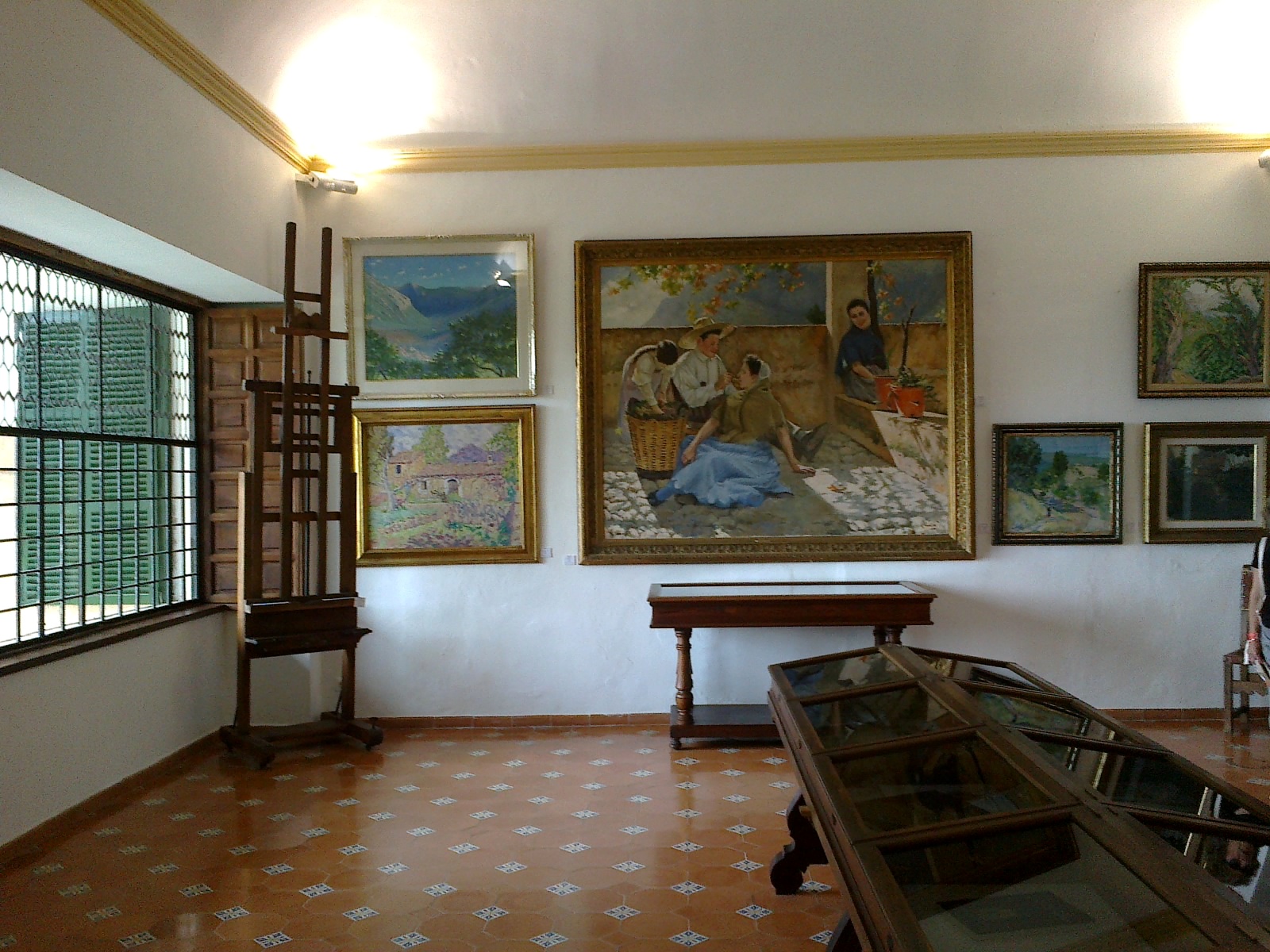
The monastery’s most famous chapter, though, belongs to the 19th century, when it became a refuge for two of Europe’s most celebrated artists. In the winter of 1838–39, Frédéric Chopin and George Sand stayed here, seeking a milder climate for Chopin’s failing health. They rented a cell—little more than a sparsely furnished room—and it was here that Chopin composed some of his most enduring works, including the *Preludes* from Opus 28. Today, that cell has been preserved as a small museum, its walls lined with his original manuscripts, a piano, and personal belongings. There’s a quiet melancholy to the space, as if the music he wrote here still lingers in the air. Visitors often remark on the way the past feels tangible in this room, as though the boundaries between then and now have blurred.
The monastery’s church is modest but striking, a jewel of Baroque design. Its interior is rich with gilded carvings and frescoes depicting saints, their faces illuminated by the soft light filtering through the windows. Unlike the grand cathedrals of Palma, this space feels intimate, almost personal. If you’re lucky enough to visit during a service, you might hear the organ, an instrument that has been played here since the 18th century. Its deep, resonant notes fill the church, a reminder of the music that has been part of Valldemossa’s life for generations.
Beyond the monastery walls, the village itself is a place of quiet charm. The streets wind uphill, past houses with wooden balconies and doorways framed by climbing roses. There are no crowds here, no souvenir shops hawking trinkets—just the occasional café where locals gather over coffee and *ensaimadas*, the sweet, spiral-shaped pastries Mallorca is known for. In the evenings, the air carries the scent of woodsmoke and the sound of laughter from small bars where *sobrasada*, the island’s spicy cured sausage, is served with crusty bread. It’s the kind of place where time moves at its own pace, where the rhythm of life is set by the sun and the seasons rather than the clock.
The monastery’s gardens, once tended by the monks, are now a public park, a green refuge where both locals and visitors come to escape the heat. Ancient olive and almond trees shade the paths, their gnarled trunks speaking of centuries of growth. There are figs, too, and citrus trees that perfume the air in spring. The old irrigation channels and wells are still visible, a testament to the ingenuity of those who once lived here, turning a dry landscape into a fertile one. In summer, the park is a cool retreat; in autumn, the falling leaves crunch underfoot, and in winter, the bare branches let in the pale Mediterranean light.
Valldemossa has long been a place where art and history intersect. The monastery hosts concerts throughout the year, its courtyard transformed into an open-air venue where the music of Chopin, Bach, and Mozart drifts across the valley. In summer, these performances draw crowds, but even then, the atmosphere remains unhurried. People sit on wooden benches under the stars, the notes rising into the night air. There are also exhibitions and literary events, a nod to the village’s enduring appeal to writers and artists. It’s not uncommon to see painters setting up their easels in the square, trying to capture the play of light on the stone facades.
What makes Valldemossa special is the way it balances stillness and life. The monastery, with its centuries of silence, stands in quiet contrast to the village that has grown up around it. There’s no sense of a place frozen in time—rather, it feels like a living thing, its past and present coexisting in a way that’s rare. You might spend the morning wandering the monastery’s halls, then step outside to find a café where an old man is playing dominoes with friends, or a group of children kicking a ball down the street. It’s this blend of the sacred and the everyday that gives Valldemossa its character.
A visit here isn’t just about seeing a historic site; it’s about feeling the weight of history in a way that’s almost physical. The stones underfoot, the cool air in the cloisters, the faint scent of incense in the church—all of it pulls you into another time. Yet there’s nothing staged or artificial about it. Valldemossa doesn’t try to impress; it simply is. And perhaps that’s why it lingers in the memory long after you’ve left. In a world where so many places feel designed for tourists, this is one that still belongs to itself.