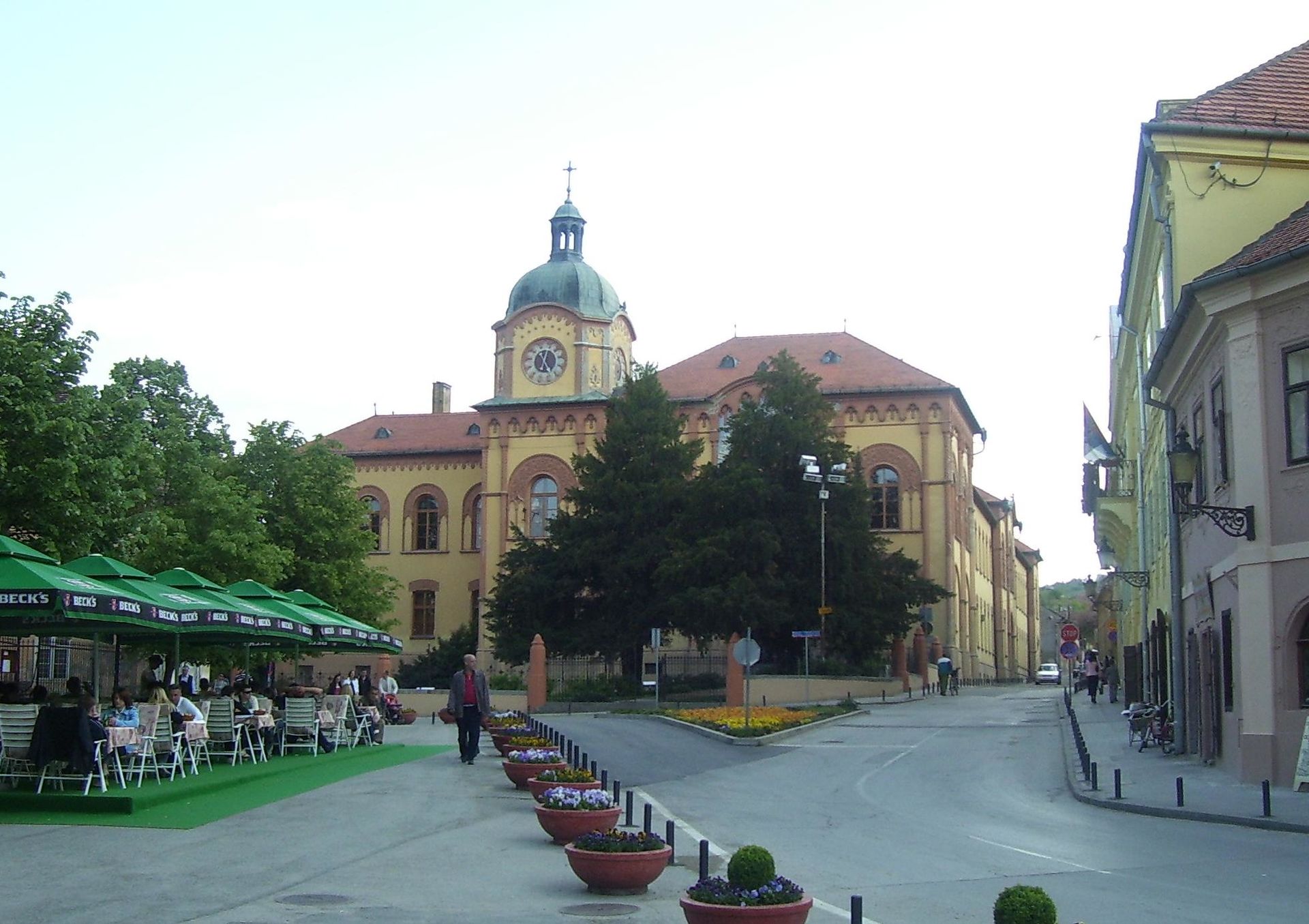
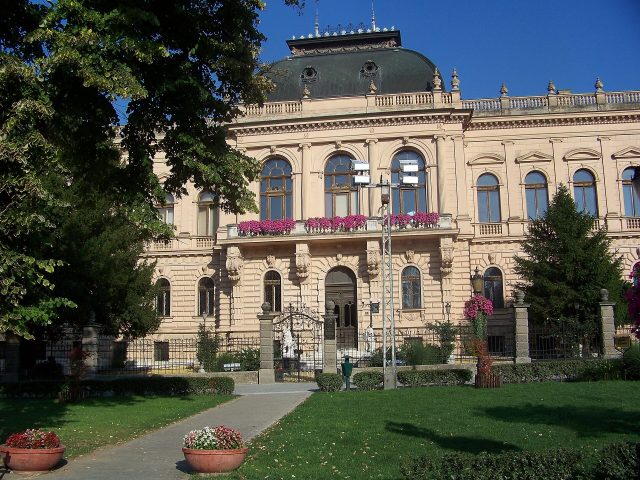
Sremski Karlovci is a town where the past lingers in the quiet corners of its streets, and few places embody this sense of continuity as vividly as the Karlovci Gymnasium. Founded in the 18th century, it stands as the first Serbian secondary school, a place where education was once a rare privilege rather than a given. The building itself is a testament to endurance—still functioning as a school today, its halls echoing with the footsteps of generations who walked them long before. It wasn’t just a place for future priests or officials; many of its students went on to shape Serbia’s intellectual and cultural life, leaving an imprint that extends far beyond these walls.
The architecture of the gymnasium tells its own story. Built in the Baroque style, the building is understated yet striking, with symmetrical facades and tall windows that let in soft, diffused light. There’s no grand opulence here, no gilded halls or towering domes—just solid stone, heavy wooden doors, and staircases worn smooth by time. Inside, the classrooms retain their old-world charm: high ceilings, wooden desks, and a library filled with books whose pages have yellowed with age. The space feels suspended in time, as if the outside world moves faster, more impatiently, while here, the rhythm of learning remains unchanged.
This school is deeply woven into the history of Sremski Karlovci, a town that has long been a center of Serbian culture and spirituality. In the 18th century, when these lands were under Habsburg rule, the town became a refuge for Serbian identity, a place where the community preserved its language, faith, and traditions. The Serbian Patriarchate held sessions here, important decisions were made, and institutions like the gymnasium were established to educate a new generation. The school became a symbol of this cultural revival, its graduates—poets, scientists, politicians—leaving their mark not just in Serbia but across Europe.
What makes the Karlovci Gymnasium remarkable is that it never became a relic. Unlike so many historic institutions that fade into museums or monuments, this one remains alive. Modern students still attend classes here, their voices mingling with the ghosts of those who came before. The building has adapted—computers now sit alongside antique globes, and the curriculum has evolved—but the essence of the place endures. Walking through its corridors, you can almost sense the layers of history beneath your feet, the weight of all those who once studied, debated, and dreamed within these walls.
For visitors, the gymnasium offers more than just a glimpse into the past. Sremski Karlovci itself is a quiet town, its cobblestone streets and old houses exuding a timeless calm, and the school fits seamlessly into this atmosphere. The small museum inside preserves fragments of its history: photographs of former students, handwritten notes, old textbooks, and maps that trace the evolution of education over centuries. The library, with its rows of leather-bound volumes, feels like a sanctuary of knowledge, a place where the written word has been revered for generations.
Yet the most striking thing about the gymnasium isn’t what you see, but what you feel. There’s no sense of detachment here, no glass barriers separating you from history. The past isn’t something to be observed from a distance—it’s present in the creak of the floorboards, the faint scent of old paper, the way the light falls through the windows. It’s a place that makes you reflect on the continuity of learning, on how ideas and traditions are passed down, shaping not just individuals but entire societies.
Sremski Karlovci is a town that moves at its own pace, and the gymnasium is one of the reasons why. It serves as a reminder that education isn’t just about facts and figures, but about the people who carry knowledge forward. You don’t need to know the names of every graduate or the titles of every book in the library to feel the weight of what this place represents. Simply being here is enough to understand how deeply the past informs the present—and how some traditions, like the pursuit of learning, never truly fade.