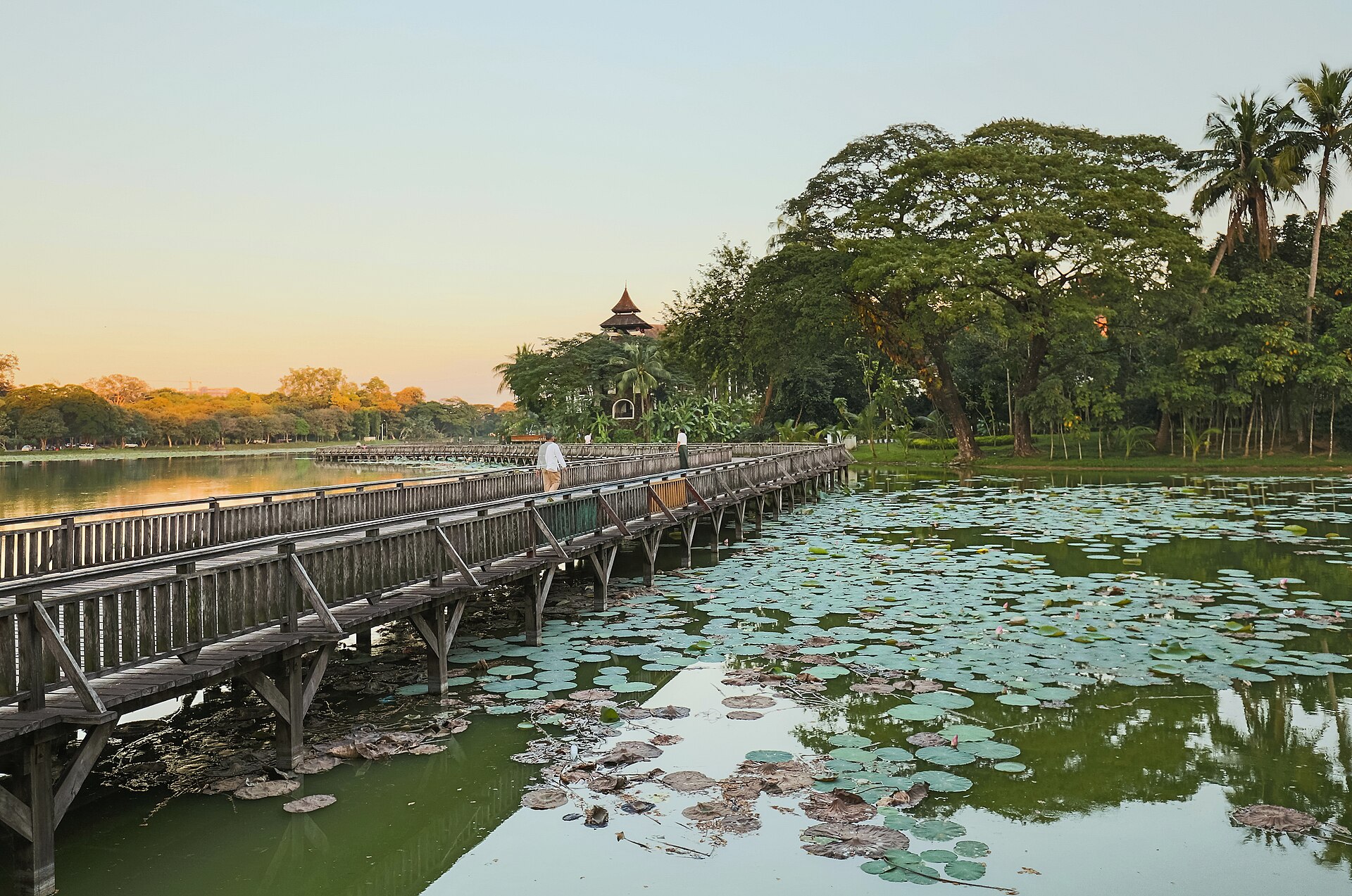
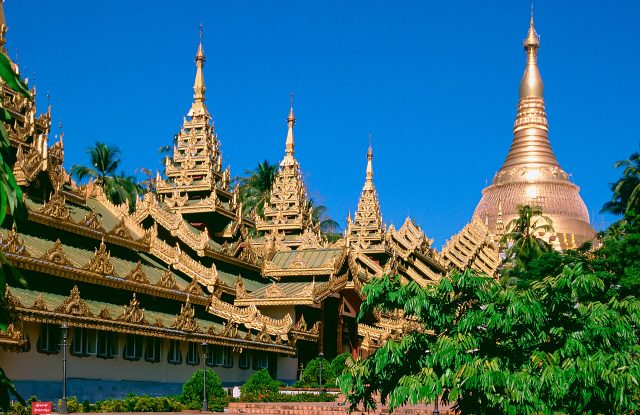
Kandawgyi Lake is one of those places in Yangon that feels like a quiet pause in the middle of the city’s constant motion. It sits just east of the Shwedagon Pagoda, its calm waters reflecting the golden spire on clear days, though the view is often softened by the haze that lingers over the city. The lake was carved out in the early 20th century under British colonial rule to supply Yangon with clean water. Over time, it became a public space where locals and visitors could escape the heat and noise of the streets.
The lake is shaped like a gentle crescent, its edges lined with trees that provide shade for those walking along the paths. On the eastern side, a narrow strip of land juts out into the water, home to the Karaweik Palace. Built in the 1970s, the palace is a modern interpretation of a traditional Burmese royal barge, with golden tiers and ornate details designed to evoke the grandeur of ancient kings. It was originally intended as a restaurant and cultural venue. Today, it stands as a landmark, its reflection shimmering in the water at dusk.
The area around Kandawgyi blends old and new. The lake is surrounded by a park, its wide paths popular with joggers in the early mornings and families in the evenings. Vendors sell snacks, children play near the water, and musicians sometimes perform on traditional *saung* harps under the trees. The park shows signs of use—worn grass, stray dogs resting in the shade—but that’s part of its character. It doesn’t feel like a place designed solely for tourists; it’s where Yangon comes to breathe.
One of the most striking things about Kandawgyi is how it changes with the light. In the early morning, the lake is often shrouded in mist, the water still and glassy. By midday, the sun burns off the haze, and the surface sparkles, though the heat can make the air feel heavy. Evenings are when the lake feels most alive. The paths fill with people, and the lights from the Karaweik Palace and nearby buildings cast reflections across the water. There’s a small amusement park on the northern shore, with Ferris wheels and bumper cars adding noise and color. It’s not a grand attraction, just a simple collection of rides, but it’s a reminder that this place is as much about everyday life as it is about history.
The lake has seen changes over the decades. During the colonial period, it was part of the city’s infrastructure and a social hub where British officials and local elites gathered. After independence, it remained a public space, though its role shifted with the city’s fortunes. In recent years, there have been efforts to clean up the water and improve the park, though progress has been uneven. The lake still suffers from pollution, and the paths can feel crowded, but it retains a certain resilience, much like Yangon itself.
For visitors, Kandawgyi offers a different perspective on the city. It’s not as immediately striking as the Shwedagon Pagoda or as busy as downtown Yangon, but that’s what makes it worth a visit. There’s no grand narrative here, just a place where the layers of the city’s past and present overlap. You might come for the view of the Karaweik Palace or the chance to walk along the water, but you’ll stay for the small moments—the way the light catches the ripples on the lake, the sound of laughter from the park, the sense of being in a space that belongs to the city and its people.
If you’re in Yangon for more than a few days, return to Kandawgyi at different times. The morning light reveals one side of the lake, the evening another. The park is always there, but the mood shifts with the hour. There’s no entrance fee, no strict schedule to follow. You can wander the paths, sit by the water, or grab a cup of tea from one of the small stalls. It’s not a place that demands attention; it’s a place that invites you to slow down and notice the details—the way the trees sway in the breeze, the distant hum of the city, the quiet rhythm of life around the lake.