- Home
- South Sudan
- Juba
- St. Teresa Cathedral
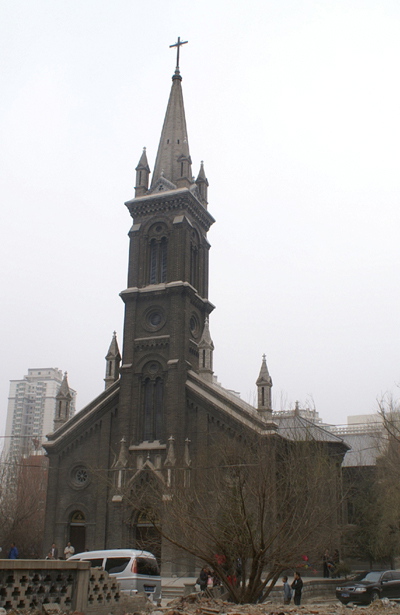
Photo: Yoshi Canopus, CC BY-SA 3.0
St. Teresa Cathedral
out of 5 0 ratingsSt. Theresa’s Cathedral in Juba is the kind of place that doesn’t demand attention but lingers in the mind long after you’ve left. Perched on a low hill just off the city’s busier streets, it stands apart from the noise and movement of South Sudan’s capital, offering a quiet space to pause.
The building is modest—whitewashed walls, clean lines, a red-tiled roof that contrasts with the surrounding greenery and dusty roads. It carries a quiet dignity, as if it has always belonged here.
The cathedral’s history is part of South Sudan’s story. Built in the mid-20th century, when the region was still under Sudanese rule and Juba was a provincial outpost, it was one of the first Catholic churches in an area where Christianity was spreading. Missionaries saw faith as a way to connect communities divided by language, tradition, and conflict. The cathedral became a symbol of that hope—a place where people could gather despite their differences.
Over the decades, the cathedral has seen upheaval. During the civil wars, Juba changed hands multiple times, and fighting often raged nearby. Yet the building remained standing. When South Sudan gained independence in 2011, the cathedral took on new meaning—not just as a place of worship, but as part of the country’s unfinished history. For visitors, it offers a connection to the past, unpolished and real.
Inside, the cathedral is simple. Tall windows let in soft light that falls across wooden pews and a stone floor. The altar is understated, free of decoration, and that simplicity feels deliberate. There are no gilded icons or frescoes, just an atmosphere of calm. On Sundays, worshippers fill the space, many seeking a break from the chaos outside.
Juba is a city of contrasts—modern buildings stand beside mud huts, luxury SUVs pass open-air markets, and daily life mixes with echoes of the past. In this landscape, St. Theresa’s Cathedral feels like an anchor. It doesn’t try to impress; its strength lies in its quiet presence.
For the people of Juba, the cathedral is more than a building. It’s where children are baptized, where couples marry, where families gather to mourn. During the war, it sheltered those with nowhere else to go. On feast days, it becomes the heart of the community. Even non-Catholics sometimes stop by, seeking stillness or a place to think. In a country where so much is uncertain, the cathedral offers permanence.
The architecture is unremarkable by design. It follows the colonial style common in mid-20th-century Africa—rectangular, with a pitched roof, a small bell tower, and little ornamentation. But that simplicity has its own beauty. The cathedral blends into the landscape, as if it grew from the earth. The red tiles on the roof, though likely imported, now feel like part of the scene.
Today, the cathedral continues its quiet existence. In the mornings, worshippers arrive for early prayers, and by evening, the building is empty, its lamps casting a soft glow. Juba isn’t a city where people often slow down, but St. Theresa’s offers a rare exception. It doesn’t tell dramatic stories or dazzle with spectacle. Sometimes, the most meaningful places are the ones that let you listen.
Day around this place
Where else to go on the same day
Building the day…
Where it is
4.82732, 31.60032