- Home
- Cuba
- Santiago de Cuba
- Santiago de Cuba Cathedral
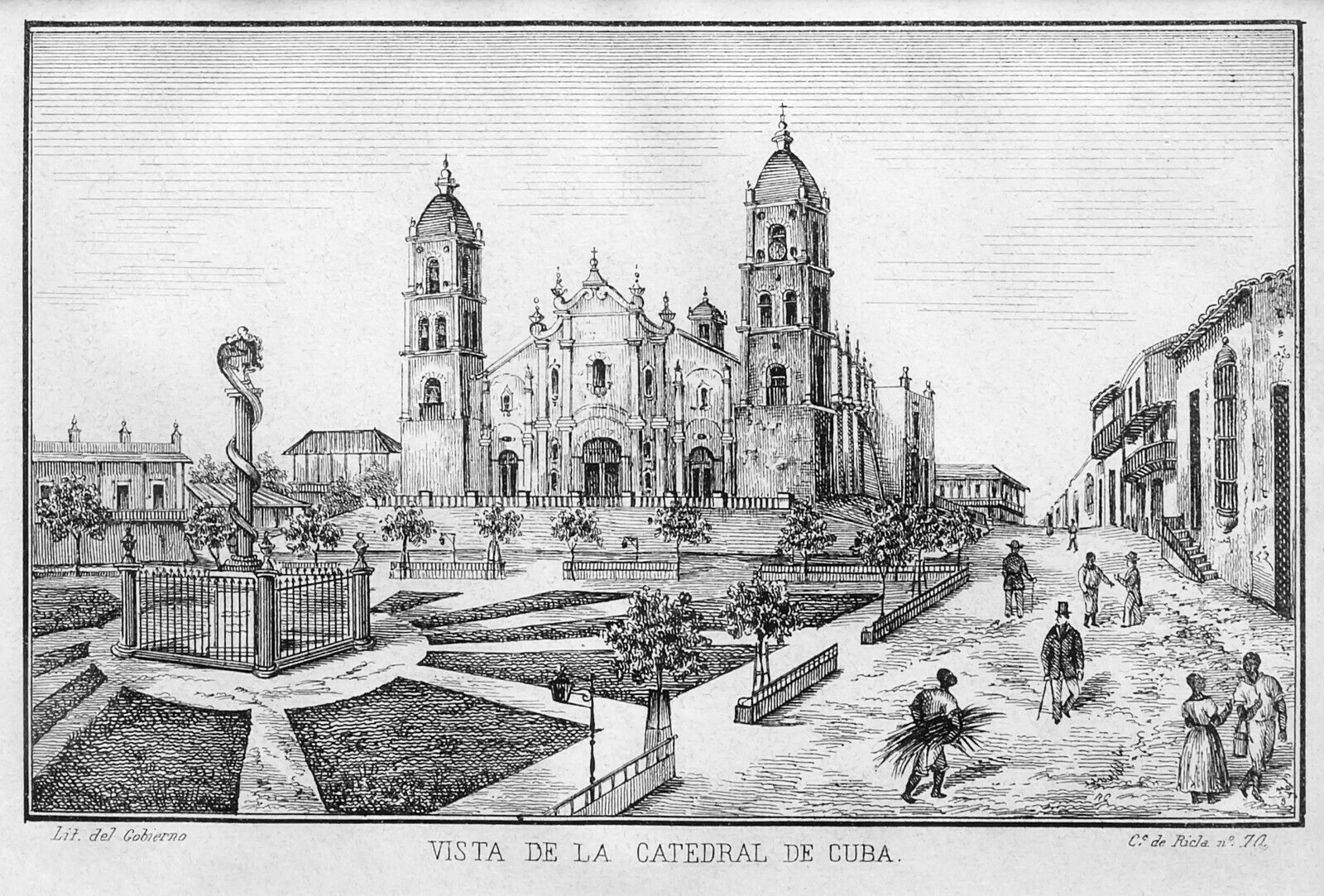
Photo: AnonymousUnknown author, Public domain
Santiago de Cuba Cathedral
out of 5 0 ratingsSantiago de Cuba’s cathedral is one of those places where time seems to pause, letting the weight of history settle quietly around you. It stands at the heart of the city, on Plaza César García, surrounded by low-slung colonial houses with peeling plaster and balconies draped in bougainvillea. The building doesn’t demand attention, yet it’s impossible to ignore—the whitewashed façade with its twin towers and crosses rises above the square like a silent guardian. There’s no grandiosity here, no overwhelming scale of European cathedrals. Instead, there’s something warmer, something distinctly Cuban in the way the light filters through the stained glass or the way the stone seems to hold the heat of the sun.
The cathedral’s story begins in the 16th century, when Spanish conquistadors first built a church on this site. Back then, Santiago de Cuba wasn’t just a city; it was Spain’s stronghold in the New World, and the cathedral was meant to be a symbol of its power. But the building’s fate was far from smooth. Earthquakes, fires, and pirate raids destroyed it time and again. The structure standing today is the fifth iteration, built in the early 19th century in a neoclassical style. The architects of the time aimed for something monumental yet harmonious with the surrounding streets, and they succeeded. The result is a building that feels both imposing and intimate, as if it grew naturally from the city itself.
Inside, the cathedral is dimly lit, the air thick with the scent of wax and old wood. Colored light from the stained glass spills across the stone floor, illuminating the high vaulted ceilings supported by sturdy columns. The walls are adorned with frescoes depicting saints and biblical scenes, their colors faded but still vivid enough to tell their stories. The main altar, gilded and carved from marble, draws the eye, though it doesn’t overwhelm. Instead, it invites quiet reflection. There’s no opulence here to distract from the sense of something enduring, something that has witnessed centuries of life in this city.
The cathedral is deeply woven into Cuba’s history. Within its walls, many of the island’s most significant figures were married or laid to rest, including Carlos Manuel de Céspedes, the national hero who sparked the fight for independence. It also houses one of Cuba’s most revered relics: the statue of the Black Madonna, the patroness of Santiago. According to legend, the statue was brought from Spain in the 17th century, and since then, it has been seen as the city’s protector. Every July, during the Santiago Carnival, the statue is carried through the streets in a grand procession, drawing crowds who come to pay their respects.
The architecture of the cathedral tells its own story of Cuba’s past. The neoclassical lines of the façade are softened by baroque details—ornate scrollwork, curved columns, and intricate iron grilles. The towers, once used as lookout points to spot approaching pirate ships, now offer views of the city and the bay where conquistadors and slave traders once anchored their vessels. From here, you can see how Santiago sprawls across the hills like an amphitheater, descending toward the sea. The cathedral’s design reflects the layers of history that have shaped the city, from colonial rule to the struggles for independence.
This isn’t just a place of worship; it’s a living part of Santiago’s rhythm. In the mornings, locals come to pray before starting their day, while tourists wander in to admire the interior. By evening, the square outside comes alive with music—son and salsa drifting through the air—as children play and elders sit on benches, watching the world go by. The cathedral doesn’t just stand apart from the city; it absorbs its energy, its noise, its life. It’s a place where the sacred and the everyday coexist, where the past and present blend seamlessly.
Over the years, the cathedral has undergone several restorations, but the work has always been careful, respectful. The frescoes have been gently retouched, cracks in the walls repaired, but nothing has been altered for the sake of modernity. The wooden pews still creak underfoot, the bronze chandeliers still hang heavy from the ceiling, and the air still carries the scent of centuries. That’s why the cathedral doesn’t feel like a museum. It feels alive, breathing in time with the city around it.
Visiting the cathedral isn’t just about seeing a landmark; it’s about stepping into the soul of Santiago. Here, the past isn’t something distant or abstract. It’s in the worn stone under your feet, in the flicker of candlelight, in the murmur of prayers and the distant echo of revolutionary songs. The cathedral doesn’t shout its history. It doesn’t need to. If you listen closely, you can hear the whispers of the people who built it, who fought for it, who found solace within its walls. It stands not to impress, but to remind—to remind us of faith, of time, of the lives that have shaped this city and the ones that continue to unfold here.
Day around this place
Where else to go on the same day
Building the day…
Where it is
20.02089, -75.82794