- Home
- Bolivia
- Santa Cruz de la Sierra
- Santa Cruz de la Sierra Cathedral
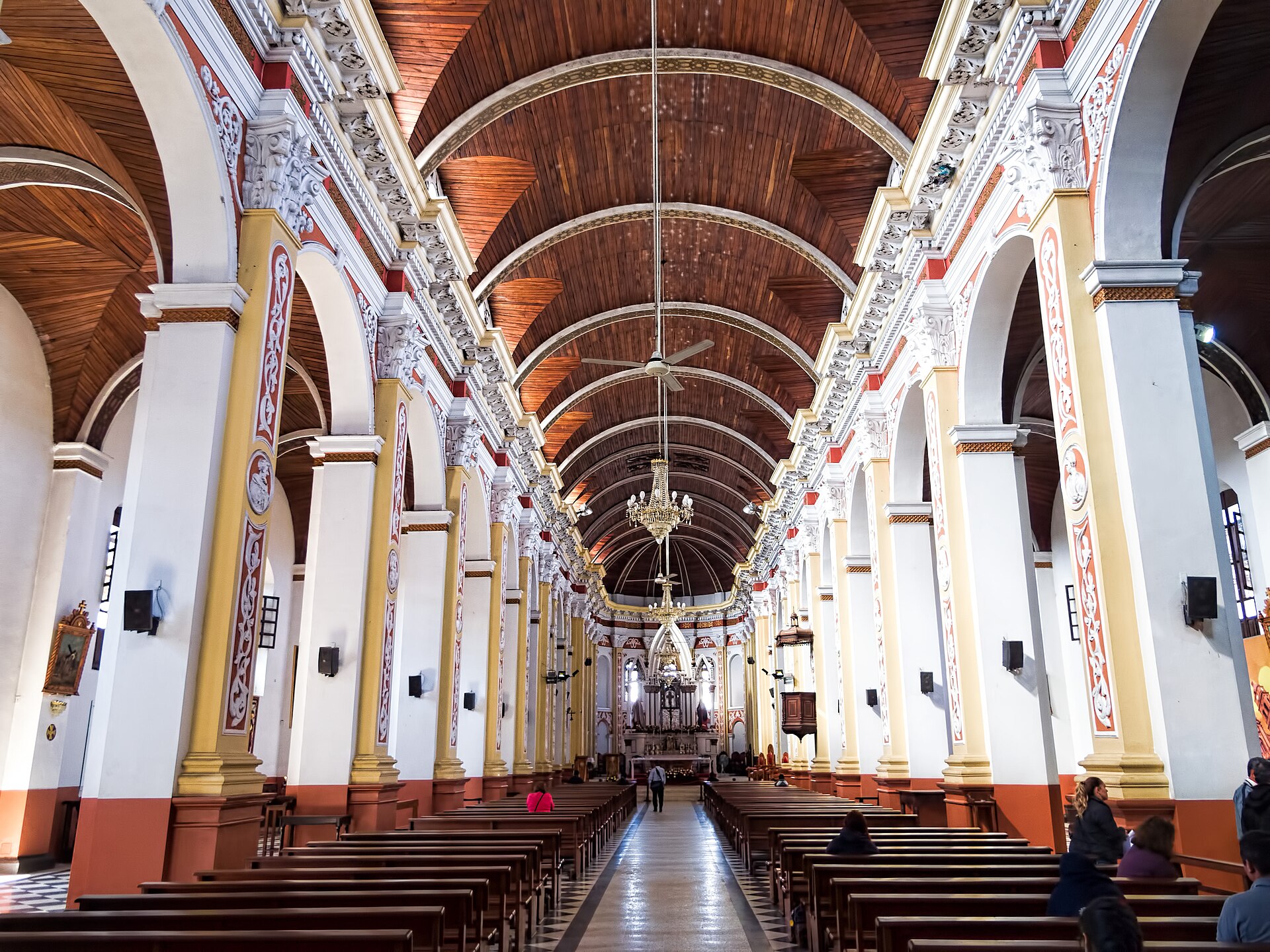
Photo: Dan Lundberg, CC BY-SA 2.0
Santa Cruz de la Sierra Cathedral
out of 5 0 ratingsSanta Cruz de la Sierra’s cathedral isn’t the kind of place that demands attention at first glance. It sits quietly in the heart of the city, on Plaza 24 de Septiembre, surrounded by low colonial-era buildings and swaying palm trees. Unlike the grand cathedrals of other Latin American cities, this one carries a more understated charm, its modest architecture reflecting the spirit of eastern Bolivia—a place where Indigenous traditions, Spanish colonial influences, and modern Bolivian life have blended over centuries.
The first church on this site dates back to the 16th century, when Santa Cruz was little more than a fledgling Spanish settlement. That early structure was a simple wooden chapel built by missionaries venturing into Bolivia’s eastern lowlands. As the city grew, so did the cathedral, undergoing several reconstructions. The current building took shape in the mid-19th century, by which time Santa Cruz had become an important commercial and administrative hub. Its neoclassical facade—clean lines, symmetrical columns, and a restrained pediment—gives the structure a quiet dignity, a far cry from the ornate baroque churches found elsewhere in the country.
Step inside, and the atmosphere shifts. The dim interior is softened by sunlight filtering through tall windows, illuminating the gilded carvings of the main altar and the faded frescoes lining the walls. These paintings depict scenes from the lives of saints and biblical stories, their colors muted by time. One of the most striking features is the wooden pulpit, crafted by local artisans in the 18th century. Its intricate carvings weave together Christian iconography and Indigenous motifs, a subtle reminder of how local culture shaped religious art in this part of Bolivia.
Beyond its spiritual role, the cathedral has witnessed much of Santa Cruz’s history. Over the centuries, it has collected relics that tell the story of the city—ancient liturgical books, priestly vestments, and gifts from parishioners. In one of the side chapels stands a statue of the Virgin of Candelaria, the city’s patron saint. Each February, her feast day draws crowds for special services, filling the cathedral with flowers, candlelight, and hymns. The square outside buzzes with activity, as vendors set up stalls and musicians play, turning the occasion into a celebration that spills into the streets.
The cathedral’s architecture is deeply tied to Santa Cruz’s development. Unlike the highland cities of Potosí or La Paz, where grand stone cathedrals dominate the skyline, Santa Cruz favored buildings better suited to its hot, humid climate. The cathedral’s walls are made of local brick, its roof tiled to withstand heavy rains and scorching sun. Inside, the materials are similarly practical—wood, plaster, and natural pigments—yet the effect is far from austere. The craftsmanship speaks to the resourcefulness of the people who built it, adapting European styles to the realities of life in the lowlands.
Today, the cathedral remains a living part of the city. Mornings bring worshippers for mass, while afternoons see schoolchildren hurrying past and vendors selling fruit and pastries. On weekends, the square fills with families, tourists, and street performers. The cathedral bridges generations and social classes—here, an elderly woman in traditional Indigenous dress might kneel beside a young professional, while a foreign visitor lingers near the back, taking in the scene. It’s a place where the past and present coexist without fanfare.
Though unassuming, the cathedral plays a key role in Santa Cruz’s cultural life. It hosts organ concerts, exhibitions of religious art, and even lectures on local history. In recent years, efforts have been made to preserve the building, with restorations focusing on the frescoes and wooden carvings, which are vulnerable to the region’s humidity. These projects ensure that the cathedral remains not just a historical monument but a space where the city’s story continues to unfold.
For visitors, the cathedral offers a quiet contrast to the usual tourist attractions. There are no crowds jostling for photos, just the scent of incense and the soft rustle of prayer books. You can sit on one of the wooden pews, watching sunlight shift across the walls, or wander through the side chapels, where old icons and tombstones hint at forgotten lives. In these moments, it’s easy to see why this place matters to the people of Santa Cruz. It’s not just a relic of the past—it’s a place where history breathes, where the city’s heartbeat is still felt.
Day around this place
Where else to go on the same day
Building the day…
Where it is
-17.78409, -63.18172