- Home
- Philippines
- Manila
- Manila Cathedral
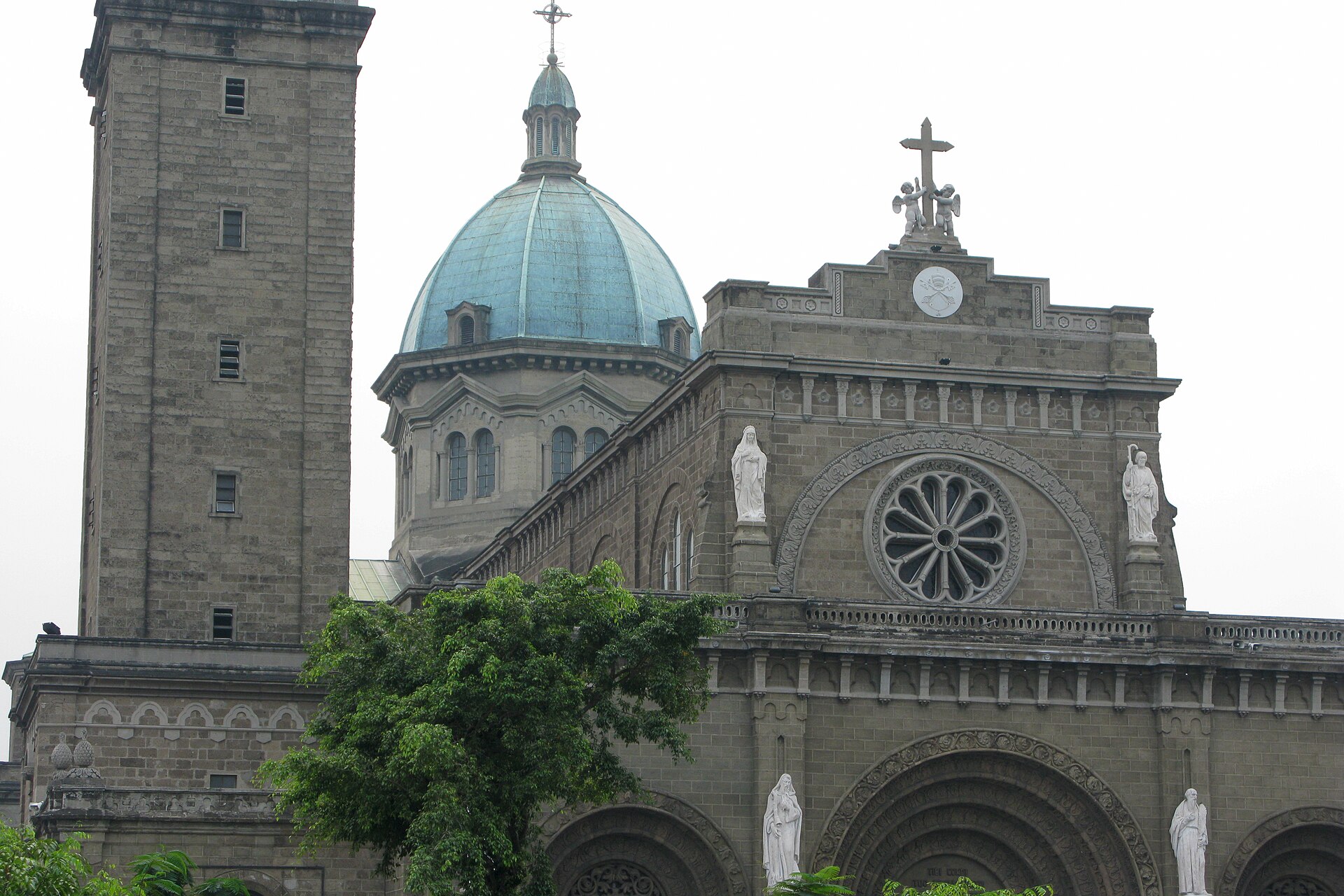
Photo: Vyacheslav Argenberg, CC BY 4.0
Manila Cathedral
out of 5 0 ratingsManila Cathedral stands in the heart of Intramuros, the historic core of the Philippine capital, where the past lingers in every stone and shadow. This is not just a place of worship but a living chronicle of the city, bearing the marks of centuries—of conquest and faith, destruction and renewal. The cathedral has witnessed the rise and fall of empires, survived earthquakes and wars, and emerged each time as a testament to the resilience of both the structure and the people who rebuilt it.
The story begins in the 16th century, when Spanish colonizers established Manila as the center of their Asian empire. The first church on this site was a modest structure of wood and nipa palm, built shortly after the city’s founding. By 1581, it became clear that a more permanent symbol was needed—one of stone, to represent the enduring presence of Catholicism in the region. That first cathedral was a humble beginning, but it set the stage for everything that followed.
Over the centuries, the cathedral was repeatedly destroyed and rebuilt. Fires, earthquakes, and conflicts reduced it to rubble more than once. The earthquake of 1863 was particularly devastating, leaving little more than the outer walls standing. Each time, the people of Manila rallied to restore it, pouring resources and labor into its reconstruction. The version that stands today dates to the late 19th century, when architect Fernando Ocampo designed it in a blend of neo-Romanesque and neo-Gothic styles. The result is a structure that feels both grand and solemn, its massive towers and thick walls conveying strength, while the intricate details—carvings, statues, and stained glass—add a layer of quiet beauty.
From the outside, the cathedral appears imposing yet understated. Its pale stone facade is punctuated by narrow windows and crowned with statues of saints, their faces weathered by time. The central portal is dedicated to the Virgin Mary, the patroness of Manila, and above it, reliefs depict key moments in the history of the Philippine Church. Inside, the space opens up into a vast, airy nave supported by columns of Italian marble. The altars gleam with gold leaf, and the wooden pews, worn smooth by generations of worshippers, invite quiet reflection. Light filters through the stained glass, casting a warm glow over the stone floors.
But the cathedral’s significance goes beyond its architecture. It has been the stage for some of the most pivotal moments in Philippine history. Here, the first Filipino bishops were consecrated, and grand processions once filled the streets, drawing crowds from across the city. During World War II, the cathedral was reduced to ruins by bombing, yet even in its broken state, it remained a symbol of hope. After the war, it was painstakingly rebuilt, and today it continues to serve as the country’s premier Catholic church, hosting not only religious services but also state ceremonies and concerts of sacred music.
The cathedral also holds a rich collection of religious art, much of it blending European traditions with local influences. Paintings, sculptures, and vestments tell stories of faith and craftsmanship, with some pieces dating back centuries. One of the most striking examples is a statue of Christ in a side altar, carved in the Spanish Baroque style but with distinctly Filipino features—a subtle reminder of how cultures intertwine over time.
Beyond its religious and historical importance, the cathedral is a place of personal meaning for many Filipinos. It has been the backdrop for countless life events: baptisms, weddings, funerals. For some, it is a place of solace, where the weight of the world feels lighter beneath the soaring arches. For others, it is a connection to ancestors, a link to a past that is still very much alive in the present.
Surrounding the cathedral, Intramuros offers a glimpse into old Manila. The cobblestone streets, colonial-era buildings, and fortified walls evoke a time when the city was the heart of Spanish rule in Asia. Walking through this district, it’s easy to imagine the processions that once passed through these gates, the voices of worshippers echoing off the stone. The cathedral remains the anchor of this historic quarter, a quiet counterpoint to the bustle of modern Manila just beyond its walls.
Inside, the atmosphere is one of reverence. The murmur of prayers, the soft notes of the organ, the way the light shifts through the stained glass—all of it creates a sense of timelessness. Visitors often find themselves lingering, whether to admire the details of the architecture or simply to sit in silence. There is no rush here. The cathedral has endured for centuries, and in its presence, the urgency of daily life fades.
In the end, Manila Cathedral is more than just a building. It is a monument to survival, a place where history is not just remembered but felt. The scars of the past are visible in the stones, the art, the very air. Yet it is also a place of continuity, where the rituals of faith and the rhythms of life carry on, as they have for generations. For those who step inside, it offers a moment of stillness—a chance to reflect on the passage of time and the enduring power of place.
Day around this place
Where else to go on the same day
Building the day…
Where it is
14.59139, 120.97361