- Home
- Philippines
- Manila

Manila
Philippines · 11 places
Photo: Various wikipedian, CC BY-SA 3.0
Manila
Manila is a city where the past and present don’t just coexist—they collide, intertwine, and sometimes blur into something entirely new. Walk through Intramuros, the walled heart of old Manila, and you’ll hear Spanish colonial rule in the clatter of hooves on cobblestones, the murmur of prayers in Manila Cathedral, or the rustle of yellowed pages in a centuries-old archive. Yet just beyond its ancient gates, the city pulses with modern life: glass-and-steel skyscrapers in Makati house global corporations, while families gather along Manila Bay at dusk to watch the sun dip below the horizon.
Luxury condos stand beside crumbling slums, and bullet-scarred churches from World War II share the skyline with sleek contemporary museums. History here isn’t preserved—it’s lived, often in the same breath as the present.
This is a city that has been burned, bombed, and battered by typhoons, only to rise again. Founded by the Spanish in the 16th century as a foothold in Asia, Manila became a crossroads of cultures, religions, and trade routes. That legacy remains in the way the city moves: Catholic processions pass Chinese temples, while the local cuisine—spicy, sour, and rich with Spanish, Malay, and Chinese influences—tells its own story. Tagalog is peppered with Spanish loanwords, English phrases, and Malay rhythms, evolving constantly, much like the city itself.
Life here never slows down. By dawn, the streets are already alive with the crowing of roosters and the impatient honking of jeepneys dodging through traffic. By midday, the air is thick with the scent of sizzling lechon, sweet-spicy spaghetti, and sinigang, the tamarind soup that’s a staple in every home. Office workers crowd into tiny cafés for strong coffee and gossip, while street vendors sell everything from fresh mangoes to knockoff watches. As night falls, the city transforms. In Malate and Ermita, bars spill onto sidewalks, and music—from traditional kundiman ballads to reggaeton—fills the air until sunrise.
Yet for all its chaos, there are pockets of quiet. Rizal Park, named after the country’s national hero, is where locals practice yoga at dawn or spread out picnics on weekends. In Paco, narrow streets lined with colonial-era houses offer a glimpse of old Manila, where neighbors still chat on doorsteps. And from the observation decks of Bonifacio Global City’s skyscrapers, the entire metropolis unfolds below—a sprawl of ancient walls, modern towers, and everything in between.
Manila isn’t for those seeking perfection or serenity. It demands patience, curiosity, and a willingness to accept the unexpected. You might get lost in its labyrinth of streets, but you’ll also find moments that linger: the grin of a vendor handing you a slice of ripe mango, the way the sunset turns Manila Bay into liquid gold, or the warmth of a stranger’s smile in a crowded market. The city doesn’t do subtle. It either overwhelms you or wins you over. But those who stay, even briefly, often return, drawn back by something they can’t quite name—maybe the energy, maybe the stories, or maybe just the way Manila refuses to be anything but itself.
Eat & Drink
1 place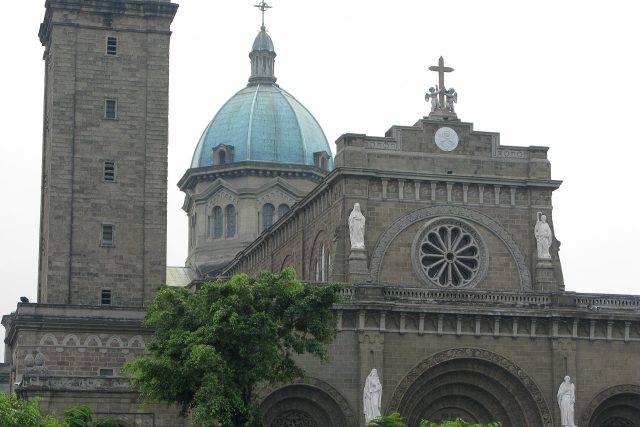
Places on the map
Marker colour follows the categoryClimate and weather
Detailed weather: Manila- Average temperature
- 29 °C
- Precipitation per year
- 2062 mm
- Sunshine hours per day
- 0 h
Average air temperature
°C
27
27
29
30
31
30
29
29
29
29
29
28
Jan
Feb
Mar
Apr
May
Jun
Jul
Aug
Sep
Oct
Nov
Dec


