Photo: tehzeta, CC BY-SA 2.0
Cajamarca Cathedral
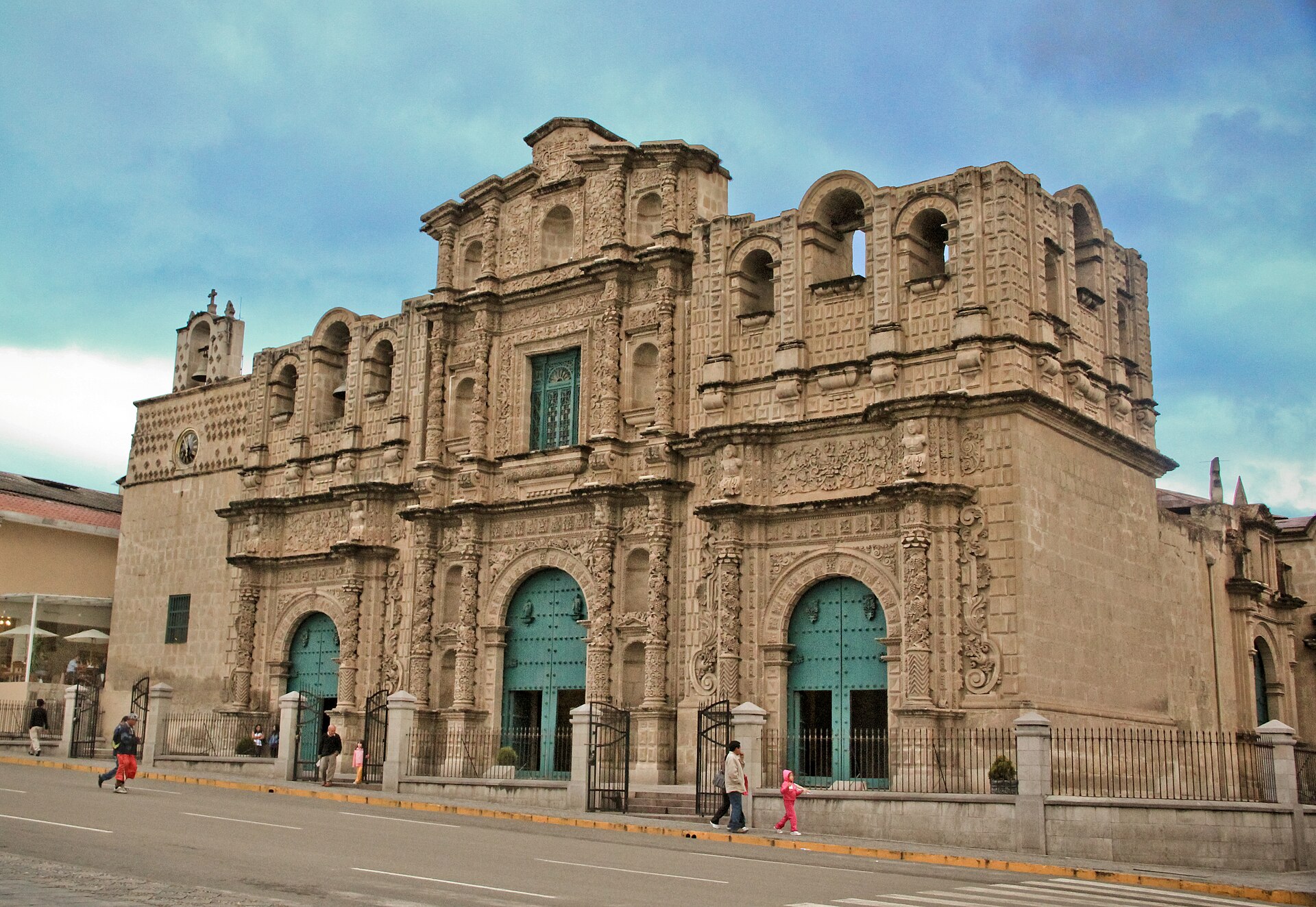
out of 5 0 ratingsCajamarca’s Cathedral sits quietly on the city’s main square, its presence unassuming yet impossible to ignore. Unlike the grand cathedrals of Europe, it doesn’t dominate the skyline with towering spires or vast domes. Instead, it blends into the rhythm of the plaza, framed by low whitewashed buildings with terracotta roofs, as if it has always been part of this place. There are no crowds here, no hurried tourists snapping photos—just the slow, steady pulse of daily life. Locals pass by on their way to the market, children chase each other in the shade, and the sun moves across the facade, revealing the delicate carvings that time has softened but not erased.
The cathedral’s story begins in the mid-1600s, long after Cajamarca had already become a key colonial outpost in northern Peru. The city itself was founded by the Spanish in 1532, on the same ground where Francisco Pizarro captured the Inca emperor Atahualpa—a moment that marked the violent collision of two worlds. By the time construction on the cathedral began, the Spanish crown was consolidating its power, and the Catholic Church was working to replace indigenous beliefs with its own. The building took decades to complete, its design shaped not just by European architectural trends but by the hands of local craftsmen, some of whom may have still remembered the Inca era. The result is a structure that feels both foreign and familiar, as if it grew from the earth rather than being imposed upon it.
From the outside, the cathedral appears restrained, even austere. Its Baroque facade lacks the ornate flourishes of Lima’s or Cusco’s churches, opting instead for a quiet dignity. Two sturdy towers flank the entrance, their simplicity broken only by the carved portal. Here, Christian symbols intertwine with floral motifs, a subtle nod to the land’s pre-Columbian past. The central section features figures of saints and angels, but they don’t demand attention. Instead, they feel like natural extensions of the stone, as if they’ve always been there, watching over the square.
Step inside, and the contrast is striking. The exterior’s severity gives way to an interior that, while not lavish, carries a warmth of its own. The nave is low but spacious, its thick columns supporting vaulted ceilings. The walls bear the marks of time—frescoes faded by humidity, plaster cracked in places—but these imperfections only deepen the sense of history. The main altar, gilded and intricately carved, dominates the far end of the church. Sunlight filters through high windows, catching the gold leaf and casting a soft glow over the figures of the Virgin Mary and the saints. Smaller chapels line the sides, each dedicated to a different patron, their altars worn smooth by centuries of devotion.
One of the cathedral’s most intriguing features is its choir loft, home to an antique organ that still plays during services. Brought from Spain in the 18th century, the instrument has witnessed countless ceremonies, its pipes echoing under the wooden beams. Even when silent, the organ adds to the atmosphere, a reminder of the music that has filled this space for generations. On quiet afternoons, it’s easy to imagine the sound of hymns drifting through the nave, the voices of worshippers rising toward the ceiling.
Cajamarca isn’t a city that reveals itself quickly. Unlike Cusco or Machu Picchu, it hasn’t been polished for mass tourism, and that’s part of its charm. The cathedral isn’t a museum piece; it’s a living part of the community. On Sundays, the plaza fills with parishioners, their voices mingling with the tolling of bells. On weekdays, the pace slows—an elderly woman murmurs prayers before a side altar, a group of children giggles in the courtyard, a restorer carefully brushes dust from a fresco. The cathedral doesn’t exist for visitors; it exists for the people who have shaped it, and who continue to shape it, day by day.
The building itself is a testament to the layers of history that define this region. Spanish Baroque architecture meets Andean practicality in its design. The stone was quarried locally, and some decorative elements subtly echo Inca patterns, though reimagined through a Christian lens. The cathedral’s form isn’t a perfect replica of European models—it’s adapted to the climate, with thick walls that keep out the midday heat and retain warmth during cool nights. There are no grand stained-glass windows, as the humid air would quickly dull their brilliance. Instead, the structure feels grounded, as if it grew from the land itself.
The cathedral’s role in Cajamarca’s history is as complex as the city’s past. After the fall of the Inca Empire, the Spanish turned Cajamarca into a colonial stronghold, and the Church played a central part in that transformation. This was where indigenous people were baptized, where the Inquisition held its trials (though with less brutality than in Europe), and where the rhythms of daily life were redefined under Spanish rule. Beneath the cathedral, archives dating back to the 1600s are said to hold records of births, marriages, and deaths—a paper trail of lives lived under colonial rule. Access to these documents is restricted, but their existence speaks to the cathedral’s dual role as both a place of worship and a repository of memory.
For those who visit, the cathedral offers something rare: a sense of stillness in a world that moves too fast. It doesn’t try to impress or overwhelm. It simply is—a quiet witness to centuries of change, seamlessly woven into the fabric of the city. There are no guided tours here, no gift shops or audio guides. Just the creak of old wood, the murmur of prayers, the play of light across stone. Come in the early morning, when the square is bathed in golden light, or in the evening, when the shadows stretch long and the air cools. Either way, the cathedral feels timeless, as if it exists just beyond the rush of the present, waiting patiently for those who take the time to notice.
Day around this place
Where else to go on the same day
Building the day…
Where it is
-7.15663, -78.51825