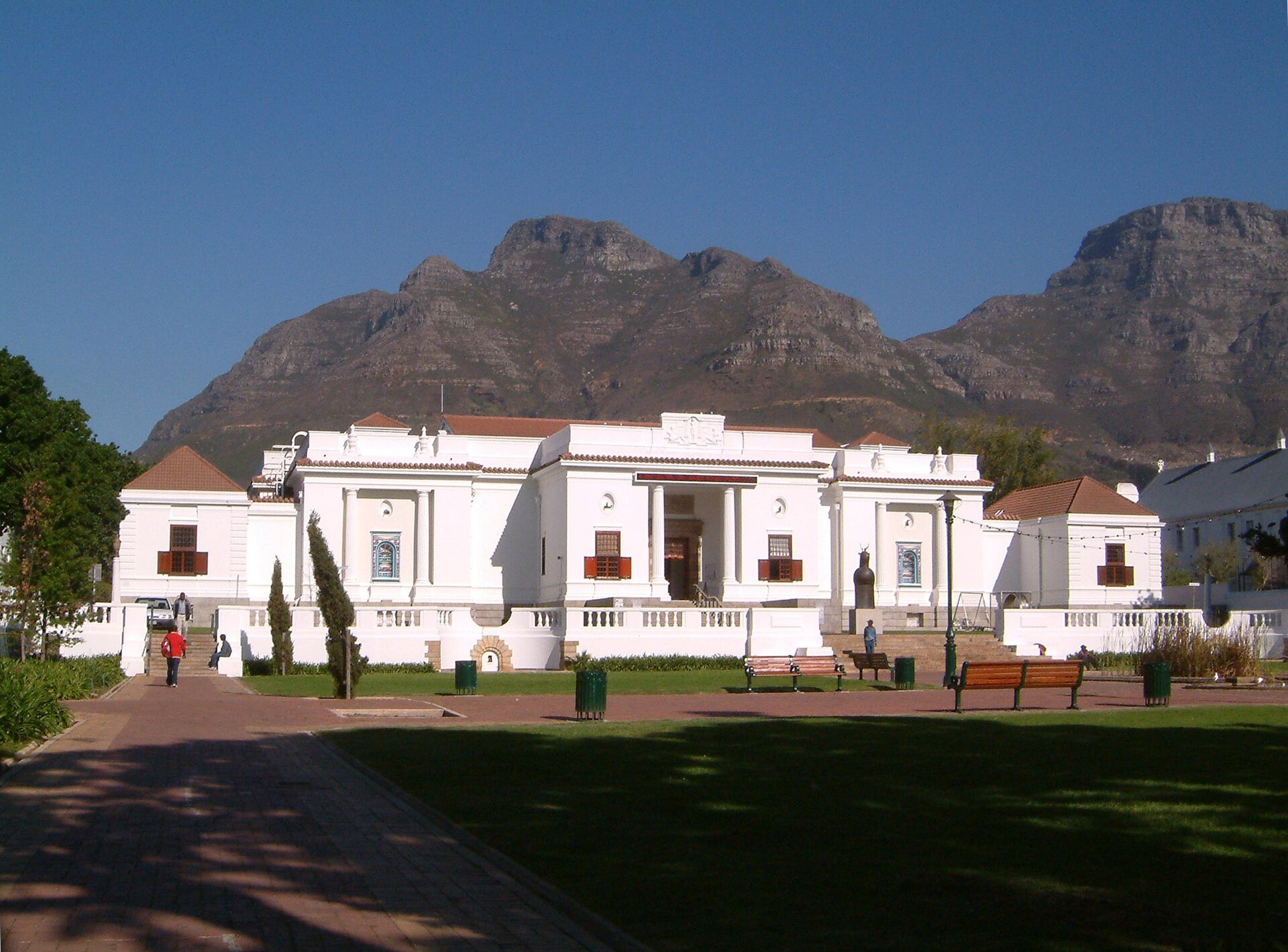
The South African National Gallery sits quietly in the heart of Cape Town, within the historic Company’s Garden—a place where the past lingers in the shade of ancient oak trees and the gentle murmur of fountains. Established by Dutch settlers in the 17th century, these gardens were once practical plots growing fresh produce for ships of the Dutch East India Company. Today, they offer a rare green space in the city, a place where history feels tangible. The gallery itself arrived much later, in the late 1800s, when Cape Town had grown into a cultural hub under British rule. The building it occupies now, designed by architect Frederick McKinder and completed in 1930, carries the weight of its purpose in its architecture: tall columns, high ceilings, and a restrained neoclassical style that signals its role as more than just a museum. It was meant to be a place of significance, and it still feels that way.
Inside, the collection spans centuries, though it isn’t confined to South African art alone. European works—Dutch and Flemish masters from the 17th century, British portraitists of the Victorian era—share space with pieces that found their way here through colonial ties or later acquisitions. Some were brought by settlers, others purchased at auctions as the gallery expanded its holdings in the 20th century. But the real heart of the museum lies in its South African collection, where the country’s complex history unfolds through art. Here, colonial-era works by white artists sit alongside pieces by Black South African creators, reflecting the nation’s long and often painful journey toward self-determination.
The 20th century takes center stage in many ways, a period when South Africa was reshaped by social and political upheaval. Artists like Irma Stern captured the vibrancy of the continent and its people in bold, expressive strokes, while Gerald Sekoto, one of the first Black artists to gain recognition in a country defined by apartheid, painted scenes of everyday life in muted tones. His works depict the struggles of Black South Africans—the weight of labor, the harshness of poverty—but also moments of quiet dignity. These aren’t just paintings on a wall; they’re fragments of a story that textbooks often overlook, a reminder of how art can bear witness to history.
The gallery isn’t stuck in the past, though. It continues to grow, adding contemporary works that respond to the challenges of today. Temporary exhibitions showcase emerging artists working across mediums—painting, sculpture, installation, video—often exploring themes of identity, memory, and justice. These shows frequently spark conversations, drawing not just art lovers but anyone curious about how South Africa grapples with its legacy. The space itself plays a role in this dialogue. The building’s high windows flood the galleries with natural light, creating an atmosphere where art feels alive. The interiors are simple—white walls, wooden floors, unobtrusive displays—so the focus stays on the work.
Beyond the exhibitions, the gallery offers programs that make art accessible to everyone. Lectures, workshops, and guided tours help visitors understand the context behind the pieces, while school groups often take part in sessions that use art as a way to explore history and culture. It’s not just about looking; it’s about engaging, questioning, and learning. The gallery becomes a place where different generations and perspectives can meet, where art isn’t just admired but discussed.
Walking through the South African National Gallery is like stepping into a conversation about the country’s past and present. There’s no attempt to gloss over the difficult chapters—colonialism, apartheid, inequality—or to present a neatly packaged version of history. Instead, the collection offers something more honest: a reflection of how South Africa has changed, how it remembers, and how it moves forward. It may not house the kind of global masterpieces you’d find in the Louvre or the Met, but its strength lies in its specificity. This is art that belongs to a place, that tells a story only this country can tell.
Cape Town is a city of contrasts—wealth and poverty, old and new, natural beauty and urban grit—and the gallery fits into that landscape seamlessly. After visiting, you might wander through the Company’s Garden, where the scent of jasmine mixes with the sound of children playing, or stop at a nearby café for coffee. Or you could head toward Table Mountain, where the city sprawls below in all its complexity. But even if you only spend an hour or two inside, the gallery leaves an impression. It’s not just a museum; it’s a place where history feels immediate, where the past isn’t just remembered but still being written.