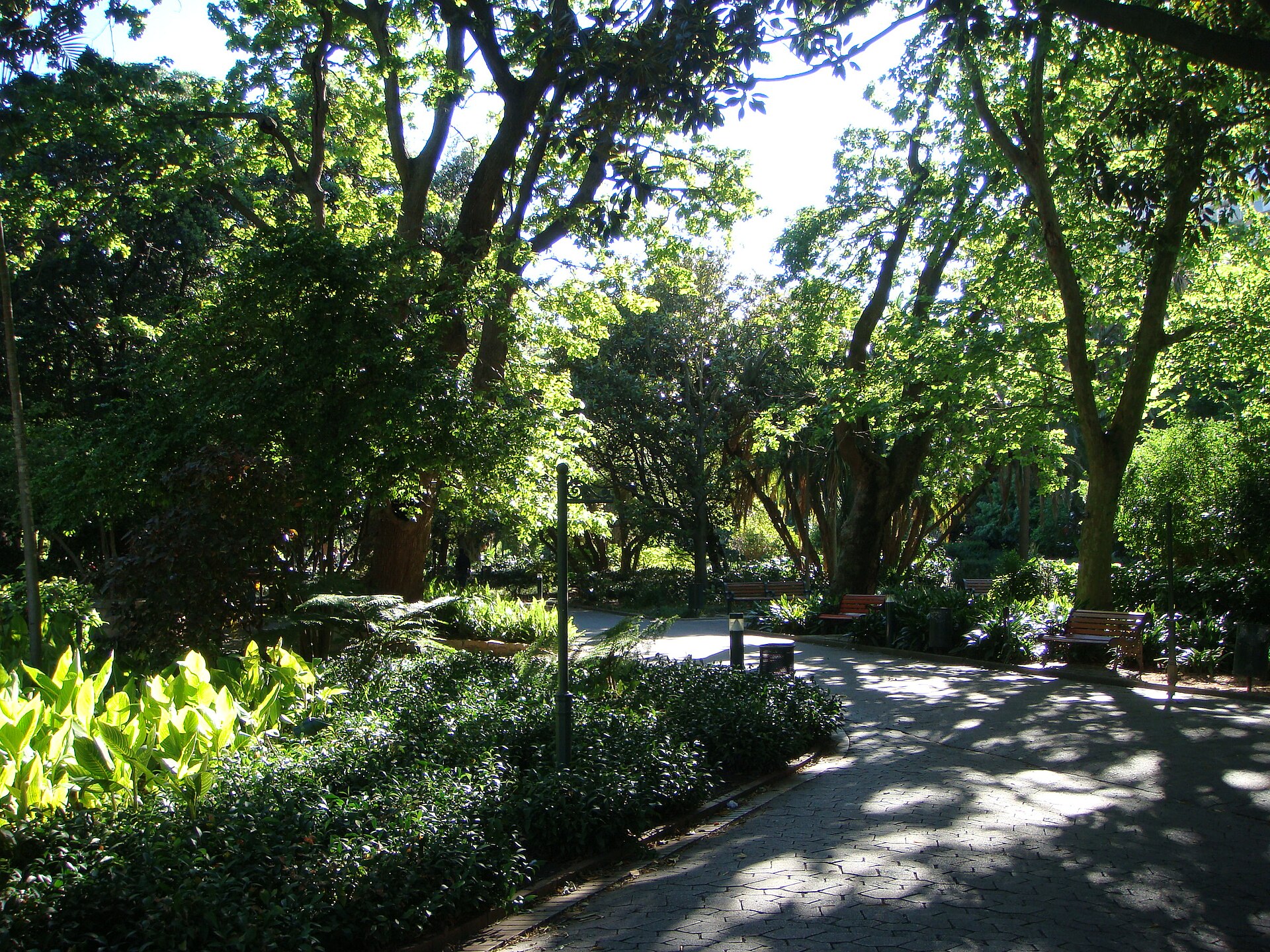
Company’s Garden is one of those rare places in Cape Town where the city’s past and present exist side by side, almost effortlessly. Established in the 1650s by Dutch settlers under the command of Jan van Riebeeck, it began as a practical solution—a vegetable patch to feed the crews of ships rounding the Cape of Good Hope. Those early colonists couldn’t have imagined that their modest garden would one day become a sprawling green heart in the middle of a bustling metropolis. Today, it’s a place where office workers eat lunch on benches, children chase after squirrels, and tourists pause to admire the ancient trees that have witnessed centuries of change.
The garden stretches between Government Avenue and Queen Victoria Street, its boundaries marked by a mix of colonial-era buildings and quiet pathways lined with oak and palm trees. There’s no grand entrance, just a sense that you’ve stepped into another time as soon as you leave the busy streets behind. The air here is different—cooler, softer, filled with the rustling of leaves and the occasional cry of a peacock. It’s a space that invites you to slow down, whether you’re here for a quick stroll or a long afternoon with a book.
What makes Company’s Garden special isn’t just its age or its beauty, but the way it reflects the layers of Cape Town’s history. The Dutch planted the first seeds, the British later shaped it into a public park, and today it belongs to everyone—students, families, street vendors selling roasted nuts, and the occasional musician playing guitar under the trees. The monuments scattered throughout the garden tell their own stories. Some, like the statue of Cecil Rhodes, are reminders of a complicated colonial legacy, while others, like the Delville Wood Memorial, honor those who fought in distant wars. Nearby, the South African Museum and the National Gallery stand as quiet guardians of the country’s cultural heritage, their grand facades blending seamlessly with the greenery.
The garden’s wildlife is just as much a part of its character as its architecture. Peacocks strut along the paths, their iridescent feathers catching the sunlight, while ducks and geese glide across the ponds. Squirrels dart between the trees, and if you’re lucky, you might spot a tortoise making its slow way across the grass. In recent years, a small population of escaped parrots has taken up residence here, their bright plumage adding a splash of color to the branches. It’s easy to forget you’re in the middle of a city when a peacock suddenly lets out a loud call or a heron stands motionless by the water’s edge.
For locals, Company’s Garden is a daily escape—a place to walk the dog, meet friends, or simply sit and watch the world go by. On weekends, it fills with families picnicking on the lawns, joggers weaving through the paths, and artists sketching the old trees. In the mornings, you might find a group doing yoga near the rose garden, while in the evenings, the occasional open-air concert or theater performance draws small crowds. The garden changes with the seasons, too. In summer, the air is thick with the scent of jasmine, and the ponds are alive with dragonflies. Winter brings a rare chill, and sometimes even frost, turning the trees into delicate sculptures.
The garden’s evolution mirrors Cape Town’s own growth. What started as a utilitarian plot of land became a symbol of colonial power, then a public space for leisure, and now a living museum of sorts. The old irrigation system, once used to water the Dutch East India Company’s crops, still runs beneath the paths, a reminder of how this place once sustained life in a fledgling settlement. Nearby, the Parliament buildings and the Company’s Garden Precinct—home to government offices and cultural institutions—show how the garden has remained central to the city’s identity, even as Cape Town has grown into a modern African metropolis.
For visitors, Company’s Garden is often the first stop in a journey through Cape Town’s history. From here, it’s a short walk to the Slave Lodge, where the stories of those brought to the Cape against their will are preserved, or to the bustling Victoria & Alfred Waterfront, where the city’s maritime past meets its present. But you don’t need to go far to feel the weight of history. The old trees, some of them over three centuries old, have seen it all—the arrival of European ships, the struggles of colonization, the birth of a new nation. Sitting on one of the benches beneath their branches, it’s easy to imagine the generations of people who have passed through this same space, each leaving their own mark.
What makes Company’s Garden endure isn’t just its beauty or its convenience, but the way it feels alive. It’s not a manicured park where every flower is in its place, nor is it a wild space untouched by human hands. Instead, it’s a place where nature and history coexist, where the past isn’t just remembered but felt. On any given day, you might see a bride having her photos taken under the oak trees, a group of schoolchildren on a field trip, or an elderly couple feeding the ducks. It’s these small, everyday moments that give the garden its soul—a reminder that even in a city as dynamic as Cape Town, there are still places where time moves a little slower.