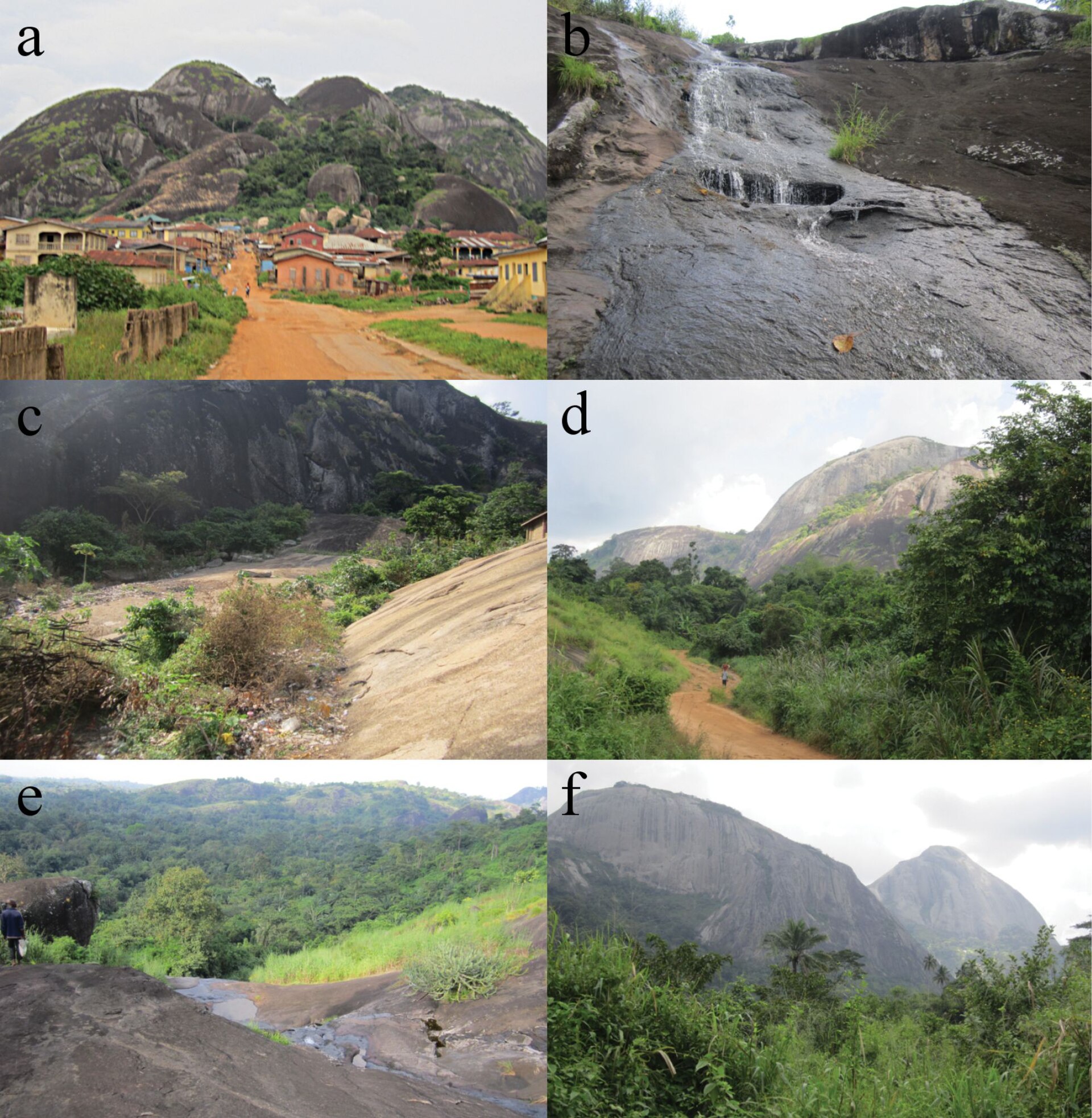
Idanre Forest is one of those rare places in Nigeria where nature and history intertwine so seamlessly that time itself seems to slow down. Tucked away near the town of Owo, this dense woodland is far more than just a patch of greenery amid the savannas and farmlands. It’s a living archive of the past, preserving echoes of ancient traditions and beliefs that still resonate with the people who call this region home. For generations, the forest has been more than just trees—it’s been a place of refuge, ritual, and reverence, with certain areas held sacred to this day.
The forest sprawls across a vast area, its edges blending into the surrounding landscape rather than standing out as a clear boundary. Thick vegetation, tangled with vines, creates an almost impenetrable barrier, shielding a world that feels entirely its own. Towering trees stretch toward the sky, their canopies so dense that sunlight barely filters through the leaves. During the rainy season, the air grows heavy with the scent of damp earth and fresh foliage, while the paths narrow into winding trails that demand careful navigation. The forest feels alive in a way that’s hard to describe—less like a place you visit and more like one you step into, where every rustle of leaves or distant birdcall carries a story.
Idanre Forest is deeply tied to the history of the Yoruba people, one of Nigeria’s largest ethnic groups. Centuries ago, these lands belonged to the Kingdom of Owo, and the forest served as both a natural border and a sacred space for important ceremonies. Some parts of the forest are still believed to be inhabited by the spirits of ancestors, and locals treat these areas with quiet respect. You might stumble upon old altars adorned with cowrie shells, clay figurines, or remnants of offerings—subtle reminders that traditions here are not relics of the past but living practices. The forest doesn’t just preserve history; it keeps it alive.
There are no grand monuments or man-made structures here, at least not in the way most travelers expect. Instead, the forest’s value lies in its unbroken connection between nature and culture. Deep within its depths, small settlements exist where people live much as they have for generations. Their homes, built from mud and palm fronds, blend into the landscape, and daily life moves at the pace of the seasons. For those accustomed to the rush of cities, it can feel disorienting at first—until you realize that this is the real draw of Idanre Forest. It offers a glimpse of Nigeria as it was long before modern roads and skyscrapers, a place where time hasn’t so much stopped as settled into its own rhythm.
Wildlife here isn’t as abundant as in Nigeria’s southern national parks, but the forest still supports its share of creatures. Monkeys swing through the trees, small antelopes dart between the undergrowth, and birds fill the air with their calls, especially at dawn and dusk. During the rainy season, frogs and insects join the chorus, their sounds weaving together into a symphony that feels both ancient and immediate. For nature lovers, the forest is a quiet revelation—a chance to observe wildlife in its most unguarded state, far from the noise of human activity.
Visiting Idanre Forest isn’t like a typical sightseeing trip. There are no signs, no guided tours, and no neatly marked paths. Exploring it requires a bit of preparation: sturdy shoes, protection from insects, and, most importantly, an openness to local customs. The best way to experience the forest is with a guide—someone from the area who knows its secrets and can explain the significance of what you’re seeing. Without one, it’s easy to lose your way, as the trails aren’t always obvious, and some parts of the forest are nearly impassable. A guide doesn’t just keep you from getting lost; they help you understand why this place matters.
The forest’s atmosphere shifts with the seasons. In the dry months, when the leaves thin and the ground is carpeted with fallen foliage, the forest feels more open but loses some of its mystery. Come the rainy season, though, it transforms. Everything turns lush and green, the air thick with moisture, and the sounds of life grow louder. This is when the forest feels most alive, and walking through it becomes an adventure in the truest sense. The paths grow slick, the undergrowth denser, and every step feels like a discovery.
Idanre Forest isn’t a place you can fully appreciate in a single visit. To understand it, you need to spend time here—hours, if not days—and even then, you might leave with more questions than answers. There are no crowds, no souvenir stands, no cafes with Wi-Fi. Instead, there’s silence, broken only by the sounds of the forest itself, and the strange, lingering sense that you’ve stepped into another era. Some might find it uneventful, but for those who seek something deeper than postcard-perfect scenery, it’s a place that stays with you long after you’ve left.
In recent years, the forest has started to draw attention from travelers curious about Nigeria’s cultural and historical roots. Yet it remains largely unknown compared to the country’s more famous landmarks. That might be for the best. Idanre Forest retains its untouched quality precisely because it hasn’t become a tourist hotspot. Here, you can still feel like an explorer, stepping into a world where time moves to its own quiet beat. It’s not a place for those who want everything neatly explained or conveniently packaged. But for those willing to listen, it offers something far more valuable: a connection to the past that feels as real as the earth beneath your feet.