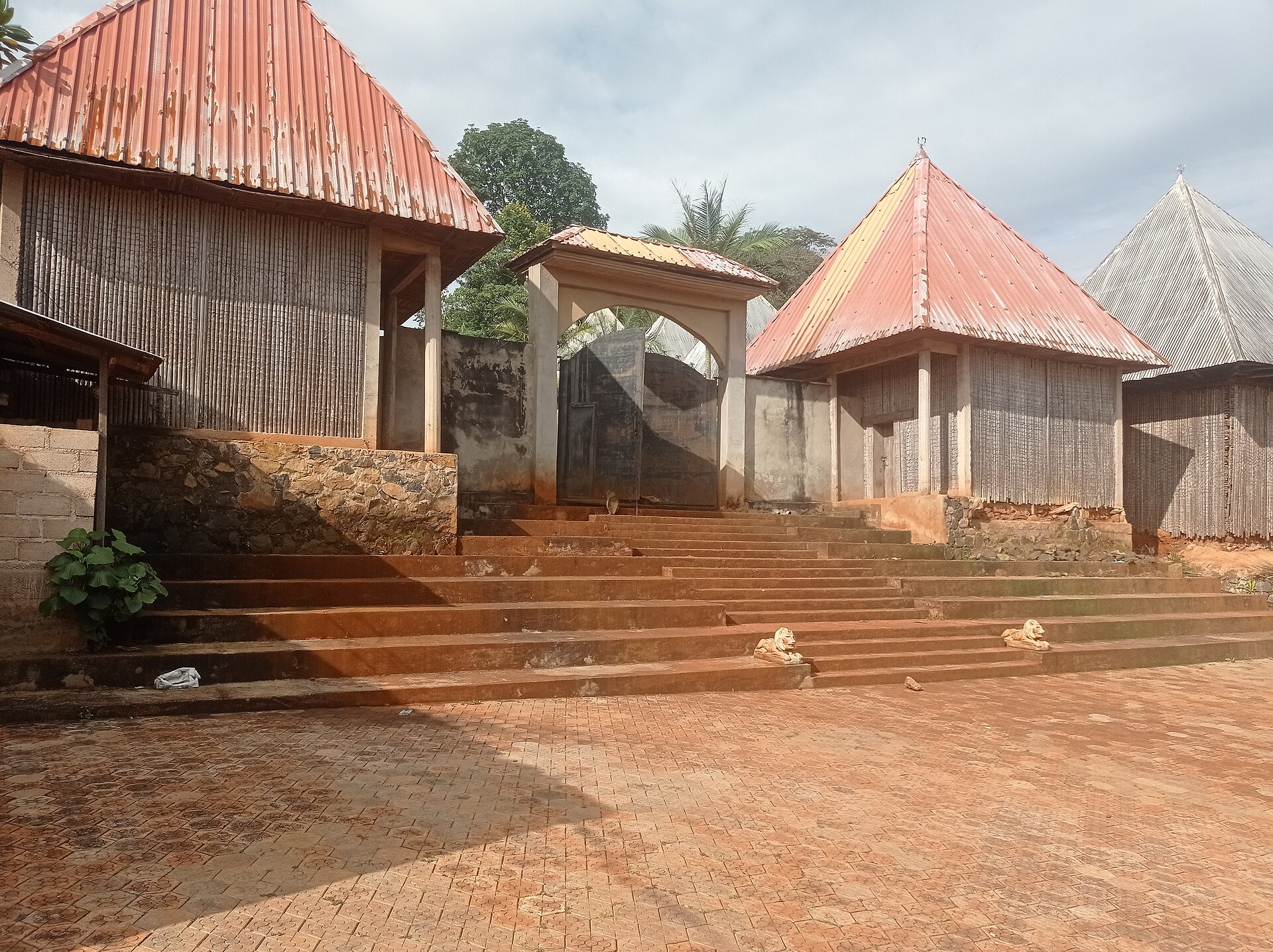
Photo: MOUNKAMBOU LAURENT BRICE, CC BY-SA 4.0
Mungo Hotel
out of 5 0 ratingsMungo Hotel in Kumba isn’t the kind of place that dazzles with luxury or polished perfection. Instead, it lingers in memory for something far more enduring—its unfiltered authenticity. Tucked at the crossroads of southwestern Cameroon, where rolling hills dissolve into dense forests and life moves to the rhythm of nature and local customs, the hotel feels like a quiet witness to the region’s pulse. There are no crowds of tourists here, and that’s precisely the point. Mungo remains a place for those who arrive with purpose—whether for business, curiosity, or simply the chance to experience a side of Cameroon that exists beyond the usual travel routes.
The building itself is modest, yet its architecture carries the weight of history. The two-story structure, with its wide verandas and tiled roof, echoes the colonial era, when Kumba served as a vital trading hub linking the coast to the country’s interior. The design doesn’t demand attention, but the details reveal themselves to those who look closely: sturdy wooden doors, intricately carved railings, and high ceilings designed to temper the tropical heat. Inside, the simplicity is deliberate—functional, uncluttered, and comfortable in a way that feels entirely natural to the region.
Kumba is an unusual city, shaped by layers of time. It began as a small settlement of the Bakweri people, but its growth accelerated in the early 20th century with the arrival of European traders and missionaries. Today, it’s a bustling center of southwestern Cameroon, where tradition and modernity coexist without fanfare. There are no grand monuments here, just the hum of daily life: markets overflowing with cassava, bananas, and locally woven fabrics; streets filled with motorbikes and the occasional car; and people who greet strangers with easy warmth. Mungo Hotel fits seamlessly into this landscape, not as a separate entity but as a natural extension of the city itself.
The rooms at Mungo don’t follow the standard hotel template. There are no air conditioners, but the high ceilings and large windows create a natural airflow, while ceiling fans do their work without fuss. The furnishings are simple—wooden beds draped with mosquito nets, small tables, and in some rooms, vintage mirrors in carved frames or tiled floors that hint at the building’s many renovations over the years. The bathrooms are basic but clean, with hot water that arrives on its own schedule, dictated by the realities of local infrastructure.
Breakfast at Mungo is an experience in itself. Served in a cozy dining room on the ground floor, it brings together a mix of guests—local businesspeople, visiting officials, and the occasional traveler drawn to the region’s offbeat charm. The food is hearty and straightforward: omelets seasoned with local spices, fresh bread, fruit from nearby plantations, and strong coffee or tea. Conversations flow in English, French, and Pidgin, the creole language that bridges communication here. The atmosphere is relaxed, as if you’ve joined a gathering of old friends rather than a hotel meal.
Evenings at Mungo are quiet. After sunset, the city settles into a slower pace, punctuated only by the distant hum of a motorbike or voices drifting from the street. On the veranda, guests might sip a local beer or palm wine, watching as the lights in neighboring houses flicker out one by one. Sometimes, conversations turn to practical matters—the state of the roads, the latest news, or the challenges of daily life. More often, though, people sit in comfortable silence, soaking in the cool air and the rare sense of stillness that comes from being in a place where time moves differently.
Mungo Hotel isn’t for those seeking luxury or entertainment. It’s for travelers who value authenticity and are willing to embrace a place on its own terms. There’s no pool, no fitness center, no gourmet restaurant—just the quiet rhythm of a city that exists for its own sake, not for tourists. What it offers instead is something far more meaningful: the chance to step into the flow of local life, even if only briefly. For some, that might feel like a compromise. For others, it’s the whole point.
Kumba and its surroundings remain largely untouched by mass tourism, and that’s part of their appeal. Here, you can wander through markets where vendors sell cassava, plantains, and spices; stop at a roadside stall for fufu and peanut sauce; or simply stroll the streets, watching the ebb and flow of daily life. Nearby Bakweri villages still hold fast to traditional customs, while the surrounding forests teem with rare birds and monkeys. Mungo Hotel, centrally located, serves as a perfect base for exploring this unassuming yet captivating corner of Cameroon.
In recent years, Cameroon has begun to attract travelers seeking new destinations off the beaten path. Kumba remains one of those places that hasn’t yet been swept up in the tide, and those who make the journey rarely regret it. Mungo Hotel isn’t just a place to stay—it’s a reflection of the city itself: unpretentious, welcoming, and quietly unforgettable. There’s nothing excessive here, just the raw, unfiltered essence of a place that invites you to see the world as it truly is.
Day around this place
Where else to go on the same day
Building the day…
Where it is
4.97556, 9.93472