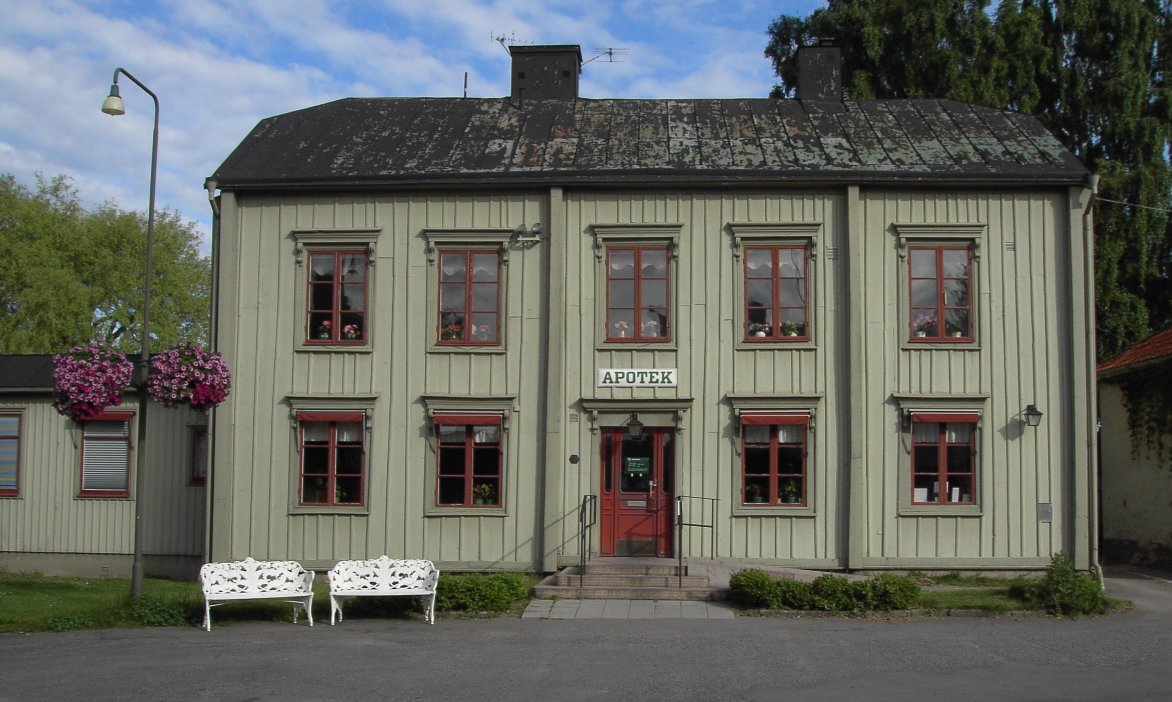
Vadstena is a town where time seems to have settled into a quiet rhythm, and its town hall stands as one of those rare places where the past feels almost tangible. Built in the early fifteenth century, the building occupies a central spot on the main square, a silent witness to centuries of change—wars, religious reforms, shifting powers. It doesn’t dominate the skyline with grand proportions, but its modest stonework and steeply pitched roof carry the unmistakable mark of medieval Sweden, where practicality and simplicity shaped architecture. Though the hall has been altered over the years, it retains the essence of an era when Vadstena was a vital hub for trade and faith, its streets alive with merchants, monks, and pilgrims.
The architecture of the town hall is a story told in stone. Originally, it served not just as a seat of local government but also as a warehouse, a necessity for a town positioned along key trade routes between the north and the rest of Europe. The facade, built from gray limestone, appears austere at first glance, yet closer inspection reveals traces of its former significance: narrow arched windows, heavy doors that once sealed the building at night, and the town’s coat of arms above the entrance. Inside, vaulted ceilings and thick walls hint at the weight of decisions made within—justice administered, deals struck, lives shaped by the rhythms of medieval civic life.
Today, the town hall remains a working part of Vadstena. Municipal offices still operate here, and on a weekday, you might step inside to find modern bureaucracy unfolding within historic walls. Occasionally, the building hosts small exhibitions or cultural events, but more often, it simply exists as it always has—a fixture of daily life. Locals pass by without a second thought, while visitors pause to photograph the facade or linger on the square, imagining the bustle of five hundred years ago.
Vadstena’s choice of location for its town hall was no accident. The town grew around the Brigittine monastery, founded in the fourteenth century by Saint Bridget, and for centuries, it remained a spiritual center of Sweden. The town hall stood at the crossroads of trade, where merchants from Stockholm, Gothenburg, and even overseas gathered to negotiate contracts, hear royal decrees, and settle disputes. In those days, the building was more than just an administrative center—it embodied the authority and order that kept the town functioning.
Over time, Vadstena’s role as a commercial hub faded, but the town hall remained, a quiet reminder of its former prominence. Today, the town is better known for its cobblestone streets, wooden houses, and views of Lake Vättern. Yet history hasn’t vanished here—it’s woven into the landscape. The town hall, like the monastery and the old lanes, isn’t a relic behind glass but a living part of the town, evolving while still rooted in the past.
Inside, the town hall lacks the opulence of royal palaces. Instead, you’ll find wooden beams, stone staircases, and archival documents—unassuming but telling details. This simplicity is what makes it special. It doesn’t demand admiration; it simply exists, a matter-of-fact piece of history that needs no embellishment. Perhaps that’s why it fits so naturally into Vadstena’s streetscape—it doesn’t resist the present but coexists with it.
On a summer evening, when the sun dips low over the lake and shadows stretch across the square, the town hall takes on a particularly striking presence. The stone walls glow warmly, and the windows catch the last light. It’s easy to picture the scene centuries ago: medieval fairs, the hum of commerce, the laughter of townspeople. Today, the square is quiet, with only the occasional cyclist or pair of tourists passing through, but the sense of history lingers.
Vadstena is a place where the past isn’t locked away in museums but lives alongside you. The town hall is just one piece of that, yet it offers a way to understand how everything here fits together. It doesn’t clamor for attention or insist on its importance, but if you pause and listen, the walls seem to whisper stories of what once was. And in that quiet persistence, its true value lies.