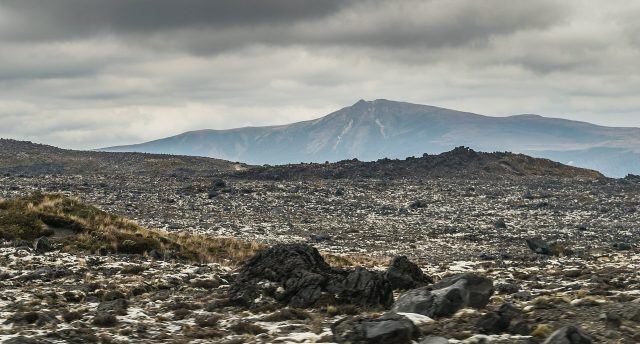
Ngāongaha stands quietly above Turangi, a mountain shaped by time and the slow, deep forces of the earth. Its slopes tell two stories at once: one of ancient volcanic activity that carved the landscape, and another of the people who have walked here for generations. There’s no fanfare at the trailhead, no crowds pressing forward—just the steady rhythm of footsteps on soil that has settled over centuries. For the local Māori, particularly the Ngāti Turangitukua iwi, the mountain is more than a landmark. It is woven into whakapapa, the layers of ancestry and connection, appearing in stories passed down through oral tradition. Even now, it remains a place where certain rituals are observed, where the gathering of medicinal plants is done with care, and where the past feels close enough to touch.
Geologically, Ngāongaha is what remains of a long-dormant volcano, part of the same system that shaped the Central Plateau of the North Island. The violence of its formation has softened with time, leaving behind gentle slopes covered in native bush and tussock grass. Yet there’s still a quiet power in the way the land holds itself—no sharp peaks, no dramatic cliffs, just a steady presence. On clear days, the summit offers a view that stretches far beyond the immediate surroundings. Lake Taupō lies below, its surface shifting between silver and deep blue depending on the light, while the distant peaks of the Tongariro volcanic complex rise like sentinels in the haze. From up here, the world feels vast and still, as if the only movement is the wind tracing the contours of the land.
The walk to the top is straightforward but not effortless. The track begins at the base, winding through beech forest where the air is cool and damp, and the ground is soft underfoot with years of fallen leaves. Birds call from the canopy—tūī with their liquid songs, pīwakawaka flitting between branches—and the deeper you go, the more the forest seems to close in around you. As the path climbs, the trees thin out, giving way to open patches of scrub and moss. By the time you reach the summit, the only company you’re likely to have is the wind and the occasional hiker who, like you, has come for the quiet. There are no viewing platforms, no handrails, just the open sky and the sense of standing on ground that has been here far longer than any of us.
For those who pay attention to the smaller details, Ngāongaha is full of life. The mountain is home to plants found nowhere else, adapted over millennia to the local climate. Delicate ferns unfurl in the damp shade, while hardy tussocks cling to the exposed ridges. Birdlife is abundant, though often heard before it’s seen. The tūī’s song carries through the forest, while the more elusive kiwi might be glimpsed at dusk if you’re lucky. Guides sometimes speak of the moa that once roamed these slopes—giant, flightless birds that disappeared after human arrival—but no traces remain. What does linger is the sense of a landscape that has found its balance, where every plant and creature has its place.
The mountain changes with the seasons. In winter, a light dusting of snow settles on the higher slopes, turning the tracks slippery and the air sharp. Summer brings warmer days, drawing walkers and photographers who come for the contrast between the rugged volcanic terrain and the softer curves of the surrounding hills. Early mornings are particularly beautiful, when mist still clings to the valleys and the first light catches the summit in shades of pink and gold. Some camp overnight at the base, waking before dawn to make the climb in time for sunrise. There are no official campsites, no facilities—just the understanding that you’re a guest here, and that the land will remain long after you’ve left.
Long before European settlers arrived, Ngāongaha was part of the landscape that sustained local iwi. Its slopes provided food, medicine, and shelter, while its presence served as a navigational marker for those traveling across the region. Unlike many other parts of New Zealand, the mountain was never heavily developed or mined, allowing it to retain much of its original character. Today, it sits within a protected area, though not formally part of a national park. Access is open, but there’s an unspoken agreement among those who visit: leave no trace, respect the whenua, and understand that this place is not just scenery, but a living part of Māori culture. Occasionally, traditional ceremonies are still held here, and visitors are asked to be mindful of their surroundings.
What makes Ngāongaha special isn’t just its views or its trails, but the way it makes you feel. There’s no rush here, no need to fill the silence with noise. The mountain doesn’t demand attention—it simply exists, and in doing so, invites you to slow down. Some come seeking a sense of connection, others for the sheer pleasure of being in a place untouched by modern clutter. Whatever the reason, the experience lingers. Perhaps it’s the way the light falls across the slopes at dusk, or the sound of the wind moving through the trees, or the quiet realization that this land has seen generations come and go. Ngāongaha doesn’t try to impress. It doesn’t need to. It has been here for thousands of years, and it will remain long after we’re gone.