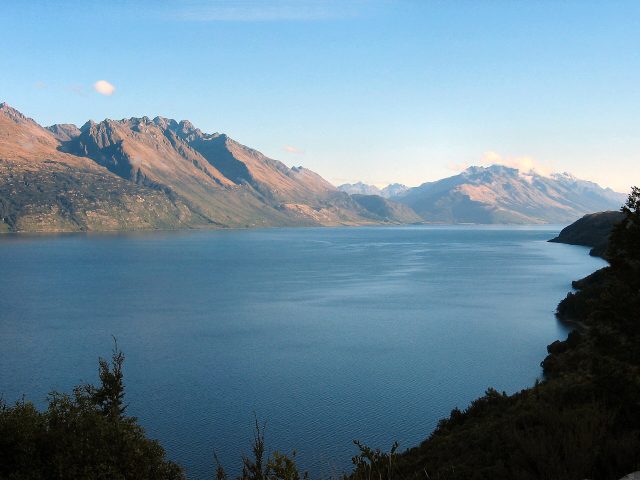
Perched on the edge of Bob’s Peak, the Skyline Gondola isn’t just a way to get above Queenstown—it’s become part of the landscape itself, as much a fixture of the town as Lake Wakatipu or the jagged silhouette of the Remarkables. The ride up is short, just a few minutes, but it’s enough to shift your perspective. Below, the town unfurls along the lakeshore, its rooftops and jetties shrinking as the gondola climbs, until all that’s left is the vast sweep of the Southern Alps stretching into the distance. It’s easy to see why Queenstown has earned its reputation as the adventure capital of the world; from this height, the scale of the place feels both intimate and overwhelming.
The gondola’s origins trace back to 1967, when a local entrepreneur, Henry van Asch, decided visitors needed a better way to take in the views. What started as a modest operation quickly proved its worth. Today, Skyline is one of New Zealand’s busiest tourist attractions, yet it never feels crowded in the way museums or city lookouts do. Perhaps that’s because the real draw isn’t the gondola itself, but what lies beyond its windows—a panorama so expansive it makes even the busiest day feel quiet.
At the top, 450 metres above the lake, the view is staggering. To the north, Coronet Peak rises, its slopes dotted with skiers in winter. To the south, the Kawarau River valley winds through the landscape, a place where gold was once pulled from the earth in the 1860s. Directly below, Queenstown looks like a model village, its streets and buildings neatly arranged along the water’s edge. On clear days, the horizon seems to stretch forever, and if you’re lucky, clouds settle over the mountain tops like a soft blanket, blurring the line between earth and sky. At dusk, the town lights flicker to life, turning the scene into something even more magical, and many visitors time their trip for that exact moment.
There are a few viewing platforms at the summit, along with a café and a restaurant, but most people don’t come for the food. The real appeal is the chance to stand at the railing, breathing in the crisp mountain air, or to wander the short trails that lead to quieter vantage points. One of these paths ends at a small memorial honouring the early settlers who carved out a life in this rugged terrain. It’s a humble reminder that not so long ago, this place was untamed wilderness, home only to those willing to take the risk.
For those who want more than just the view, Skyline offers a few ways to get the blood pumping. The most popular is the mountain bike descent, a guided ride down purpose-built trails that’s more thrilling than extreme. There’s also a zipline and, in summer, a luge track, though these are more about adding a bit of movement to the visit than anything else. Many people, though, prefer to skip the activities altogether, opting instead to sit on a bench with a coffee, watching others race down the hill.
Winter transforms the scene entirely. Snow blankets the mountains, and skiers and snowboarders weave their way down the slopes near the gondola’s base. The crowds grow, but the sense of space never really disappears—perhaps because the mountains are always there, a constant reminder of how small we are in comparison. Even in the busiest months, the air feels lighter up here, as if the altitude itself keeps things from feeling too hectic.
The gondola runs year-round, with only brief closures for maintenance. Tickets can be bought on the spot or in advance, and there’s rarely a wait unless you arrive at peak times. The price covers both the ride up and down, so you can linger as long as you like, soaking in the views. Many visitors return more than once during their stay—once in daylight to see the landscape in sharp relief, and again in the evening to watch the town glow below.
Skyline isn’t a place of grand gestures or over-the-top attractions. There are no gilded interiors or high-tech displays, just wooden decks, metal railings, and the occasional glass window in the café. But that simplicity is what makes it special. It’s a place where you’re not just looking at the scenery; you’re part of it. Maybe that’s why people keep coming back—not for something new, but to remind themselves that the world is still vast, still beautiful, and still worth pausing for.