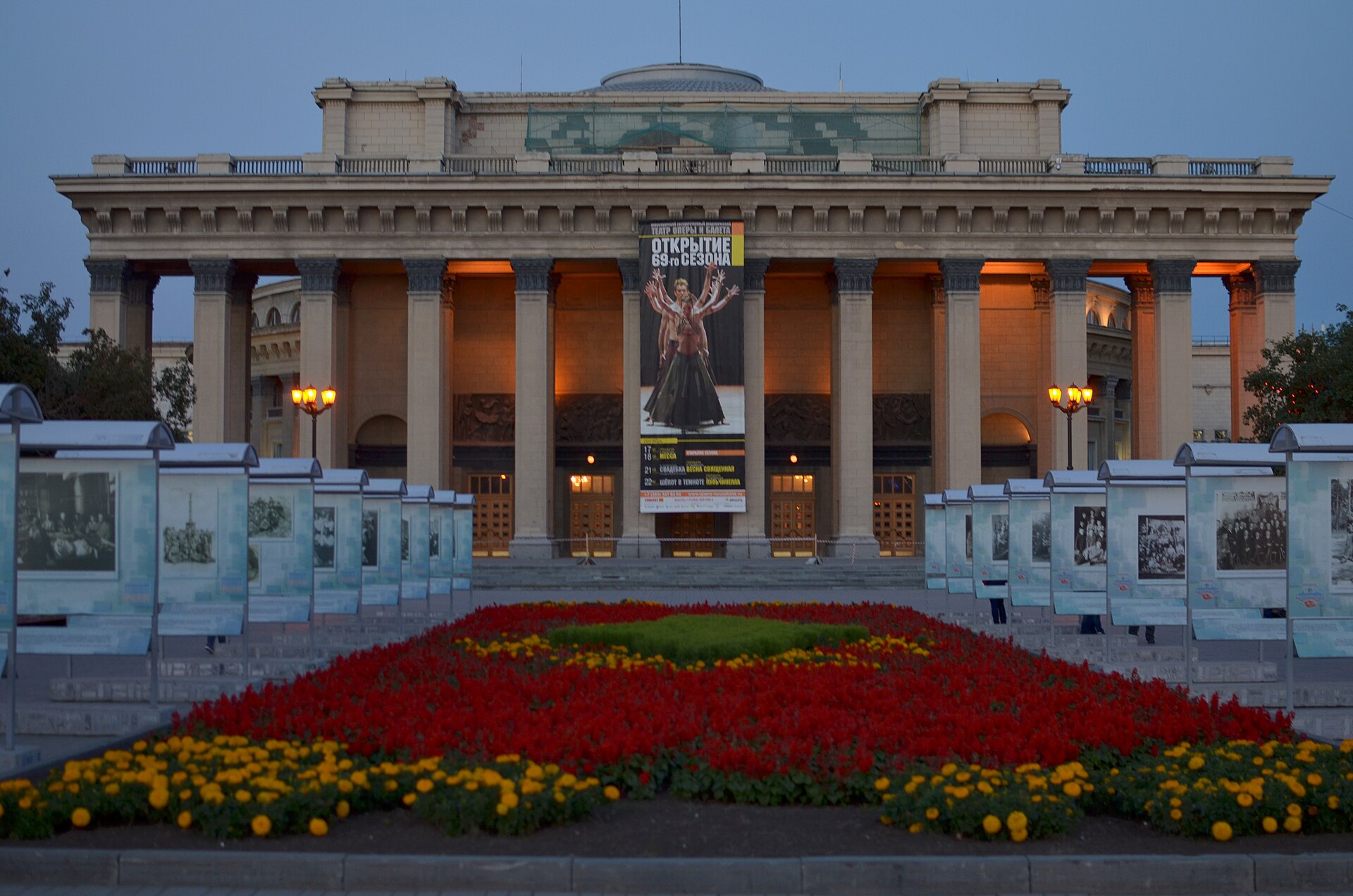
The Novosibirsk Opera and Ballet Theatre shapes the city’s identity. Built in the 1930s, its grand structure became a symbol of Siberia’s cultural life during an era of ambitious projects. The massive dome, visible from afar, stands as a reminder that art here was never just entertainment—it was part of a larger conversation about the future. Another detail draws attention almost as much as the building itself: the enormous globe in front of the main entrance.
The globe arrived later, in the 1960s, after the theatre had already become a city fixture. Novosibirsk was growing rapidly, and architects wanted to emphasize its status as a city with global significance. Made of metal and glass, the globe symbolized Siberia’s connection to the wider world. Today, it feels like a starting point—where locals and visitors meet before heading to a performance or walking through the square.
The globe isn’t just decoration. Several meters in diameter, it rests on a sturdy pedestal that matches the surrounding architecture. Inside, there was once an illuminated map of the world, creating the illusion of a floating planet. The lighting no longer works, but the globe hasn’t lost its presence. It still looks imposing, especially at dusk, when sunlight glints off its surface.
For many in Novosibirsk, the globe holds childhood memories. School groups once posed for photos here. Newlyweds would touch it together as a symbolic gesture. That tradition remains, though now people come simply to stand beside it, to feel the scale of the place. The globe has become a landmark, a point around which city-center walks often begin.
Some once criticized the globe as overly pompous, a Soviet-era relic. But attitudes changed. Today, it’s seen as part of history, a reminder that Novosibirsk has always aimed to be more than just another city on the map. The globe stands for ambitions that didn’t always succeed but left something meaningful behind.
The theatre and the square around it tell their own story. The opera house is a monument to constructivism, with touches of neoclassicism. Its dome, resembling a giant parachute, is one of the city’s most recognizable features. Together with the globe, they create an unmistakable image—no excess ornamentation, just monumentality and function.
The globe is part of the city’s mythology. Stories about it circulate. Some say walking around it three times and making a wish will make it come true. Others claim a time capsule with a message for future generations was hidden inside. These tales show how the place has taken on a life of its own.
Today, the globe is part of everyday life. People meet here. Small events take place nearby. In winter, children sled down ice slides around its base. It has become woven into the city’s fabric, inseparable from Novosibirsk’s daily rhythm. It doesn’t demand attention like Moscow’s famous landmarks—it’s just there, a quiet companion.
There’s occasional talk of restoring the globe, bringing back its original appearance. For now, those plans remain just that. Maybe that’s part of its charm. The globe continues as it is, slightly worn but still striking. Its value isn’t in perfection—it’s in being here, now, a bridge between the past and present.