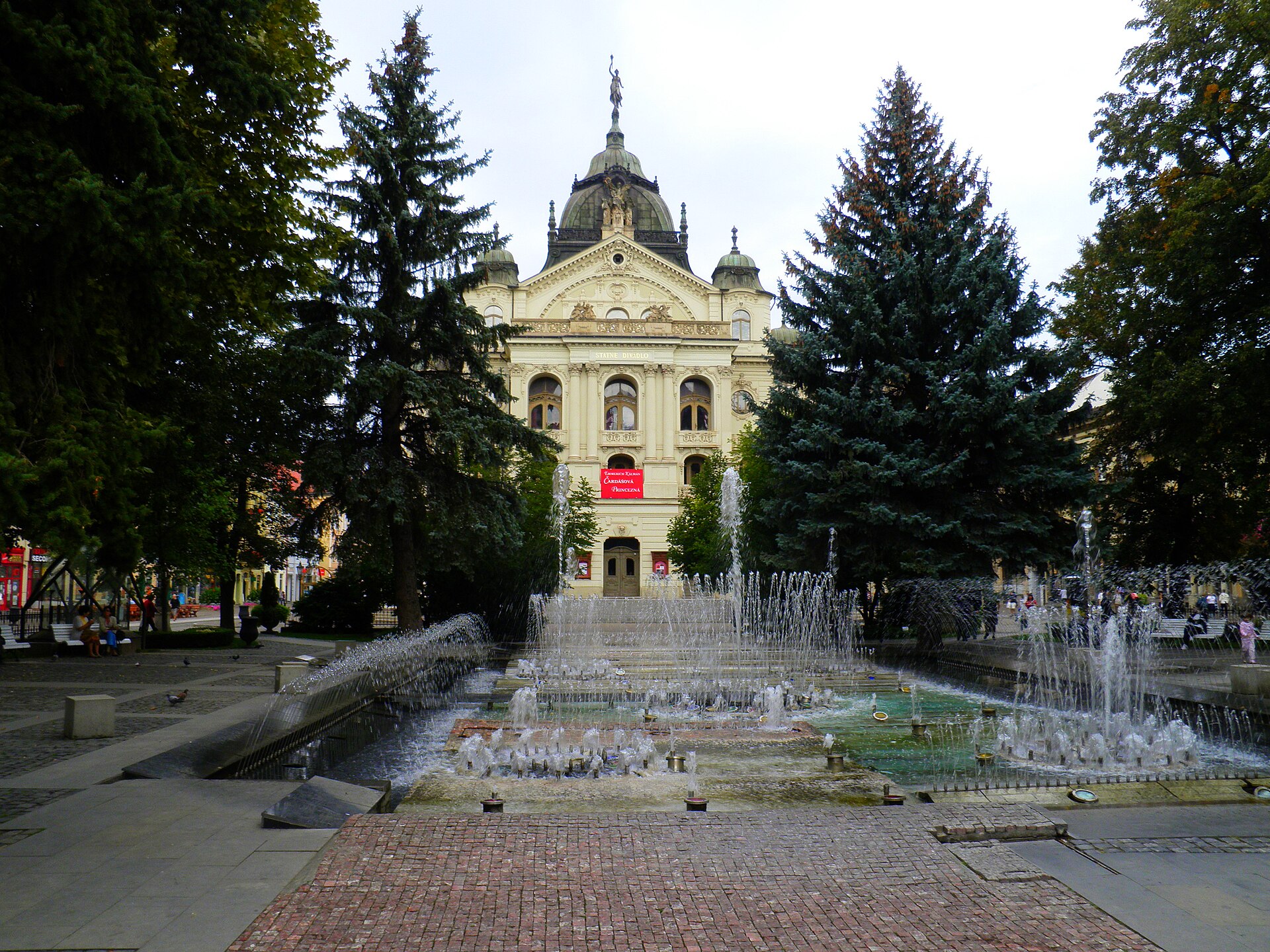
Rožňava’s main squareRožňava’s main square unfolds slowly, like a book you leaf through without hurry. There’s no rush here, no crowds of tourists or vendors shouting. Instead, the quiet hum of daily life takes over—footsteps on cobblestones, the chime of a church bell drifting from nearby. The square is framed by buildings painted in faded pastels and earthy tones, each from a different era, their stories in the details of their facades.
This town was once one of the most important mining centers in the Kingdom of Hungary. The wealth from its silver and copper mines shaped its architecture. The square shows that legacy, with Baroque and Neoclassical buildings that once belonged to merchants, craftsmen, and local nobility. The town hall stands out—a white structure with a clock and the city’s coat of arms. It anchors the square, giving it order and history.
At the center, a war memorial honors those lost in the First World War. Locals still come here on anniversaries and holidays. On ordinary days, children play near its base, and elderly men sit on benches, talking. The square feels lived-in, unhurried, as if time moves slower here.
In summer, small markets sell smoked meats, cheeses, and honey from nearby villages. Sometimes, musicians play in the open air, their accordions and violins carrying down the streets. In winter, the square is decorated with lights and a Christmas tree, but the atmosphere stays intimate.
Walk along the edges of the square, and you’ll notice details that hint at its past. Some buildings still have old signs or carved wooden doors. A few have been in the same families for generations. One houses a small café where they serve Viennese coffee and homemade pastries. Sitting there with a warm cup feels like stepping back in time.
Rožňava has never been a tourist hotspot. There are no crowds or souvenir shops. The square isn’t a museum—it’s where history and everyday life blend. Maybe that’s why it appeals to those tired of polished destinations.
If you find yourself in Rožňava, don’t rush away. Sit by the old fountain, which has stood here for centuries. Listen to the sounds—the murmur of conversations, a bicycle’s clatter, a distant dog’s bark. Watch people going about their day. It’s in these small things you’ll sense what draws people here: a place where time doesn’t dictate the rhythm.