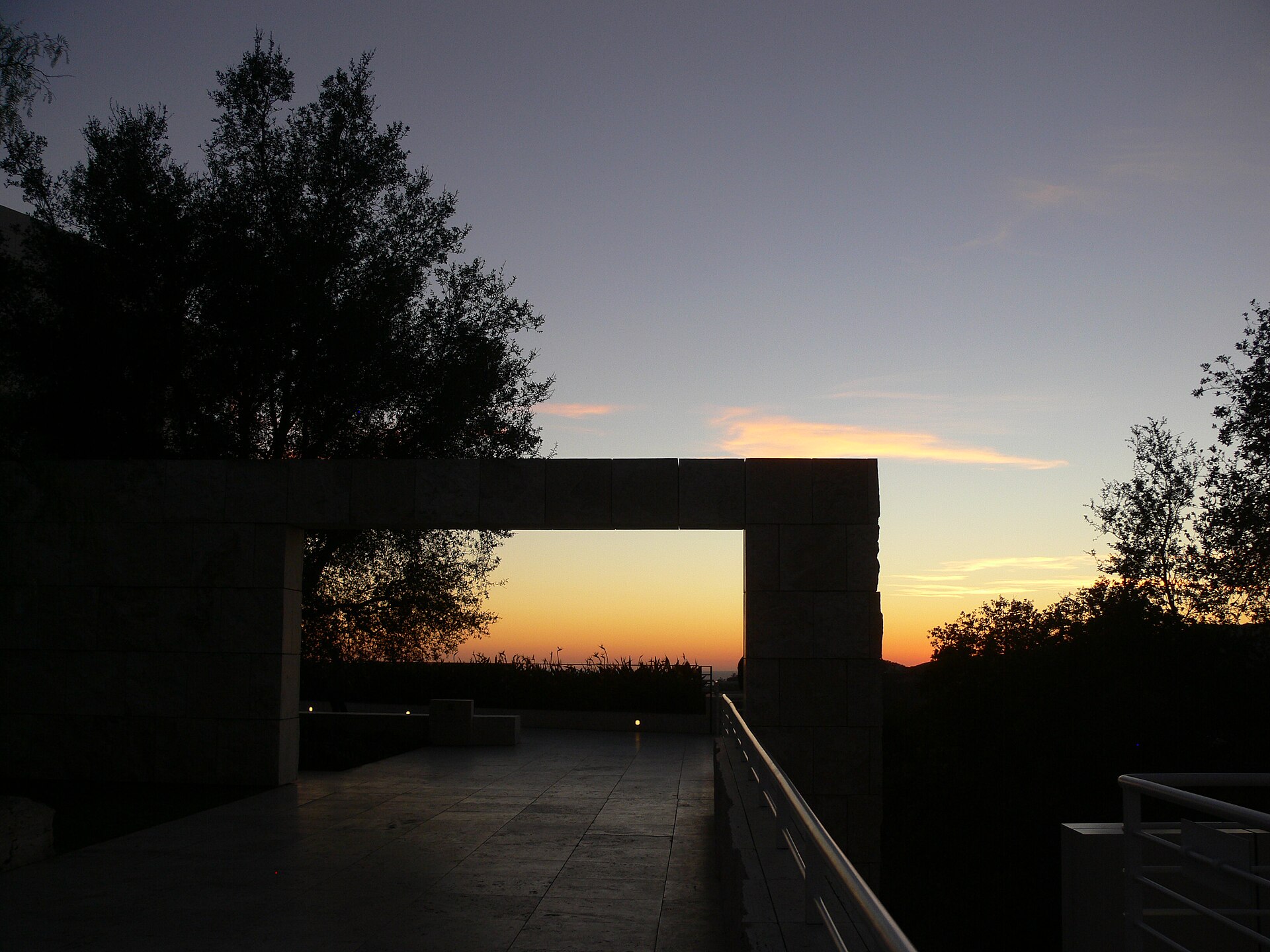
Perched on a hillside overlooking Los Angeles, the Getty Center feels less like a museum and more like a place where art, architecture, and nature have been carefully woven together. The complex rises from the landscape in a series of white stone buildings connected by terraces and gardens, their clean lines and geometric forms blending seamlessly with the surrounding hills. From here, the city sprawls below, the Pacific Ocean glints in the distance, and the Santa Monica Mountains frame the horizon. It’s the kind of place where hours can slip by unnoticed, whether you’re wandering through galleries, lingering in the gardens, or simply sitting on a bench with a view.
The architecture itself tells a story of balance—between modern design and timeless ideals, between human creation and the natural world. Designed by Richard Meier, the buildings are a study in precision, their travertine and glass surfaces catching the light in ways that make them appear almost weightless. Inside, the spaces are flooded with daylight, and the transitions between galleries and outdoor areas feel effortless. There’s no jarring contrast between the art and its setting; instead, everything exists in harmony, as if the buildings were designed to serve the works they house rather than the other way around.
The museum’s collection spans centuries, from ancient artifacts to contemporary pieces, but it’s the European masterworks that draw many visitors. Here, you’ll find paintings by Rembrandt, Van Gogh, Monet, and Rubens, displayed in a way that invites close looking. The galleries aren’t crowded with too many pieces at once, so there’s room to appreciate the details—the brushstrokes, the play of light, the expressions on faces. Beyond the permanent collection, the Getty is known for its conservation work and research. Some of the world’s leading experts in art restoration and history work here, and their findings occasionally make their way into public exhibitions or lectures.
The gardens are just as thoughtfully designed as the buildings. They don’t try to mimic untamed nature but instead present a carefully curated version of it, where every plant, path, and water feature has its place. At the heart of the garden is a central fountain, its water cascading down stone steps in a steady, soothing rhythm. The plantings include both native California species and varieties from around the world, so the gardens shift with the seasons—blooming in spring, offering shade in summer, and taking on quieter tones in winter. Even on the hottest days, there’s always a cool corner to retreat to.
The Getty Center isn’t just for art lovers. It’s a place where scholars, musicians, and curious visitors converge. The research library and study centers attract academics from across the globe, while lectures, concerts, and temporary exhibitions bring in a broader audience. There’s a café with a view of the city, where you can pause for coffee or a meal without losing sight of the landscape. The atmosphere is one of quiet focus, a contrast to the hustle of the city below.
Getting here is part of the experience. The center sits above the fray of Los Angeles traffic, and visitors take a free tram from the parking lot at the base of the hill. The short ride upward offers glimpses of the city unfolding beneath you, a preview of the views that await. Admission to the museum is free, though tickets for special exhibitions and events may require advance booking. This system keeps the crowds manageable, allowing for a more relaxed visit.
What makes the Getty Center special is the way it slows you down. There’s no rush, no pressure to see everything at once. You can spend an hour in front of a single painting, then step outside to sit in the garden and watch the light change over the hills. Or you might wander into the library, pick up a book, and lose yourself in its pages. It’s a place that encourages reflection, where the boundaries between art, nature, and architecture blur.
The Getty Center is just one part of the larger legacy of J. Paul Getty, the oil tycoon and art collector whose foundation has shaped cultural institutions around the world. In Los Angeles, there’s also the Getty Villa, dedicated to ancient art, while the foundation’s support extends to museums, libraries, and research initiatives globally. But the Center remains the most visible expression of Getty’s vision—a place where art isn’t just displayed but experienced, where beauty and intellect come together in a way that feels both grand and deeply personal.