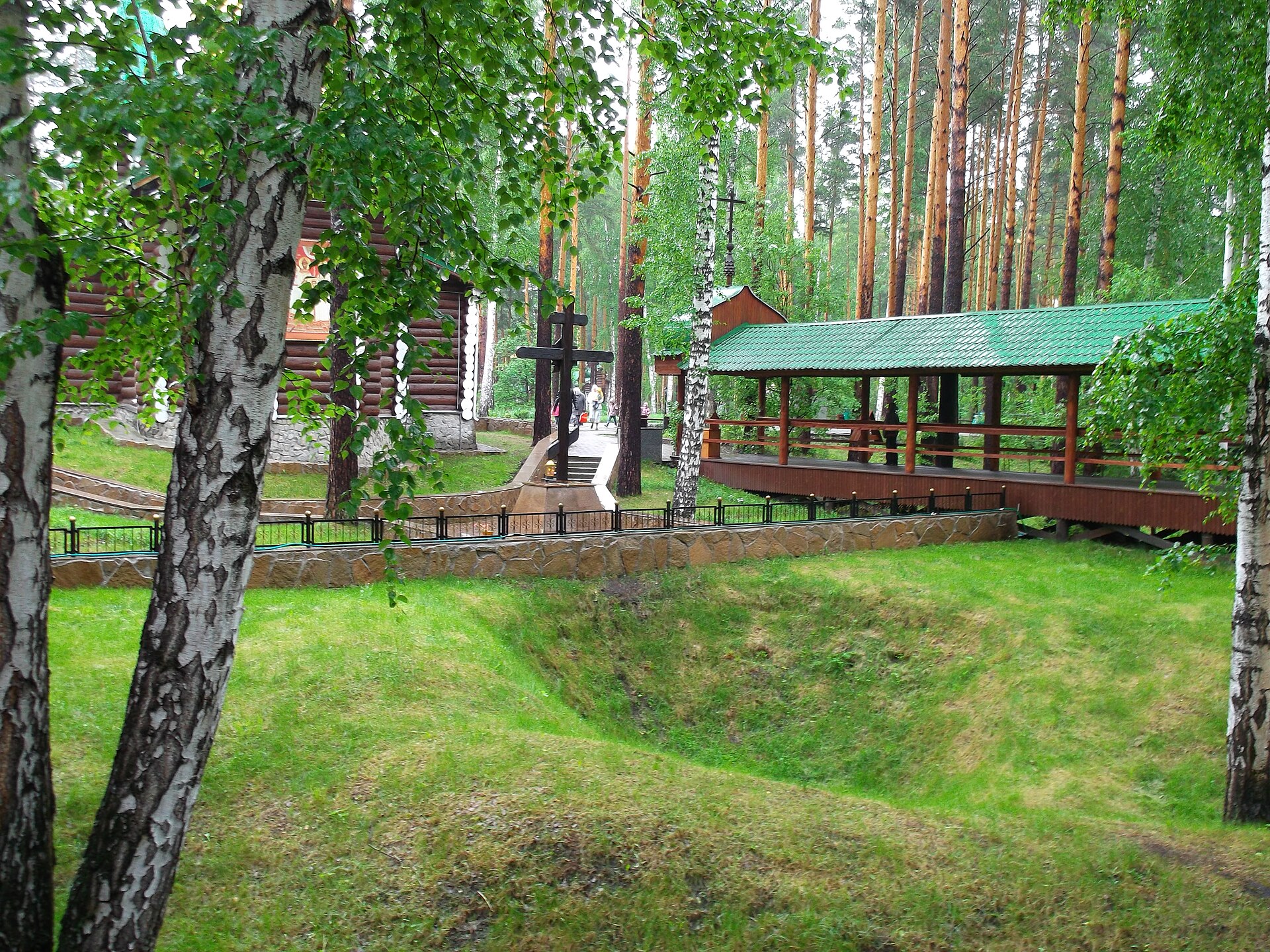
Ganina Yama
Ganina Yama lies on the outskirts of Yekaterinburg. Here, in the abandoned shafts of an old mine, the remains of Russia’s last emperor, Nicholas II, and his family were secretly buried in July 1918 after their execution in the Ipatiev House. Today, the site is home to the Monastery of the Holy Royal Passion-Bearers, where visitors come to honor the Romanovs and reflect on a painful chapter in Russian history.
The mine opened in the mid-19th century for iron ore extraction. By the early 20th century, it was abandoned and used as a dumping ground. For decades, it was forgotten—until the 1990s, when the search for the Romanov remains revealed its historical weight. What was once neglected became a place where the past could not be ignored.
After the remains were discovered in 1991 and identified, the site was restored. In 2000, the Russian Orthodox Church canonized Nicholas II and his family as martyrs, and the monastery was built where their bodies were believed to have been buried. The complex now includes seven wooden churches, one for each member of the imperial family. The churches are made of hand-hewn logs with steeply pitched roofs and carved window frames, matching the surrounding forest.
The monastery’s main church, the Cathedral of All Saints Who Shone Forth in the Russian Land, stands on a hill. Inside, an icon with a relic of the royal passion-bearers is kept, and the walls are covered with frescoes of their lives. Nearby, a well is marked by a small chapel, said to be where the remains were first disposed of. Some believe the water has healing properties, though the monastery does not confirm this.
The grounds include a museum with exhibits on the events of 1918. Photographs, documents, and personal effects from the era show the revolution, the civil war, and the monarchy’s collapse. The displays focus on the human side of the tragedy—the faith, suffering, and resolve of the Romanovs in their final days.
The atmosphere at Ganina Yama is quiet. Visitors speak softly, if at all, and the pine and spruce forest adds to the stillness. Paths wind through the trees, leading to chapels and memorial markers. On clear days, the view stretches across the landscape, encouraging contemplation.
The monastery follows Orthodox monastic life, with services held morning and evening. On feast days, the grounds fill with worshippers; at other times, only a few monks and visitors remain. Those who wish to stay longer can use the guesthouse, though most come for a few hours or a day. Summer brings the largest crowds—pilgrims, tour groups, and families. Winter brings silence, with snow muffling footsteps on the paths.
Ganina Yama is a place of reconciliation. People arrive from across Russia and beyond to honor those who perished in the revolution. The monastery does not impose a single interpretation of the past but offers space for personal reflection—prayer, quiet thought, or simply standing where history feels present.
For Yekaterinburg, Ganina Yama is part of the city’s identity. Schoolchildren visit on field trips, memorial events are held year-round, and locals often stop by to light a candle or walk through the woods. It reminds visitors that history is made of human stories—faith, loss, and the search for meaning.