Nowy Sącz’s Gallery of Art, known locally as Galeria "Sącz," is more than just a space for paintings and sculptures. It sits in a town shaped by centuries of movement—once a crossroads for merchants, later a provincial hub under the Austro-Hungarian Empire, where layers of history linger in the streets and buildings. The gallery itself occupies a stately old structure that once housed administrative offices, its high ceilings and tall windows framing light in a way that blurs the line between the art on display and the architecture itself. The building doesn’t just contain exhibitions; it’s part of the experience, a quiet witness to the town’s past meeting the present.
The collection here isn’t confined to one style or era. You’ll find everything from classical Polish works to contemporary pieces pushing boundaries, alongside photography, ceramics, and installations. What stands out is the focus on artists with ties to Małopolska—those born or working in the region. It’s a deliberate choice, reflecting Nowy Sącz’s role as a cultural crossroads. The town may be small, but its identity has always been shaped by the people passing through, and the gallery mirrors that diversity.
Temporary exhibitions rotate regularly, often exploring themes that resonate beyond the art world. Some delve into local history, like the traditions of the Lemko people, whose culture once thrived in these mountains. Others tackle broader social issues, creating a space where art becomes a lens for understanding the region’s past and present. These shows don’t just hang on the walls; they invite conversation, offering visitors a way to connect with the stories that have shaped this corner of Poland.
The gallery isn’t just for looking. Workshops, lectures, and artist talks bring the space to life, turning it into a place where creativity isn’t just observed but practiced. Children’s programs let young visitors try their hand at different mediums, while adults might find themselves sketching in a corner or listening to a debate about contemporary art. Sometimes the halls fill with music or performance art, making the gallery feel less like a museum and more like a living room for ideas.
Nowy Sącz moves at its own pace, nestled in a valley where the Dunajec River winds between the Beskid Mountains. The gallery fits seamlessly into this rhythm. There’s no rush here, no crowds jostling for a view. You can linger in front of a painting, wander the halls without a set path, or simply sit in the café on the ground floor, watching the town’s daily life unfold. The lack of tourist hordes makes it easier to absorb the atmosphere—something rare in an age where so many cultural spaces feel like they’re designed for quick consumption.
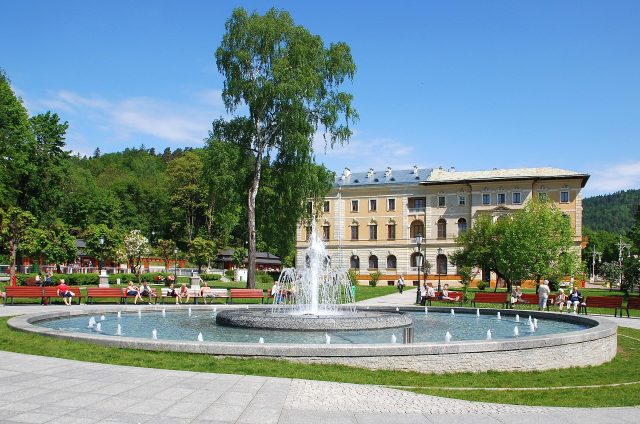
The building itself is worth a closer look. Built in the late 19th century, when Nowy Sącz was expanding as an administrative and commercial center, its architecture blends Neo-Renaissance and Neoclassical elements—styles chosen to project the town’s growing importance. The façade is symmetrical and understated, with decorative details that hint at its past without overwhelming the eye. Inside, original features like plasterwork, wooden paneling, and old doors remain, adding layers to the experience. It’s the kind of place where you half-expect to hear the echo of footsteps from another era.
What makes Galeria "Sącz" special isn’t just the art or the building, but the people who fill it. The café on the ground floor has become an unofficial meeting spot—artists discussing projects, students working on laptops, retirees flipping through exhibition catalogs over coffee. The gallery feels less like an institution and more like a shared space, where creativity seeps into everyday life. It’s the kind of place where you might strike up a conversation with a stranger or leave with a new perspective on something you thought you already knew.
For visitors spending a few days in Nowy Sącz, the gallery offers a quiet introduction to the town. After wandering its halls, you could stroll through the old center, where medieval streets lead to a market square anchored by a historic town hall. Or head toward the river, where the mountains rise in the distance, visible from almost anywhere in town. The gallery doesn’t try to tell you everything about Nowy Sącz; instead, it gives you a starting point, a way to see the town through its art, its history, and the people who call it home.
In a country where small towns often struggle to hold onto their identity, Galeria "Sącz" shows how culture can be a bridge between past and present. It doesn’t compete with the grand museums of Kraków or Warsaw, nor does it try to. Instead, it carves out its own role—one that’s rooted in the region’s stories, open to dialogue, and unafraid to blur the line between observer and participant. That, perhaps, is what makes it feel so alive.