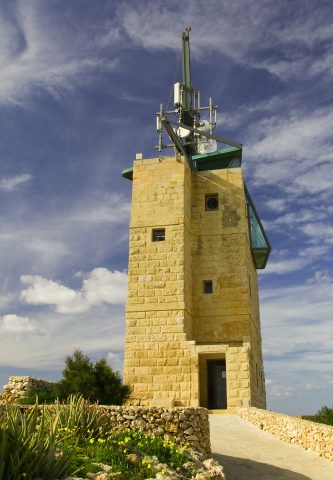
Nadur Fort sits on a low hill along Malta’s eastern coast, overlooking the village and the sea beyond. Built in the early eighteenth century, it was part of the Knights of St. John’s efforts to strengthen the island’s defenses against maritime threats. At the time, Malta held strategic importance in the Mediterranean, and forts like this one served both as military strongholds and symbols of the Order’s authority.
The architecture follows the typical style of Maltese fortifications from that era—thick stone walls, low bastions, and narrow gun embrasures designed for artillery fire. Unlike the more famous forts in Valletta or Vittoriosa, Nadur is modest in size, but its position made it a key part of the island’s defensive network. From its walls, the approaches to the coastline were clearly visible, and its guns could support neighboring fortifications if needed.
Today, little remains of its military purpose beyond the walls and a few cannons mounted on the bastions. The interior is mostly empty, with grass-covered platforms and the ruins of powder magazines where ammunition was once stored. This emptiness gives the place a distinct atmosphere, making it easy to imagine soldiers keeping watch for enemy ships on the horizon or the echo of cannon fire rolling across the water.
Nadur Fort isn’t a typical tourist attraction. Few guided groups visit, and even locals rarely come here. Most who do are history enthusiasts, photographers, or those simply looking for a quiet spot with a good view. There are no cafes, souvenir shops, or signs—just a narrow path leading up from the village and the sound of waves below.
The village of Nadur itself is far removed from Malta’s busy resorts. It’s a quiet place with winding streets, old houses, and small churches, where life moves at an unhurried pace. Summers are hot and dry, winters windy—typical weather for this part of the island. The fort seems to preserve the memory of a time when Malta was less a holiday destination and more a fortified outpost in the middle of the sea.
If you climb the walls near sunset, the view is striking—the sun dips below the horizon, painting the sky in shades of orange and pink. The sea appears unusually calm, and the air carries the scent of salt and dry grass. In moments like these, it’s clear why the Knights chose this spot. There’s a sense of connection to the past, not lost but suspended in the stone and silence.
The fort doesn’t offer its history through plaques or audio guides. But if you look closely, details reveal its story—the walls pockmarked by cannon fire, the scars left by cannonballs on the bastions, the narrow staircases leading to the upper platforms. Every stone holds traces of the past, subtle but present for those who take the time to notice.
In recent years, there have been efforts to preserve the fort—clearing debris, reinforcing walls to prevent further decay. The work is done carefully, ensuring the place retains its character. There’s talk of adding informational displays or a small museum someday, but for now, Nadur Fort remains as it always has—a quiet witness to history, open to those willing to listen.