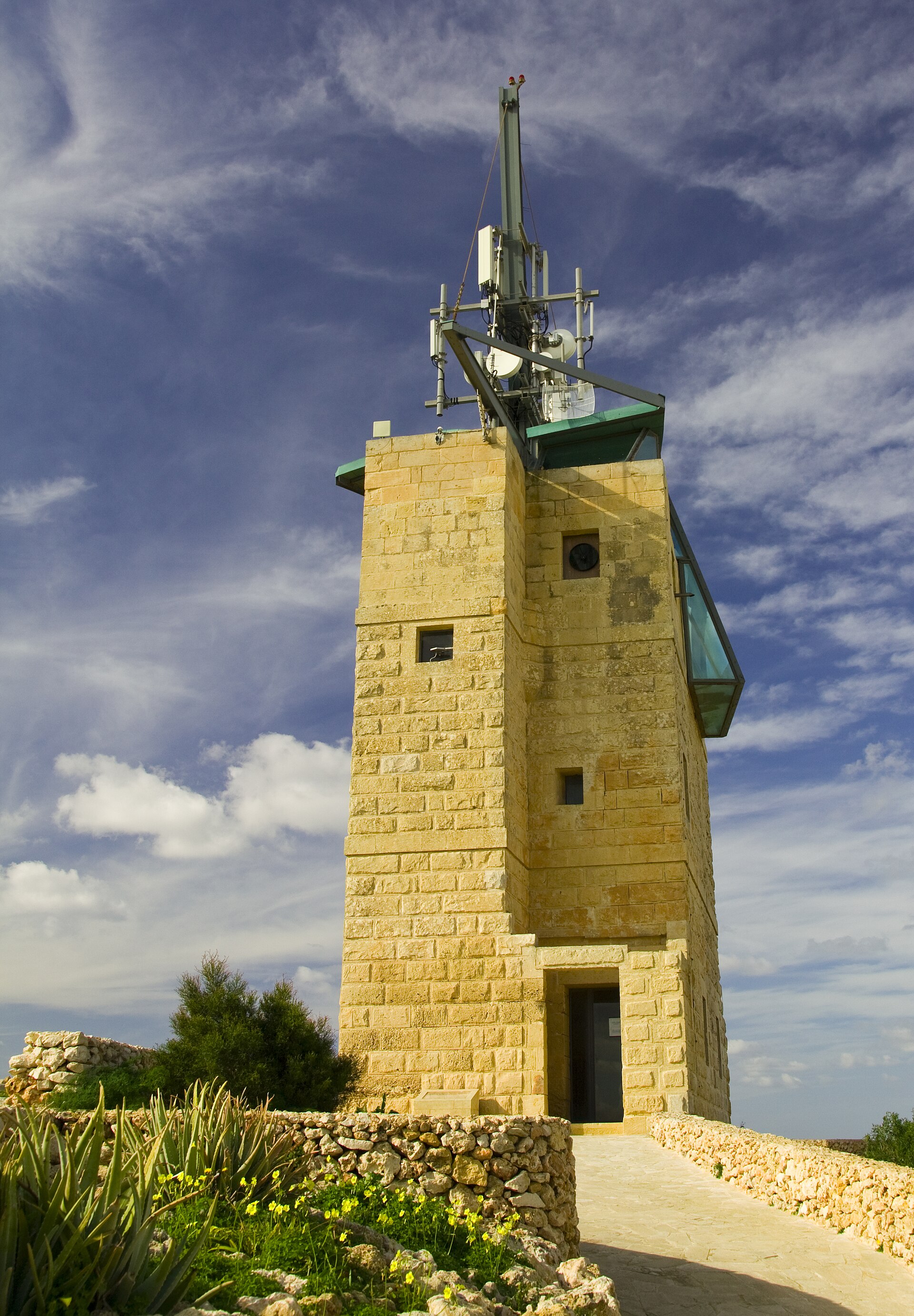
Ta’ Kenuna isn’t just another viewpoint on Malta—it’s where the island reveals itself in all its raw, unfiltered beauty. Perched on the edge of Nadur, a quiet town on the northeastern coast, this spot feels far removed from the usual tourist trails. Life here moves at its own pace, and visitors are few. From this height, the jagged coastline unfolds below, a mix of hidden coves and rocky headlands, while on clear days, the distant outline of Gozo shimmers on the horizon. This isn’t a place for staged photos or quick selfies. It’s where you come to feel the weight of the Mediterranean, the wind and waves that have shaped these shores for centuries.
The viewpoint itself is unassuming. A handful of stone benches, carved directly into the limestone, offer a place to sit, while a low wall marks the edge—though it’s best not to lean too far over. The drop is steep. Locals call this spot the "window to the sea," and the name fits. On one side, the endless blue stretches out, while on the other, sheer cliffs rise, their surfaces dotted with stubborn shrubs clinging to the rock despite the salt-laden winds. Below, waves crash against the base of the cliffs in a steady, rhythmic pulse, a sound that fills the air as long as you’re here.
The history of Ta’ Kenuna is woven into Malta’s own. These shores have always been strategic—first for the Phoenicians, who established trading posts here, then for the Romans, Arabs, and later the Knights of St. John. In medieval times, lookouts would scan the horizon for approaching ships, and during World War II, anti-aircraft positions were set up along these cliffs. Little remains of those military structures now, but if you look closely, you might spot rusted fragments embedded in the rock, faint echoes of a turbulent past.
There’s no grand architecture here, just the same golden limestone that builds Malta’s villages. The simplicity is what makes it special. The benches, worn smooth by time, look as if they’ve always been part of the landscape. Nearby, the remnants of old terraces hint at a time when people carved out a living from this harsh terrain, growing vegetables and grapes on the narrow ledges. The terraces are abandoned now, but their outlines remain, a quiet testament to the resilience of those who once worked this land.
The best times to visit are early morning or sunset. At dawn, the sun rises over the sea, casting a warm glow across the cliffs, while the air is still cool and crisp. By evening, the sky ignites in shades of orange and violet, and the water below mirrors the colors, creating the illusion of standing at the edge of the world. In those moments, even the wind seems to still, as if reluctant to break the silence.
For locals, Ta’ Kenuna isn’t a tourist attraction—it’s just part of their world. They come here to think, to sit alone, or to watch the sea without fanfare. Occasionally, you might see a fisherman checking his nets or a shepherd guiding a small flock of goats along the cliffs. They’ll nod in greeting as they pass, then disappear into the landscape, leaving you with nothing but the sound of the waves and the vastness of the horizon.
Getting here isn’t difficult, but it’s not as straightforward as reaching Malta’s more famous spots. From Nadur, you follow narrow streets lined with whitewashed houses and wooden balconies, then a dirt road that winds between fields and prickly pear cacti. Eventually, the pavement ends, and a rough path leads to the edge of the cliff. There are no signs, no crowds, no souvenir stalls—just the open sky, the sea, and the wind.
This isn’t a place for those seeking entertainment or constant stimulation. There are no cafes, no beaches, no guided tours. Ta’ Kenuna is about something else entirely: silence, solitude, the chance to pause and realize that sometimes the most meaningful experiences come from simply being still. That’s probably why most tourists never find it—and why those who do often return.