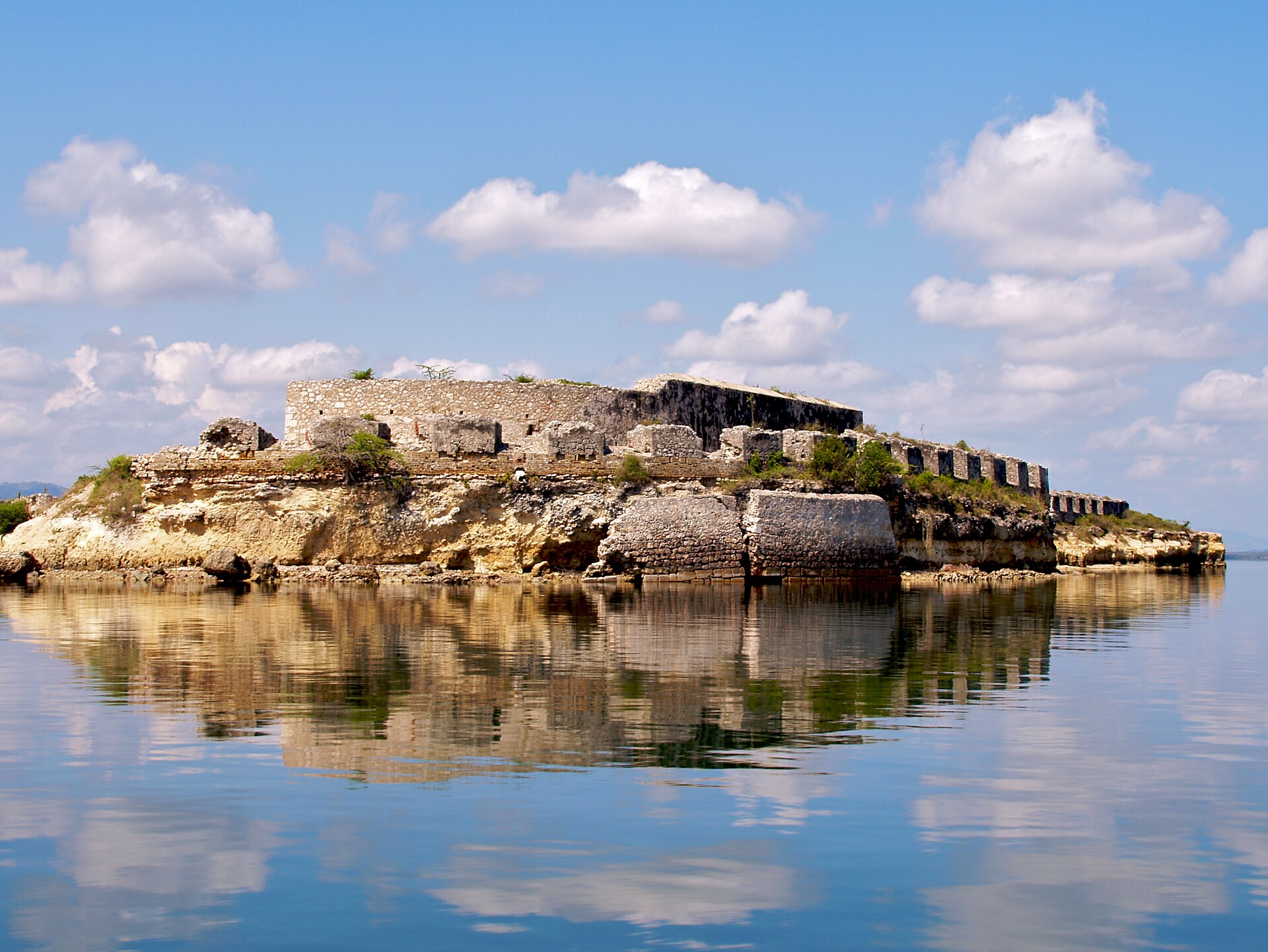
Fort Liberté is one of those places in Haiti where history isn’t just remembered—it lingers in the air, clinging to the weathered stones beneath your feet. Tucked along the northern coast near the quiet town of Limbé, this fort may not have the fame of other Caribbean strongholds, but its past is just as layered and turbulent. Built in the late 18th century, it stood witness to the violent upheavals of revolution, colonial power struggles, and the birth of a nation that would defy the world.
What remains today are ruins, but they carry a weight that’s hard to ignore. Crumbling walls, draped in vines and moss, rise above the bay, their silence broken only by the crash of waves and the occasional cry of a seabird. The fort was part of a network of defenses meant to protect Haiti’s shores, back when the island—then the French colony of Saint-Domingue—was the crown jewel of the New World. Sugar, coffee, and cotton flowed from its plantations, enriching Europe while enslaved people toiled under brutal conditions. Yet it was here, in the north, that the spark of rebellion first caught fire, leading to Haiti’s independence in 1804 and sending shockwaves through the colonial world.
The architecture is classic for its time: thick walls designed to withstand sieges, narrow gun slits, and the skeletal remains of bastions. Inside, you can still make out the outlines of barracks, storage rooms, and even a small prison. Locals speak of underground tunnels that once connected the fort to nearby hills, though most are now collapsed or flooded. The surrounding jungle has reclaimed much of the land, its dense greenery softening the edges of the ruins. On still days, the only sounds are the rustle of leaves and the distant murmur of the sea.
Fort Liberté is deeply tied to Henri Christophe, one of the most complex figures of Haiti’s revolution. After independence, he ruled the northern part of the island as a king, turning the fort into a key military outpost. Christophe was a man of contradictions—ruthless in his methods, yet determined to build a strong, independent nation. Under his rule, the fort was expanded, though its strategic importance faded over time. Now, only the decaying walls and scattered artifacts—cannonballs, pottery shards, old coins—hint at its former role.
Visiting the fort is less about grand monuments and more about stepping into a quieter, more reflective side of Haiti. There are no crowds here, no souvenir stands, no guided tours with rehearsed scripts. Just the wind, the sea, and the slow erosion of time. For most Haitians, the ruins are simply part of their history, a reminder of struggles that shaped the country. Occasionally, school groups or curious travelers make the trip, but more often than not, the fort stands alone, slowly surrendering to nature.
Getting here is straightforward if you’re in Limbé or Cap-Haïtien. The road follows the coast, passing through small villages where life moves at its own unhurried pace. Local drivers know the way, though signs are scarce and the roads can be rough. The fort itself is unguarded, with no entry fees or barriers—just an open invitation to explore. But caution is wise; the stones are slick, and some walls are unstable.
What makes Fort Liberté special is its lack of pretense. There’s no attempt to polish the past or package it for tourists. The history here is raw, unfiltered, and all the more powerful for it. If you come to Haiti looking for something beyond beaches and resorts, this is the kind of place that stays with you. It’s not a destination for those seeking entertainment, but for those who want to feel the weight of history and understand the forces that shaped this resilient nation.
Haiti is a country of contrasts, where moments of breathtaking beauty exist alongside hardship. Tourism infrastructure is minimal, and the realities of life here are never far from view. But that’s also what makes places like Fort Liberté so compelling. It’s not a museum exhibit, preserved behind glass—it’s a living piece of the past, still standing despite everything. And perhaps that’s why it leaves such a lasting impression.