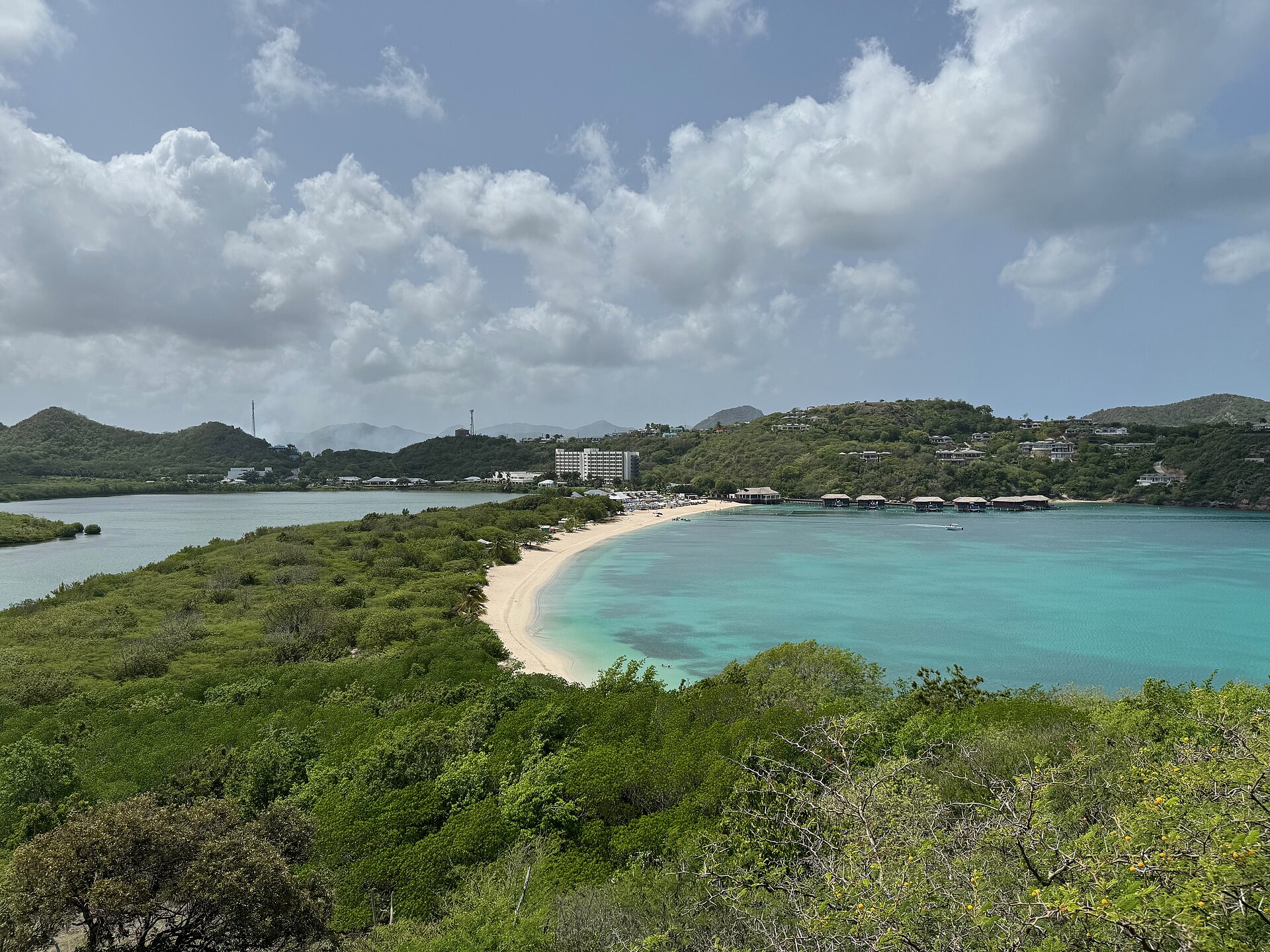
Perched on a low hill at the entrance to St. John’s Harbour, Fort Barrington is one of those rare places where the past doesn’t just linger—it feels alive. The fort’s weathered stone walls and silent cannons overlook the Caribbean Sea, where the water shifts from turquoise to deep blue as it stretches toward the horizon. Built in the late 17th century, it was never the site of a famous battle, but its position made it indispensable. From here, British forces could monitor the comings and goings of ships, protecting the island’s sugar trade and fending off pirates, rival colonial powers, and anyone else who might threaten Antigua’s prosperity.
The design of the fort follows the classic British military architecture of the era: thick stone ramparts, narrow gun emplacements, and winding paths meant to slow down invaders. Time and the Caribbean climate have softened its edges—creepers snake through cracks in the walls, and some structures have crumbled—but the layout remains intact. You can still make out the outlines of barracks, powder magazines, and lookout points where soldiers once scanned the sea for approaching sails. The cannons, though long silent, still command the view, their rusted barrels pointing toward the water as if waiting for a threat that will never come.
Antigua’s importance in the 17th and 18th centuries was tied to its harbour, one of the busiest in the British Caribbean. Fort Barrington stood guard over it, ensuring that ships laden with sugar, rum, and other goods could enter and leave safely. Even after the age of piracy faded, the fort remained useful, first as a lookout post and later as a lighthouse. Today, it’s less a military stronghold and more an open-air museum, a place where the past isn’t just remembered but felt. Walking along the ramparts, you can almost hear the distant shouts of orders, the creak of wooden ships, and the murmur of soldiers passing the time.
What makes Fort Barrington special isn’t just its history—it’s the way it frames the island. From the top of the hill, the view unfolds in layers: the harbour below, where fishing boats bob alongside sleek yachts, the curve of the coastline, and, on clear days, the faint outline of Barbuda in the distance. Locals sometimes come here to picnic or watch the sunset, turning the fort into more than just a relic. It’s a place where history and everyday life overlap, where the past isn’t cordoned off but woven into the present.
There’s something quietly satisfying about how little has changed here. Unlike more famous sites, Fort Barrington hasn’t been polished for tourists. There are no gift shops, no guided tours, no crowds—just the wind, the sound of waves, and the occasional rustle of leaves. The road leading up to the fort winds through small villages where life moves at its own unhurried pace. The fort itself is surrounded by scrubby trees and bushes, offering patches of shade where you can sit and take in the view. It’s easy to imagine soldiers doing the same centuries ago, waiting for a signal that never came.
If you’re the kind of traveller who prefers to explore without a script, this is the place for you. There are no plaques explaining every detail, no arrows pointing the way—just the ruins, the sea, and your own curiosity. You can wander along the walls, peer into the old powder magazines, or simply sit and listen to the waves. Time seems to slow here, as if the fort itself is reluctant to let you go. For a little while, you’re not just a visitor; you’re part of the story, standing where soldiers once stood, seeing what they saw.
Getting here is straightforward. The fort is a short drive from St. John’s, and the route takes you past rolling hills and stretches of coastline. It’s best to visit in the early morning or late afternoon, when the light is softer and the heat less intense. The path up to the fort is uneven, so sturdy shoes are a good idea. There’s no shade at the top, so bringing water is wise. The climb isn’t steep, but it’s enough to make you pause and appreciate the effort it must have taken to build this place centuries ago.
Fort Barrington isn’t a grand monument or a tourist hotspot. It’s something quieter, more personal—a place where the past isn’t just preserved but still breathing. There’s no fanfare here, no attempt to dress up history for visitors. What you see is what remains: the stones, the cannons, the view. For those who want to understand Antigua beyond its beaches and resorts, this is where the island’s soul reveals itself. It’s a reminder that history isn’t just something you read about; sometimes, it’s something you can stand inside.