- Home
- Antigua and Barbuda
- St John's

St John's
Antigua and Barbuda · 4 places
Photo: Wikimedia Commons, CC BY-SA 3.0
St. John’s isn’t just the capital of Antigua and Barbuda—it’s where the Caribbean slows down just enough to let you catch its rhythm. Tucked into the island’s northwest coast, where a shallow bay meets the Atlantic, the city feels more like a seaside village that grew up by accident. There are no skyscrapers, no rush-hour traffic jams, just narrow streets lined with weathered colonial buildings and fishing boats bobbing at the docks. The charm here isn’t about grandeur; it’s in the way the place seeps into you. A stroll along the waterfront, a coffee under the palms, or a glance into a shop selling handmade straw hats, and suddenly the city doesn’t feel like a stop on a map—it feels like somewhere you’ve always known.
The sea has always been St. John’s reason for being. Founded in the early 1600s as a port for English settlers, it became a hub for sugar, rum, and the darker trade that shaped the region. You can still see traces of that past in the old forts scattered along the coast and the small but thoughtful museum that holds artifacts from pre-Columbian times alongside relics of the colonial era. But the real legacy isn’t in the buildings or the exhibits—it’s in the people. Descendants of African slaves and European settlers have woven their histories into the fabric of daily life, from the music that spills out of open windows to the way conversations stretch out over slow afternoons. No one here is in a hurry, and that ease is contagious.
The heart of the city is a mix of old and new, where Georgian architecture stands beside brightly painted storefronts. On weekends, the main square fills with vendors selling mangoes, hot peppers, and hand-carved wooden bowls. Nearby, St. John’s Cathedral rises above the rooftops, its white towers a familiar landmark. The current building, dating to the 19th century, replaced two earlier churches lost to earthquakes, and though the interior is simple, the sense of history is palpable. Just a short walk away, the market buzzes with energy—stalls piled high with tropical fruit, spices, and souvenirs made from seashells. It’s the kind of place where you can lose track of time, caught up in the chatter and the scent of fresh ginger and ripe bananas.
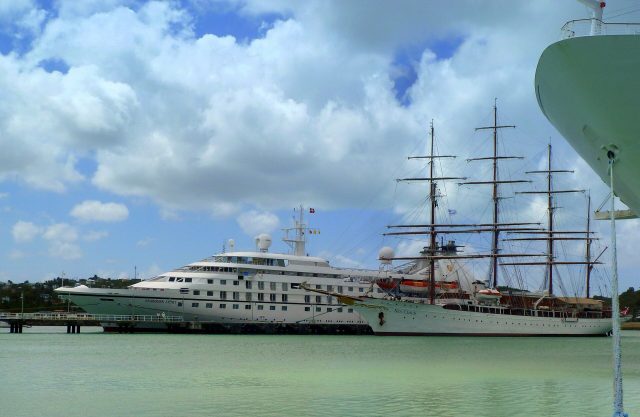
The ocean isn’t just scenery in St. John’s; it’s part of the city’s pulse. Locals and visitors alike flock to beaches like Fort James and Dickenson Bay, where the sand is powdery white and the water so clear it’s hard to tell where the sea ends and the sky begins. Sunsets here are worth lingering for, painting the bay in shades of gold and pink. The harbor is often dotted with yachts and sailboats, a reminder that St. John’s is a favorite stop for those cruising the Caribbean. Yet despite the comings and goings of travelers, the city itself feels timeless—unhurried, welcoming, as if it operates on its own unspoken schedule.
There are no all-inclusive resorts or flashy nightclubs here. Instead, St. John’s offers quiet bars where live music drifts through the evening air, seafood shacks serving grilled lobster and conch fritters, and open-air cafés where the rum punch is strong and the conversation even stronger. The city doesn’t try to be anything it’s not. It’s not a place for those chasing luxury or nonstop entertainment, but for those who come looking for something real—whether it’s the warmth of the people, the salt in the air, or the way the trade winds carry the sound of waves long after you’ve left the shore.
See & Do
All of them


Places on the map
Marker colour follows the categoryClimate and weather
Detailed weather: St John's- Average temperature
- 27 °C
- Precipitation per year
- 0 mm
Average air temperature
°C
26
26
26
26
28
28
29
29
29
28
27
27
Jan
Feb
Mar
Apr
May
Jun
Jul
Aug
Sep
Oct
Nov
Dec


