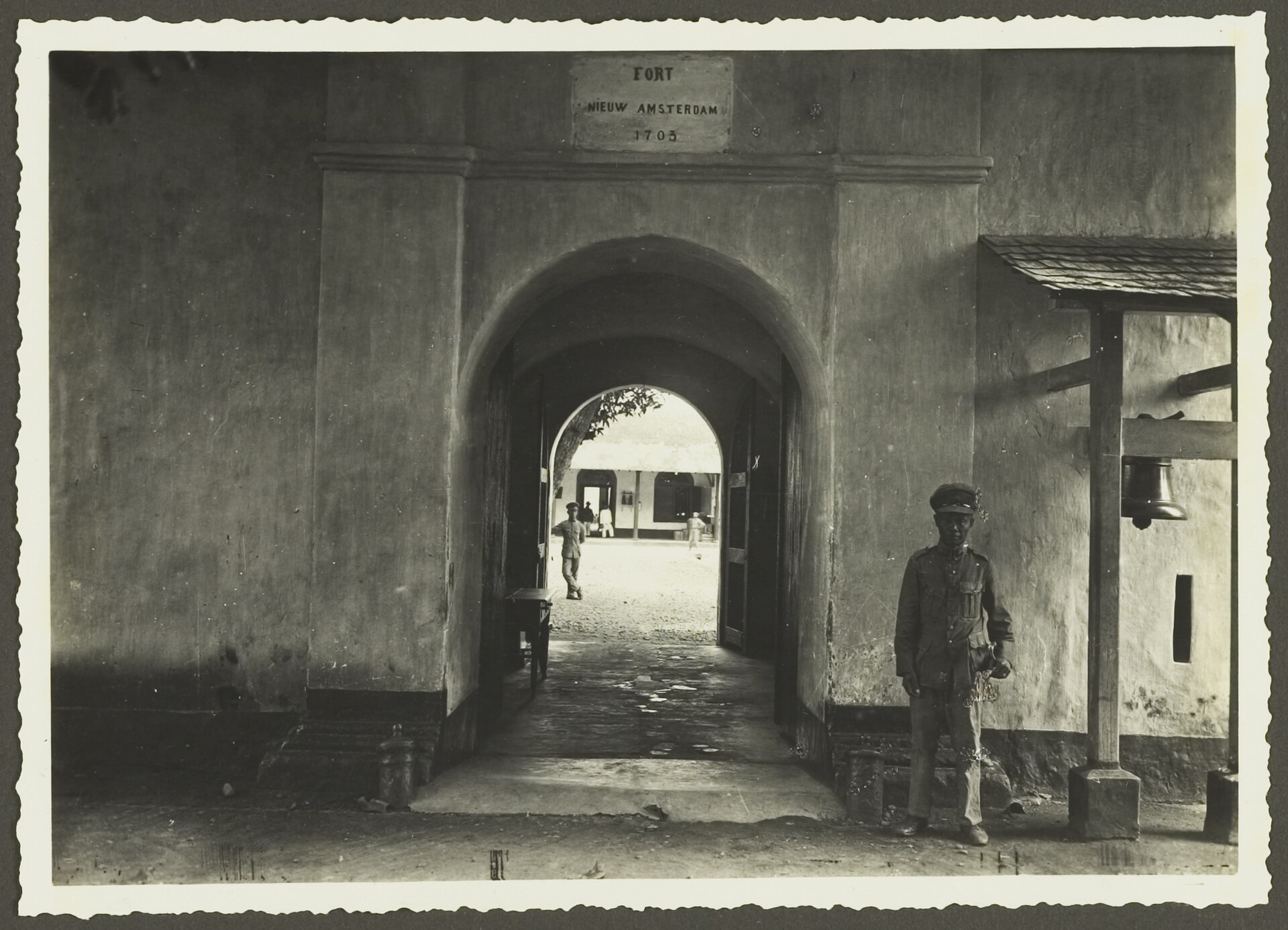
Amsterdam Fort in Manado is one of those rare places where history isn’t just remembered—it clings to the air, the weathered stones, the silence between the waves. Built by the Dutch in the early 17th century, the fort has stood through centuries of shifting power, spice wars, and the slow fading of colonial ambitions. What remains today are ruins, but they carry a quiet weight, as if the past hasn’t quite let go. The old cannons still point toward the sea, as if waiting for ships that will never return. You can sit on one of them, run your fingers over the rusted metal, and imagine the voices that once filled this place—traders haggling over cloves, soldiers arguing in Dutch, the distant shouts of sailors loading cargo onto ships bound for Europe.
Manado was never just another port on the map. In the 1600s, it was a critical link in the spice trade, where the scent of nutmeg and cloves hung thick in the air, where fortunes were made and lost on the whims of European markets. The Dutch built Amsterdam Fort to protect their interests, to claim this corner of Sulawesi where the sea met the jungle. But control was never absolute. The local Minahasa people resisted, sometimes openly, sometimes in ways history barely recorded. The fort changed hands, was rebuilt, expanded, and eventually abandoned—not in one dramatic fall, but in a slow surrender to time and neglect. The walls that once bristled with cannons now crumble under the weight of vines, and the moat that once kept enemies at bay is long gone, filled in by earth and memory.
The architecture is classic Dutch colonial—thick stone walls, angular bastions, a layout designed for defense. If you’ve seen other forts from this era, you’ll recognize the pattern: the way the walls curve to deflect cannon fire, the narrow passages that would have forced invaders into kill zones. Amsterdam Fort was never grand like the ones in Batavia or Malacca. It was built to last, though not to impress. Inside what’s left of the perimeter, there were once barracks, warehouses, even a small church. Now, the jungle has reclaimed much of it. The stones are slick with moss, and the ground is uneven. Yet the decay has its own dignity. The fort doesn’t ask for admiration; it simply stands, a silent witness to everything that happened here.
Today, Amsterdam Fort is less a tourist attraction and more a quiet corner of the city where time moves differently. There are no guided tours, no gift shops, no signs urging you to take a photo. Instead, there’s the sound of the sea, the rustle of leaves, the occasional cry of a seabird. Locals come here to escape the heat, to sit under the trees and watch the waves, or to meet friends in the cool of the evening. For visitors, it’s a place to step out of the present, if only for an hour.
The walk up from Manado’s waterfront takes about twenty minutes. The city’s hustle—motorcycles cutting through traffic, street vendors calling out their wares—slowly gives way to quieter edges where the roads narrow and the houses grow smaller, their gardens overgrown with frangipani and bougainvillea. The fort sits on a low hill, and from here, you can see the harbor, the cranes unloading cargo, and, on clear days, the distant outline of Bunaken Island, famous for its coral reefs.
What’s striking about Amsterdam Fort is how unassuming it is. There’s no museum here, no carefully curated exhibits, no plaques explaining the significance of each stone. That might disappoint some travelers, but it’s also what makes the place feel real. You’re not walking through a reconstruction; you’re walking through history as it’s been left behind. The walls are rough under your hands, the cannons cold even in the midday sun. You can wander the perimeter, tracing the outline of what once was, or sit on the edge of the hill and watch the sea stretch out endlessly. It’s easy to lose track of time here, to forget that the rest of the world is still moving forward.
In a way, the fort is a reminder that history is never just one story. For the Dutch, it was a stronghold, a symbol of power. For the Minahasa people, it was a foreign imposition, a reminder of struggles they’d rather forget. And for modern Indonesia, it’s something in between—a relic that survived not because it was preserved, but because it was overlooked. After independence, many colonial monuments were torn down or left to rot, seen as symbols of oppression. Amsterdam Fort endured, perhaps because it had already faded into the landscape, no longer a threat, just a part of the place. The government now protects it, though not with the same care given to more famous sites. There are no grand restoration projects, no attempts to turn it into a tourist draw. It remains what it has always been: a quiet, stubborn piece of the past.
The best time to visit is late afternoon, when the sun isn’t so harsh and the light turns golden. The heat of the day lingers, but there’s a breeze off the water, and the shadows grow long. Locals sometimes gather here in the evenings—teenagers with guitars, fishermen swapping stories, families picnicking on the grass. For them, the fort isn’t a monument; it’s just a place, like a park or a beach.
Amsterdam Fort doesn’t demand anything from you. It doesn’t need to be impressive or grand. It’s enough that it’s still here, that the stones remember what the rest of the world has forgotten.
If you’re looking for a place to reflect, this is it. There’s no script, no narrative to follow. Just the wind, the sea, and the weight of centuries pressing down on the ruins. You might think about the people who walked these paths—Dutch merchants, Minahasa warriors, slaves brought from other islands, all of them long gone. Or you might not think about them at all. The fort doesn’t care. It’s seen enough to know that history isn’t about grand gestures or dramatic moments. It’s about the quiet persistence of the everyday, the way life goes on, even when empires fall and the world moves on. Amsterdam Fort is still here, not because it was important, but because it existed. And that’s enough.