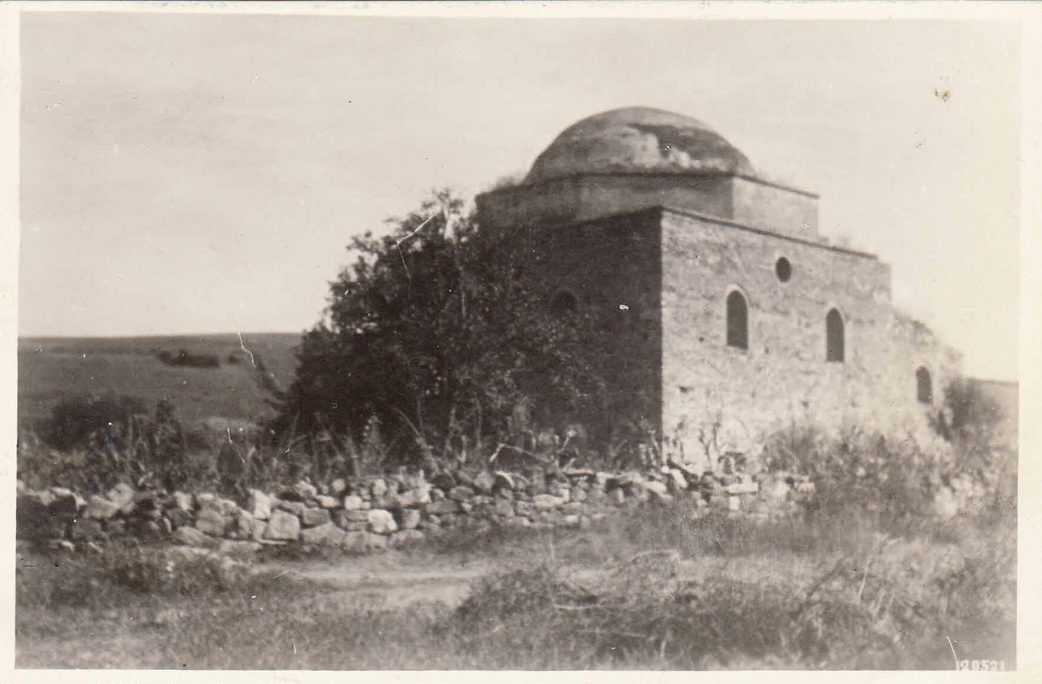
Eski-Saray is where history lingers in quiet corners, untouched by modern tourism. Near the village of Pionerskoye in Crimea, it sits where mountains meet open steppe. The sea is out of sight, but its salt still hangs in the air. No crowds, no souvenir stalls—just the remnants of a city that once stood at the heart of the Golden Horde, now dissolving into the earth.
The name means Old Palace. In the 14th century, this was one of the most important cities of the Crimean Ulus, a residence for khans and a center of power. Founded under Khan Uzbek in the 1300s, it thrived for about a century before the capital moved to New Sarai on the Volga. What remains are faint outlines—low mounds of earth, scattered bricks, pottery shards.
Archaeologists have uncovered a well-planned urban center. At its core stood the khan’s palace, surrounded by residential quarters, workshops, and markets. The city had walls, towers, mosques, public baths, and a water supply system. The most striking remnants are palace foundations, fragments of mosaic floors, and glazed tiles that hint at its former wealth.
Now, Eski-Saray is a vast, open field. Gentle rises and hollows mark where buildings once stood. Their stones were carried away long ago. Walk slowly, and you might spot bits of brick, pottery, or colored plaster half-buried in the soil. The steppe around it is quiet, covered in wormwood and thyme. No signs, no fences—just the land and its stories.
Visiting isn’t about ticking off a tourist attraction. It’s about stepping into a space where time moves differently. Wander and imagine the sounds—the clatter of a blacksmith’s hammer, merchants’ shouts, the call to prayer. The absence of crowds makes history feel close, carried on the wind.
This isn’t a place for polished exhibits. No reconstructions, no gift shops, no labeled artifacts. It offers something rarer: raw history. Few locals know it, which adds to its quiet allure. The real discovery isn’t in what’s left standing, but in the space between the ruins.
If you’re in this part of Crimea, stop for an hour. Early morning or late afternoon is best—soft light, long shadows. Don’t expect a museum. Expect a landscape that has absorbed centuries of life, now returning to the earth. For those who listen, the past speaks here.