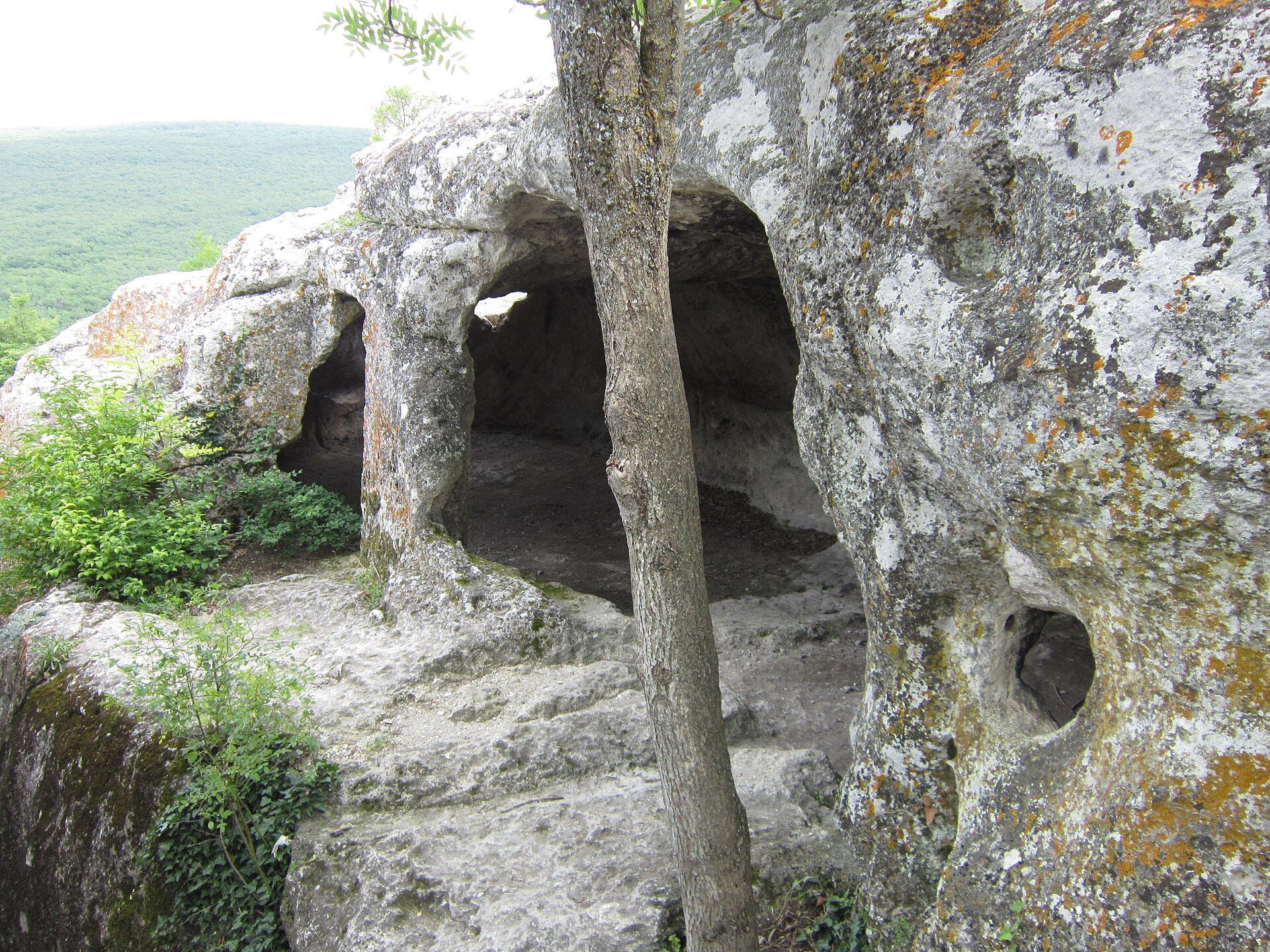
Perched on a limestone plateau in the Crimean hills, Eskikermen is a place where time feels still. The ruins of this medieval cave city sprawl across the slopes and summit—ancient streets, homes, and places of worship carved directly into the stone. The wind moves through the trees, and the past lingers in the quiet.
Eskikermen began as a Byzantine stronghold in the 6th century, when Crimea was a contested frontier between empires. Its name, meaning Old Fortress in Crimean Tatar, reflects its purpose: a settlement on cliffs, shielding the southern coast from nomadic raids. By the 8th and 9th centuries, it had grown into a religious and administrative center, its cave churches holding faded frescoes and inscriptions. The plateau’s natural defenses—sheer drops and narrow paths—made it a refuge, though its isolation also shaped its fate.
Eskikermen was built by hollowing out the rock. Instead of walls and buildings, its inhabitants carved multi-level neighborhoods into the limestone. Homes, storerooms, workshops, and tombs formed a labyrinth, connected by steep staircases. The cave churches remain the most striking feature, with traces of murals and altar niches still visible. The Church of the Three Horsemen, named for a depiction of three mounted saints, lets you see the past clearly.
The city declined in the 13th century after Mongol invasions. Unlike other Crimean sites, it was never rebuilt. For centuries, it lay forgotten beneath overgrowth until archaeologists rediscovered it in the 19th century. Even now, much of the city remains buried, its secrets still emerging from the earth. There are no reconstructed walls or polished exhibits—just the raw remains of a place that once lived.
Reaching Eskikermen takes effort.
From Zalesnoye, a trail winds through oak and juniper forests, climbing toward the plateau. The hike takes about an hour. The reward is a view of the valley below, where vineyards stretch toward the Black Sea. There are no signs or barriers—just the land as it has been for centuries. The lack of modern intrusions makes the place feel like a discovery.
This isn’t a place for those who want convenience. There are no cafes or guided tours. Instead, Eskikermen offers something else: the chance to walk through a city untouched by tourism. The silence is broken only by the sound of archaeologists at work or the footsteps of another traveler. The real draw is the connection—to the people who lived here, to the land they shaped, and to time itself.
If you visit, come prepared. Bring water and sturdy shoes. Spring and autumn are the best seasons, when the weather is mild. As you climb, look at the details: the worn steps, the remnants of defensive walls, the symbols etched into cave walls. Each is part of a story still being uncovered.
Eskikermen is not like Crimea’s more famous attractions. There are no palaces or beaches. What remains is a place where history isn’t just seen but felt. It stays with you, not because of what it shows, but because of what it makes you wonder. Standing at the edge of the plateau, gazing down at the valley, you might still hear the past in the wind.