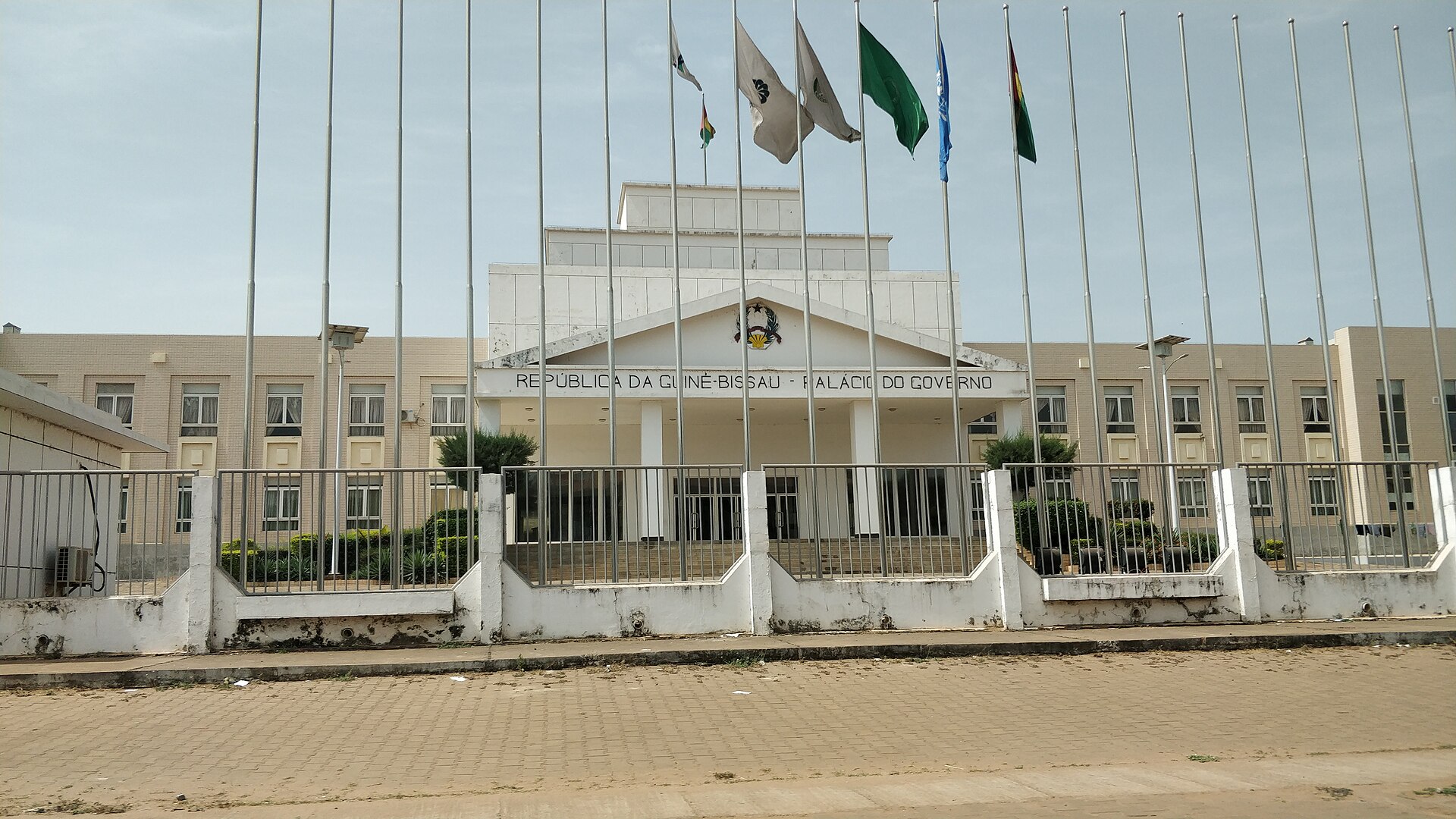
The Government Palace in Bissau is one of those places that doesn’t immediately demand attention, yet it quietly holds the echoes of a complicated and often turbulent history. Situated in the heart of Guinea-Bissau’s capital, the building stands where the city’s main streets converge, a modest but unmistakable presence in the urban landscape. Unlike the grand palaces of Europe or the ornate royal residences found elsewhere in Africa, this structure doesn’t overwhelm with its scale or decoration. Instead, its understated design—a product of mid-20th-century functionalism—reflects the era when Guinea-Bissau was still under Portuguese colonial rule. The low-slung lines and practical architecture speak less of ambition and more of the bureaucratic needs of the time.
Construction began in the 1950s, when Portuguese administrators decided to centralize the colony’s governance in Bissau. Back then, the city was small but strategically vital, a hub where the interests of the colonial power, local elites, and an emerging independence movement intersected. The palace was meant to symbolize Lisbon’s authority over this distant territory, yet its role shifted dramatically within just a few decades. When Guinea-Bissau declared independence in 1973, the building passed into the hands of the new government, becoming the seat of power where presidents, ministers, and officials have since shaped the country’s future.
From the outside, the palace is unassuming: a two-story structure with a row of columns at the entrance, its light-colored facade faded by the relentless sun. There are no intricate carvings, no mosaics, no grand decorative flourishes that often adorn government buildings elsewhere. This simplicity might stem from the colonial era’s focus on utility over grandeur, though inside, traces of the past remain. High ceilings, spacious meeting halls, and heavy wooden doors hint at a different time, but the interiors are far from lavish. Instead, they serve a purely functional purpose, every corner optimized for the machinery of governance.
For locals, the Government Palace isn’t a tourist attraction but a familiar part of daily life. It’s where laws are debated, decrees are signed, and foreign delegations are received—decisions made within its walls ripple across the country. Outside, the scene is one of quiet routine: people waiting for appointments with officials, journalists rushing to press conferences, or pedestrians seeking shade from the midday heat. The atmosphere is businesslike, though not without the occasional bustle that comes with any administrative center.
The palace’s history is deeply entwined with that of Guinea-Bissau itself. In 1980, it was the stage for a coup that ousted President Luís Cabral, bringing João Bernardo Vieira to power. This was just one of many political upheavals in the country’s recent history, and the palace has witnessed its share of crises, reshuffles, and even armed conflict. During the civil war in 1998, the building came under fire, and bullet marks still scar its walls—a silent testament to the violence that once gripped the nation.
Today, the palace remains off-limits to the public, accessible only from the outside. Visitors can walk past it along Bissau’s central streets, catching a glimpse of how power operates in one of Africa’s least-visited countries. There are no towering fences or heavily guarded perimeters, just a few police officers at the entrance maintaining order. This relative openness might reflect a tradition of portraying government as accessible, though the reality is often more complex.
Bissau is a city of contrasts, where decay and renewal exist side by side, and where hope for the future is tempered by the weight of the past. The Government Palace embodies this duality. It lacks the grandeur of other African capitals’ official buildings, but that’s precisely what makes it significant. There’s no gilded opulence here, just the raw, unvarnished history of a place that has seen struggle and resilience in equal measure. For those who seek to understand the real Guinea-Bissau—not just its beaches or its exotic appeal—the palace offers a small but meaningful window into the country’s soul.
In recent years, the area around the palace has begun to change. New buildings have sprung up—offices for international organizations, banks, cafes—hinting at a slow but steady transformation. Yet the Government Palace remains, a fixed point in a city that is gradually evolving. It’s possible that one day it will become a museum or cultural center, a place where visitors can learn more about Guinea-Bissau’s past. For now, though, it’s simply where the country’s future is quietly being decided—without fanfare, but with the quiet determination of a nation still finding its way.