- Home
- Guinea-Bissau
- Bissau

Bissau
Guinea-Bissau · 8 places
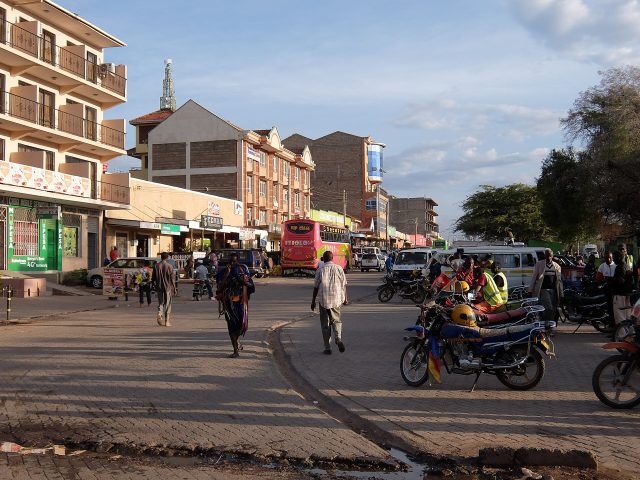
Photo: Wikimedia Commons, CC BY 2.0
Bissau moves to its own rhythm, a quiet pulse that feels just a fraction slower than the rest of the world. It’s not a city that announces itself with grand monuments or polished facades. Instead, it unfolds gradually, revealing itself in the faded charm of its colonial buildings, their peeling plaster hinting at stories from another era. The old quarter’s narrow streets twist and turn, lined with stalls where vendors sell everything from freshly caught fish to handmade charms, their voices blending into the hum of daily life. There’s no rush here, no pressure to perform for visitors—just the steady, unhurried beat of a place that has long existed outside the usual tourist circuits.
At the heart of the city lies the central square, anchored by a statue of Amílcar Cabral, the revolutionary leader who shaped Guinea-Bissau’s path to independence. Around it, the past and present coexist: Portuguese-era architecture stands alongside modest cafés where locals linger over strong coffee, debating politics or the day’s events. Nearby, the port buzzes with activity—fishermen unloading their catch, traders hawking spices and tropical fruit, children darting between the crowds. From here, boats depart for the Bijagós Islands, a scattered archipelago known for its untouched beaches and resilient island cultures. The waterfront is alive with energy, yet there’s a sense of timelessness, as if the scene has played out the same way for generations.
Bissau doesn’t offer the kind of attractions that fill guidebooks. There are no world-class museums or grand theaters, no luxury resorts vying for attention. What it does have is something rarer: authenticity. The people here live simply, but their warmth is genuine. A stranger might find themselves invited into a conversation, offered directions to the best fabric stalls, or steered toward a street-side grill where fish sizzles over charcoal. Tourism is still a whisper in this city, which only adds to its appeal. Those who come are rewarded not with curated experiences, but with the chance to see life as it’s actually lived—unfiltered, unhurried, and unapologetically real.
As evening falls, the city softens. The air cools slightly, and the streets come alive with music—traditional rhythms blending with contemporary beats, drifting from open-air bars and restaurants. The food is bold and unpretentious: spicy seafood stews, rice cooked with palm oil and slow-simmered meats, or the hearty one-pot dish *jambalaya*, a legacy of the region’s layered history. Night markets spill onto the sidewalks, offering not just food but handcrafted jewelry, wooden carvings, and shell-adorned trinkets. Bissau doesn’t shut down after dark; it simply shifts, its energy taking on a different, more intimate quality.
The climate here is relentless—hot, humid, and punctuated by a rainy season that turns streets into rushing streams and slows everything to a crawl. Yet even then, the city retains its character. Palm trees sway in the wind, the scent of salt and spices hangs in the air, and life goes on, undeterred by the weather. Locals adapt, carrying on with their routines as if the downpours were just another part of the day. Bissau isn’t a place that tries to impress. It doesn’t need to. What it offers instead is something far more valuable: a glimpse of Africa untouched by mass tourism, where the pace is set by the tides and the sun, not by itineraries or expectations. There are no crowds, no forced smiles, no scripted experiences—just space, freedom, and the quiet confidence of a city that has always been exactly what it is.
See & Do
All of them

Eat & Drink
All of them
Places on the map
Marker colour follows the categoryClimate and weather
Detailed weather: Bissau- Average temperature
- 28 °C
- Precipitation per year
- 1490 mm
Average air temperature
°C
27
28
28
29
29
29
27
27
27
28
28
27
Jan
Feb
Mar
Apr
May
Jun
Jul
Aug
Sep
Oct
Nov
Dec