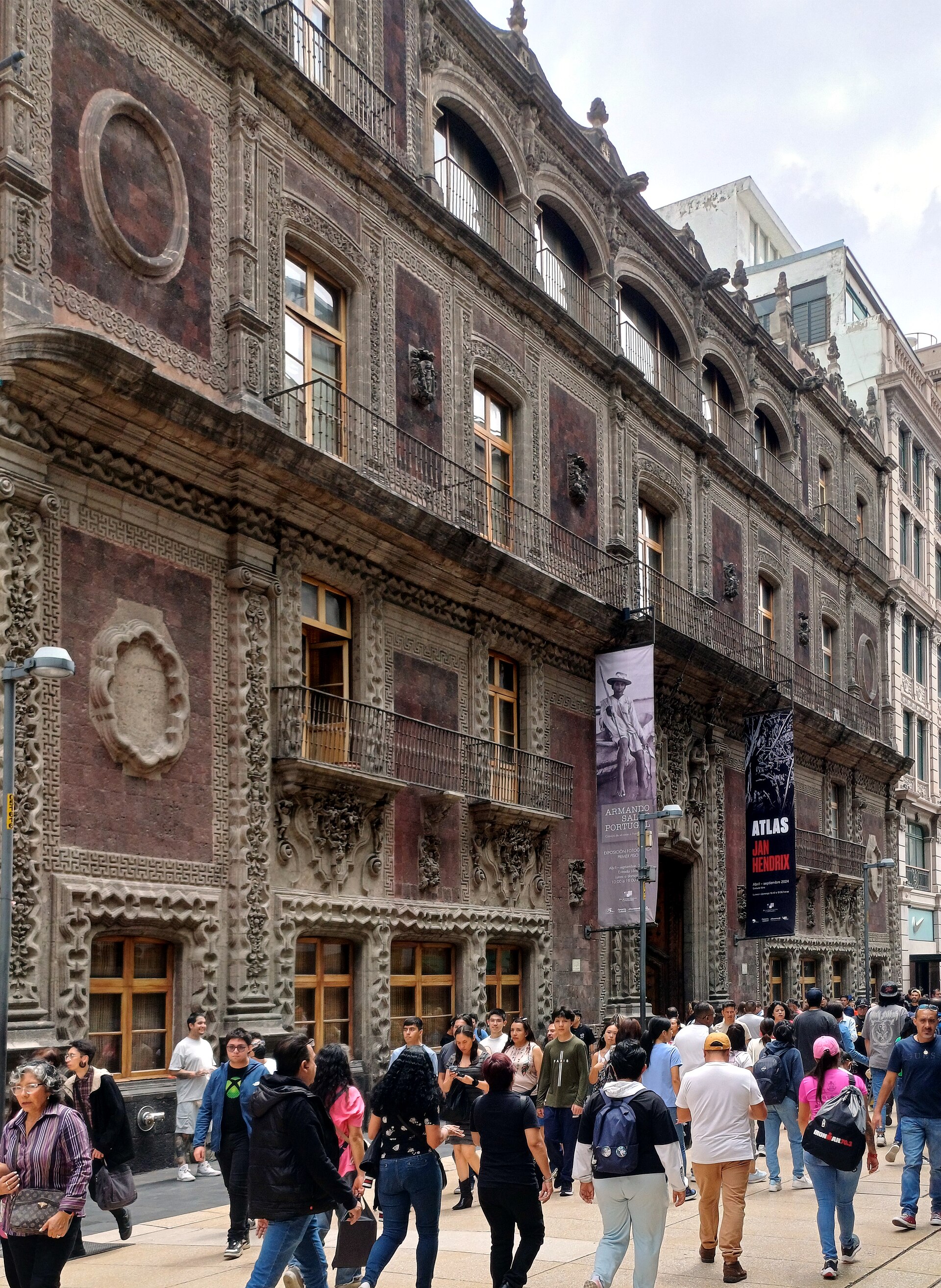
The Palace of Iturbide stands as one of Mexico City’s quiet witnesses to history, a building where the past lingers in every corner. Built in the mid-18th century, it was originally conceived as a grand residence for the Moncada family, a prominent Spanish lineage that sought to display its wealth and influence through architecture. The palace’s facade is a striking example of colonial design, blending Baroque flourishes with the sturdy elegance of Andalusian traditions. Massive wooden balconies overlook the street, while the interior courtyards—central to the layout of any colonial home—offer a glimpse into the private lives of the era’s elite. These spaces weren’t just for show; they were statements of power, designed to impress and intimidate in equal measure.
The palace’s name is tied to Agustín de Iturbide, the first emperor of Mexico, who briefly made it his home in the early 19th century. His time here was marked by both ambition and turmoil. It was within these walls that he prepared for his coronation, only to later sign his abdication, a decision that would shape the nation’s future. The rooms still echo with the weight of those events, their high ceilings adorned with intricate plasterwork, their walls lined with period furniture and faded frescoes that hint at the tastes of New Spain’s aristocracy. Walking through them, it’s easy to imagine the debates and decisions that unfolded here, moments that would ripple through Mexican history.
Like many grand buildings of its time, the Palace of Iturbide has worn many hats over the centuries. After Iturbide’s fall, it served as a hotel, an office building, and even a post office. Each new purpose left its mark, yet the core of the palace remained intact. By the 20th century, its historical significance was officially recognized, and after careful restoration, it was transformed into a cultural hub. Today, it hosts exhibitions, concerts, and lectures, while part of the building functions as a museum dedicated to Mexico’s past and the palace’s own layered history. The transformation from private residence to public space hasn’t erased its original character; if anything, it has deepened the sense of connection between the building and the city around it.
The heart of the palace is its central courtyard, or patio, a feature common to colonial architecture. In its heyday, this open-air space was where guests gathered, deals were struck, and life unfolded in the shade of stone columns and arched walkways. Today, the patio retains much of its original charm. A small fountain trickles softly, and the play of light across the worn stones creates a quiet rhythm, a counterpoint to the bustle of the city just beyond the walls. On warm afternoons, it’s a perfect place to sit with a coffee, watching the shadows stretch across the centuries-old masonry.
The palace is nestled in Mexico City’s historic center, a neighborhood where history isn’t confined to museums but spills into the streets. Nearby, the Metropolitan Cathedral looms over the Zócalo, the National Palace stands as a testament to political power, and the surrounding plazas hum with the energy of daily life. The Palace of Iturbide fits seamlessly into this landscape, not as a relic but as a living part of the city’s fabric. It’s a place where the colonial era feels tangible, where the layers of time are visible in the worn steps, the chipped paint, and the stories embedded in the walls.
What makes the Palace of Iturbide special is its understated presence. Unlike the city’s more famous landmarks, it doesn’t draw crowds, which only adds to its appeal. Visitors can wander through its rooms at their own pace, lingering over architectural details or simply soaking in the atmosphere. There’s no rush, no scripted tour—just the quiet dialogue between past and present. The palace doesn’t shout its stories; it waits for those who are curious enough to listen.
For anyone with an interest in history, architecture, or the soul of old Mexico City, the Palace of Iturbide is a must-visit. It’s a place where the grandeur of the colonial era meets the lived-in reality of a city that has grown and changed around it. The building has seen empires rise and fall, witnessed revolutions and reforms, and yet it endures, not as a monument to a single moment but as a thread in the larger tapestry of Mexican history. To step inside is to step into that story, to feel the weight of the past without the distraction of tourist hordes. And sometimes, that’s where the most meaningful connections are made.