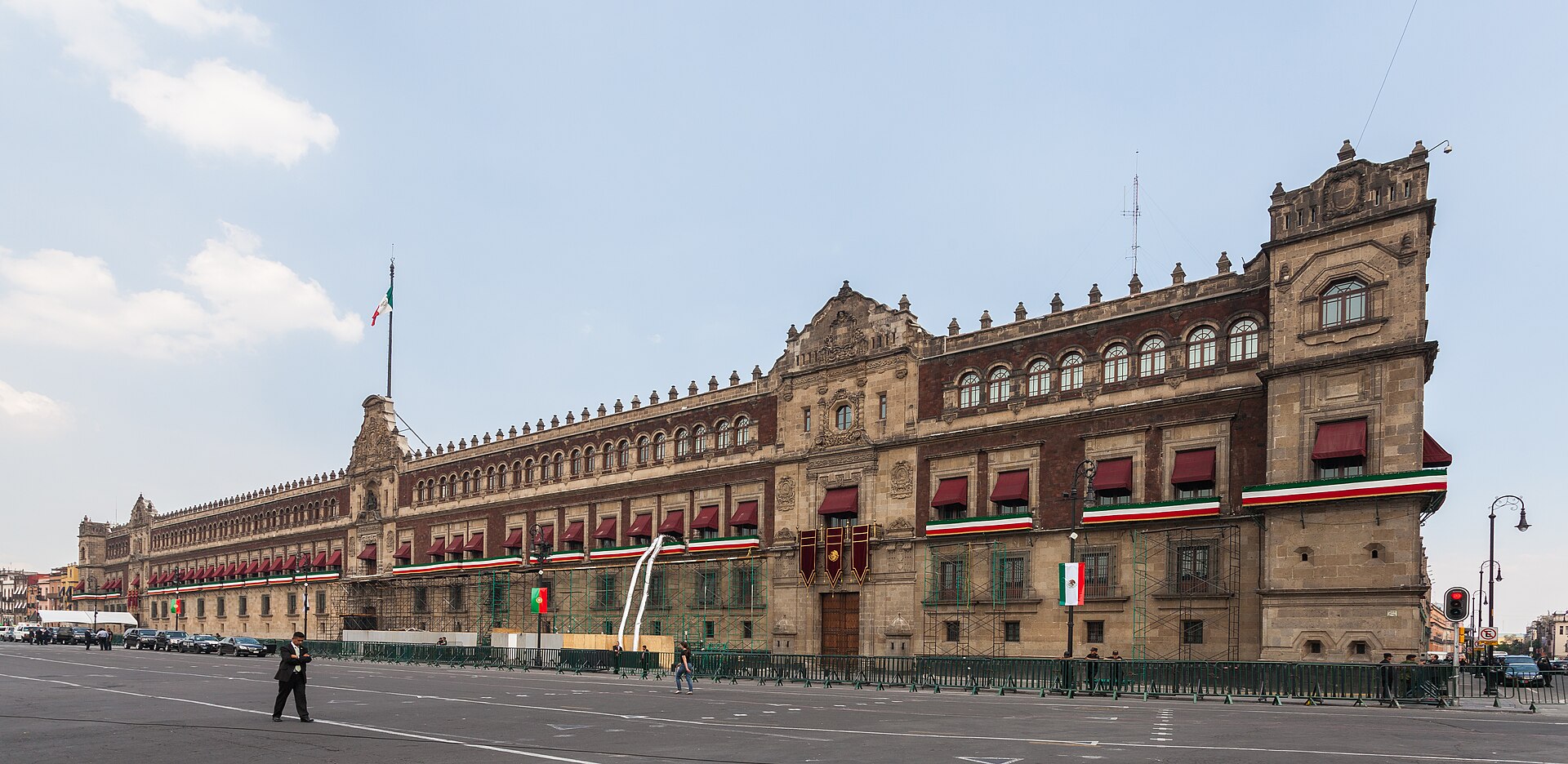
The National Palace in Mexico City is one of those rare places where the weight of history presses down on you with every step. Standing on the eastern edge of the Zócalo, the city’s vast central square, it isn’t just a building—it’s a physical manifestation of Mexico’s layered past, stretching from the Aztec empire to the modern nation. The palace occupies an entire city block, its long façade a silent witness to centuries of upheaval, conquest, and reinvention.
The site itself is steeped in symbolism. When Hernán Cortés arrived in the early 16th century, he chose this spot to build his residence, using stones from the dismantled palace of Moctezuma II, the last Aztec ruler. The act was deliberate, a way to erase the old order and assert Spanish dominance. But little of Cortés’s original structure remains. Fires, earthquakes, and successive renovations reshaped the building over the centuries, particularly in the 17th and 18th centuries, when Mexico was firmly under colonial rule. What stands today is a blend of architectural styles, a testament to the country’s turbulent evolution.
From the outside, the palace is a striking example of colonial grandeur, its Baroque and neoclassical elements typical of the era. The main façade, facing the Zócalo, is adorned with heavy columns, wrought-iron balconies, and the coats of arms of Spanish royalty. Two towers flank the central entrance, giving the building a sense of imposing symmetry. Inside, the architecture shifts to something more intimate—sprawling courtyards surrounded by arched walkways, where officials once gathered for ceremonies and receptions. The grand staircase, wide and sweeping, leads visitors upward as if inviting them into the very chambers where history was made.
Yet the true heart of the National Palace lies in its murals. Painted by Diego Rivera between 1929 and 1935, these vast frescoes transform the building into a visual chronicle of Mexico’s past. Rivera, one of the most influential artists of the 20th century, filled the walls of the main staircase and inner courtyard with scenes that trace the country’s journey from pre-Columbian civilizations to the Revolution of 1910. The murals are dense with detail—depictions of Aztec life, the violence of conquest, the opulence of colonial rule, the struggle for independence, and the revolutionary fervor that reshaped the nation. Rivera didn’t just document history; he interpreted it, infusing each brushstroke with political meaning. His work was a statement, an attempt to reclaim Mexico’s identity from centuries of foreign influence.
The palace remains an active seat of government. The Mexican president’s offices are housed here, along with various administrative departments, and while much of the building is off-limits to the public, some areas are open for exploration. Walking through its halls feels like stepping into a living museum. The rooms where viceroys once held court now display historical artifacts and artworks, their grandeur undiminished by time. The government meeting chamber, still used for official functions, retains an air of solemnity, a reminder that this place is more than just a relic—it’s a working part of the country’s political life.
Visiting the National Palace is as much about the atmosphere as it is about the architecture. The Zócalo, where it stands, is the pulsing center of Mexico City, a place where the past and present collide. Street vendors, protesters, tourists, and locals all converge here, creating a constant hum of activity. Festivals, protests, and cultural events spill across the square, while in the evenings, families stroll beneath the palace’s illuminated façade. The building itself seems to stand apart from the chaos, a steady presence amid the city’s relentless energy.
Unlike traditional museums, the palace doesn’t feel like a curated exhibit. There are no velvet ropes or neatly labeled displays. Instead, the space is alive—civil servants move through the corridors, security guards patrol the halls, and visitors wander freely. This lack of formality makes the experience feel more immediate, as if you’re not just observing history but momentarily stepping into it. The line between past and present blurs, and for a short while, you’re part of the story.
For anyone interested in Mexico’s history, the National Palace is essential. It doesn’t offer easy answers, but it does provide a glimpse into the forces that have shaped the country—indigenous traditions, colonial oppression, revolutionary ideals, and the ongoing struggle to define what it means to be Mexican. Rivera’s murals, in particular, are more than just art; they’re a provocation, a challenge to view history through a critical lens. Even today, they spark debate, their messages as relevant as when they were first painted.
Time slips away quickly inside the palace. You could spend hours deciphering the symbols in Rivera’s murals, tracing the intricate details of Aztec warriors, Spanish conquistadors, and revolutionary heroes. Or you might simply sit in one of the courtyards, watching the play of light on the stone arches, letting the weight of centuries settle around you. Some visitors leave with a sense of pride, others with questions about Mexico’s future. But no one walks away unchanged. The National Palace isn’t just a landmark—it’s a living piece of history, one that continues to evolve with every passing day.