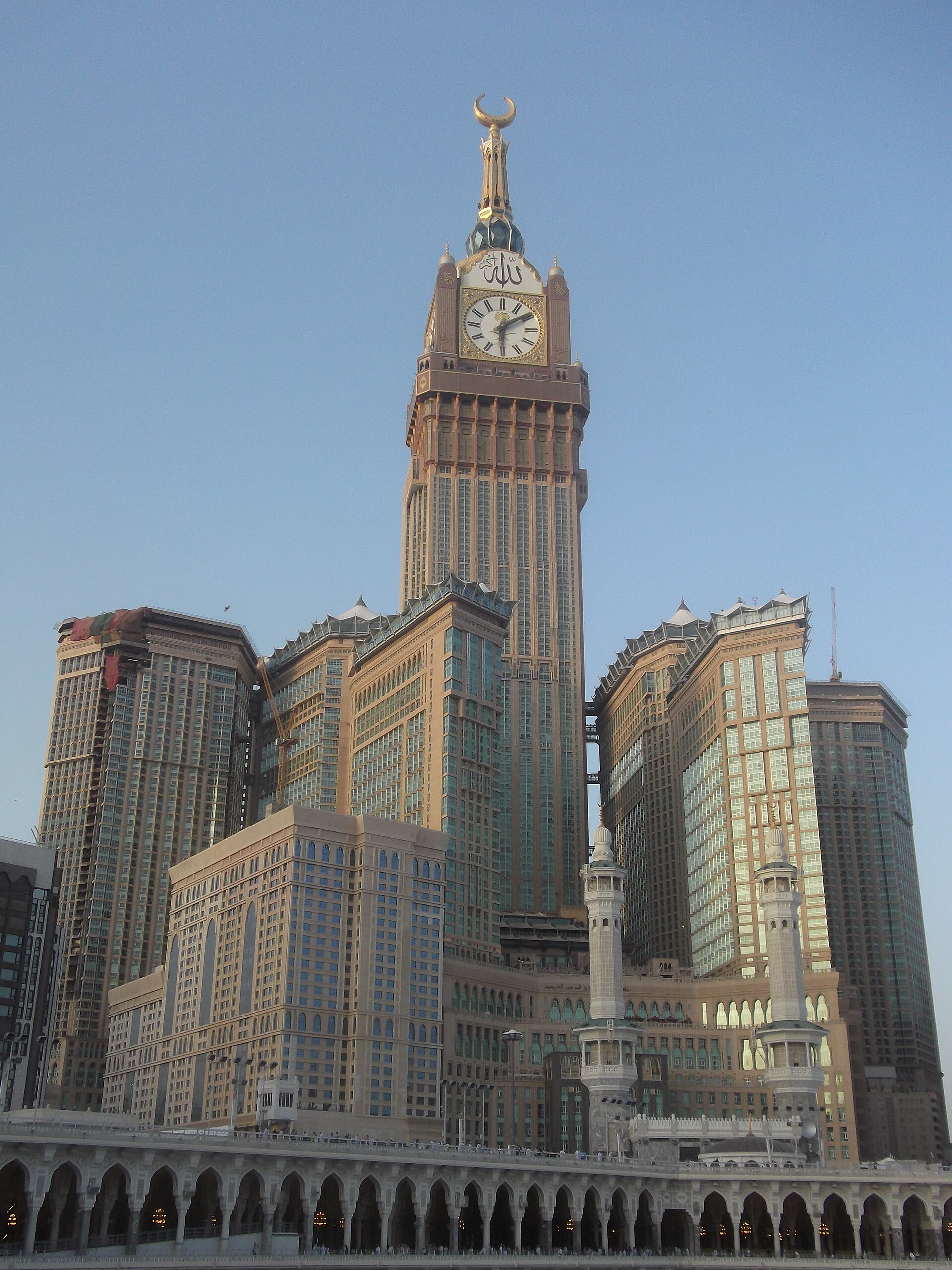
Standing tall over Mecca, the Abraj Al-Bait complex is one of the city’s most striking modern landmarks. Its towering clock tower, visible from nearly every corner of the holy city, has become a familiar part of the skyline—a blend of contemporary ambition and reverence for tradition. Built in the early 21st century, the complex was designed to accommodate the growing number of pilgrims who travel to Mecca each year for Hajj and Umrah. More than just a hotel, it offers a range of facilities, from spacious guest rooms to shopping areas, dining options, and even a museum dedicated to Islamic history.
The architecture of Abraj Al-Bait is a fusion of modern engineering and Islamic design principles. The central clock tower, often compared to London’s Big Ben, is one of the tallest of its kind in the world. Its faces are adorned with intricate Arabic calligraphy and geometric patterns, illuminated at night to create a mesmerizing display. The surrounding towers, though less imposing, maintain a sense of harmony with the overall structure, reflecting the grandeur and restraint typical of Saudi architecture.
One of the most compelling aspects of Abraj Al-Bait is its proximity to the Masjid al-Haram, the Great Mosque of Mecca. Many of its rooms offer direct views of the Kaaba, Islam’s holiest site, making it a preferred choice for pilgrims who wish to stay close to the spiritual heart of the city. Despite the constant flow of visitors, the atmosphere inside remains calm and focused, a quiet refuge amid the intensity of religious devotion.
The construction of Abraj Al-Bait was part of a broader effort to modernize Mecca’s infrastructure. Over the past few decades, the city has undergone rapid development to support the millions of pilgrims who arrive annually. The complex was built with strict attention to safety and functionality, ensuring it could handle the massive influx of visitors during Hajj. Today, it functions almost like a self-contained city, with every detail—from prayer spaces to medical facilities—designed to meet the needs of its guests.
Inside, the complex balances comfort with tradition. The rooms are spacious and thoughtfully decorated, incorporating elements of Islamic art such as arabesques and calligraphic inscriptions. The shopping areas offer everything from traditional goods to modern conveniences, while the dining options cater to a variety of tastes. Cleanliness is a priority, reflecting the importance of hygiene in a city where so many people gather in close quarters.
Even in its modern design, Abraj Al-Bait remains deeply connected to Islamic heritage. The interiors feature intricate tilework, carved wood, and other decorative elements that pay homage to centuries of artistic tradition. The lighting is carefully calibrated to avoid disrupting the sacred atmosphere of Mecca, and soundproofing ensures that the noise of the city doesn’t intrude on moments of prayer or reflection.
For many visitors, the complex is more than just a place to stay—it’s a vantage point from which to experience Mecca. The observation decks offer sweeping views of the city, particularly striking at dusk when the lights of the mosques and streets begin to glow. From here, it’s possible to see the contrast between the ancient rituals unfolding below and the modern structures that have risen to support them.
Abraj Al-Bait embodies the dual nature of Mecca itself—a city where the past and present coexist. It serves as a reminder that even in a place defined by tradition, progress has its role to play. For pilgrims, it offers a space to rest, reflect, and prepare for the next stage of their journey. And for those who simply pass through, it stands as a testament to the enduring significance of this sacred city.