- Home
- Saudi Arabia
- Mecca

Mecca
Saudi Arabia · 8 places
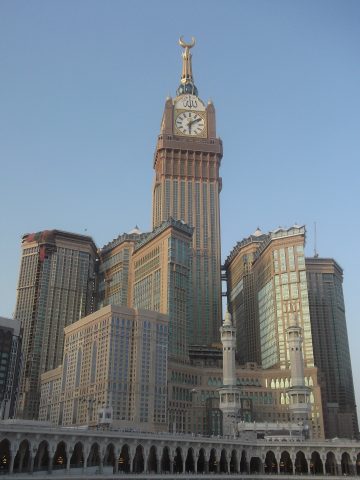
Photo: MrJoker07, CC BY-SA 4.0
Mecca is not a city for casual visitors. There are no sidewalk cafés, no nightclubs, no crowds of tourists snapping photos of landmarks. Yet every year, millions of people from across the globe make their way here, drawn by something far deeper than sightseeing. This is the spiritual heart of Islam, a place where faith takes physical form in the rituals of Hajj and Umrah—obligations that define the lives of Muslims around the world.
The city sits in a narrow valley, hemmed in by low mountains, its skyline instantly recognizable by the Kaaba, the massive cube-shaped structure draped in black cloth embroidered with gold. For believers, it is the center of the world, the focal point of every prayer. The Grand Mosque, Al-Masjid al-Haram, surrounds it, its vast courtyards capable of holding over two million worshippers at once. During Hajj, the air hums with the murmur of prayers, the shuffle of feet, the quiet intensity of devotion. Here, distinctions of wealth, nationality, and status dissolve—everyone stands equal before God.
Mecca’s history stretches back centuries. According to Islamic tradition, the Kaaba was first built by the Prophet Ibrahim and his son Ismail as a house of worship to God. Long before Islam, the city was already a pilgrimage site, a crossroads for trade and a gathering place for the tribes of the Arabian Peninsula. When the Prophet Muhammad began preaching in the 7th century, Mecca became the cradle of a new faith, its streets echoing with the words that would shape a religion. Today, little remains of that ancient past. The labyrinthine alleys of old Mecca have given way to wide boulevards and towering modern buildings, though the city’s spiritual essence endures.
Life here moves to the rhythm of pilgrimage. Outside the Hajj season, Mecca is quiet, its streets calm, its people going about their daily routines. But as the sacred month of Dhu al-Hijjah approaches, the city transforms. White-clad pilgrims in ihram fill the air with their presence, their voices rising in prayer, their steps tracing the same paths walked by generations before them. The Grand Mosque becomes a sea of humanity, its marble floors reflecting the light of thousands of lamps, its minarets piercing the night sky.
In recent decades, Mecca has changed dramatically. Skyscrapers now loom over the Kaaba, luxury hotels cater to the needs of pilgrims, and shopping malls offer everything from traditional textiles to high-end electronics. The Abraj Al Bait complex, with its towering clock face visible for miles, is one of the most striking examples of this modernization. Yet not all changes have been kind to the city’s heritage. Many historic buildings have been demolished to make way for new construction, leaving only fragments of old Mecca behind. For most visitors, though, this matters little. They come not to admire architecture or explore history, but to fulfill a spiritual duty, to stand where prophets once stood, to feel the weight of centuries in their bones.
There are no beaches here, no museums, no theaters in the conventional sense. Mecca exists for one purpose, and everything else—its streets, its buildings, even its people—serves that singular calling. Even those who do not share its faith often find themselves moved by the city’s atmosphere. In the quiet hours before dawn, when the call to prayer echoes across the rooftops, or at dusk, when the lights of the minarets glow against the darkening sky, Mecca feels like a place where time moves differently. There are no accidental footsteps here. Every movement, every glance, is directed toward the Kaaba—a symbol of unity for millions, a point on the map where the earth and the divine seem to meet.
See & Do
8 places


Places on the map
Marker colour follows the categoryClimate and weather
Detailed weather: Mecca- Average temperature
- 32 °C
- Precipitation per year
- 0 mm
Average air temperature
°C
25
26
28
31
35
37
37
36
36
33
29
27
Jan
Feb
Mar
Apr
May
Jun
Jul
Aug
Sep
Oct
Nov
Dec


