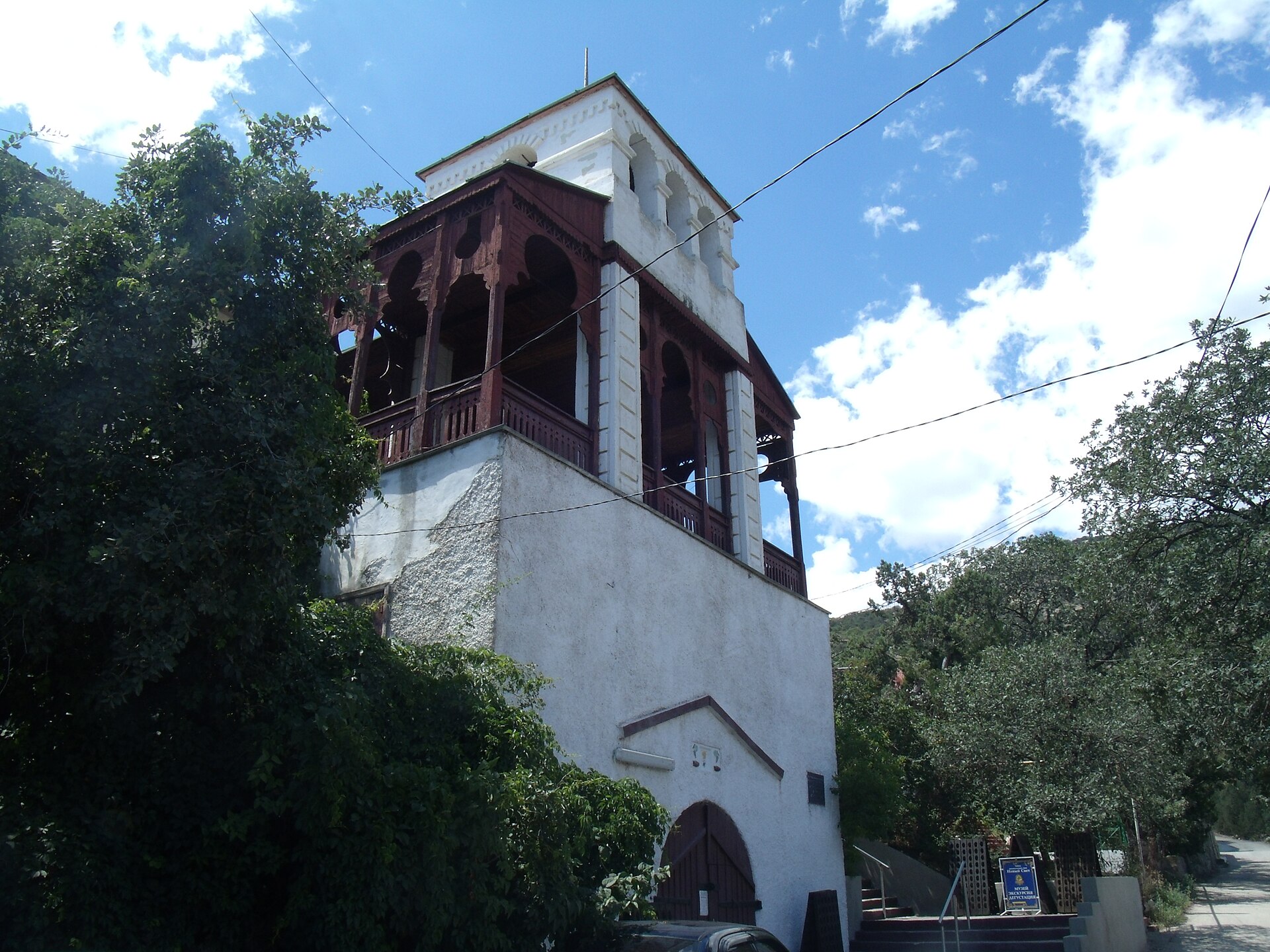
New World is a place where the Black Sea meets the Crimean coastline in a quiet embrace of vineyards and hidden coves. Yet beyond its natural beauty, there’s a house here that tells the story of a man who saw potential where others saw only wilderness. Prince Lev Sergeyevich Golitsyn didn’t just own land—he transformed it, turning a modest stretch of the Crimean shore into a cornerstone of Russian winemaking. His home, now a museum, stands as a testament to an era when ambition and tradition walked hand in hand.
The house itself is unassuming, built from local stone in the late 19th century. Unlike the grand estates of Russian nobility, it feels more like a Mediterranean villa, blending seamlessly with the landscape. Large windows let in the sea breeze, while wide verandas offer views of the water and the surrounding hills. Inside, the rooms retain a lived-in warmth, as if Golitsyn might return at any moment. The architecture isn’t about opulence; it’s about harmony—between man and nature, work and leisure, past and present.
Golitsyn arrived in Crimea in the 1870s, when the region was still wild and winemaking was more luck than science. Educated in Europe, he saw something in the Crimean soil that others had missed. He didn’t just plant vineyards; he imported the best French grape varieties, hired skilled winemakers, and built underground cellars that remain marvels of engineering. New World became his laboratory, where innovation met respect for local traditions. The wines he produced weren’t just drinks—they were a statement, a challenge to the idea that Russia couldn’t compete with Europe’s finest.
The museum preserves more than just the physical traces of Golitsyn’s life. Here, you’ll find the tools of his trade: oak barrels, presses, and glass decanters used for tasting. There are maps he drew to plan his vineyards, books on winemaking in multiple languages, and letters that hint at his wide circle of friends and collaborators. One of the most intriguing details is the collection of wine labels he designed himself. Golitsyn didn’t just name his wines—he crafted their identities, ensuring each bottle told a story. These labels, with their elegant typography and artistic flourishes, are a reminder that for him, winemaking was as much about art as it was about science.
Golitsyn wasn’t a recluse. His home was a gathering place for artists, writers, and thinkers of the time. Chekhov, Bunin, and Gorky visited, as did members of the imperial family. Alexander III himself praised Golitsyn’s contributions to Russian winemaking. The house still feels like a place where ideas were exchanged over glasses of wine—where conversations about literature, science, and the future of the region flowed as freely as the sea breeze through the open windows. The furniture, the paintings, even the desk where Golitsyn worked, all seem to carry echoes of those discussions.
After the revolution, the estate was nationalized, and Golitsyn died in 1915, never witnessing the upheavals that would reshape Crimea. Yet his legacy endured. The house survived wars, neglect, and changing regimes, and today it stands as a quiet monument to a man who dared to dream big. The museum doesn’t romanticize the past; it presents it honestly, showing how one person’s vision could leave a lasting mark on an entire region. Winemaking in New World continues, and many of the traditions Golitsyn established are still alive, passed down through generations.
Visiting the museum is just the beginning. The surrounding area invites exploration. Nearby trails lead to the vineyards and the old cellars where wine is still aged, just as it was in Golitsyn’s time. You can walk down to the Golden Beach, where the view of the bay is as breathtaking now as it was a century ago, or hike up Mount Koba-Kaya for a panoramic perspective of New World. It’s easy to imagine Golitsyn wandering these same paths, lost in thought, inspired by the beauty around him.
This isn’t just a museum or a historic site. It’s a place where time feels fluid, where the past and present coexist. There’s no grandeur here, just authenticity—the kind that comes from knowing a place has been loved and lived in. The walls hold memories, the air carries the scent of the sea and the vineyards, and the stories of those who shaped this land are still palpable. If you come to New World, take an hour to step inside. It’s a chance to see Crimea not just as a tourist, but through the eyes of someone who helped make it what it is today.