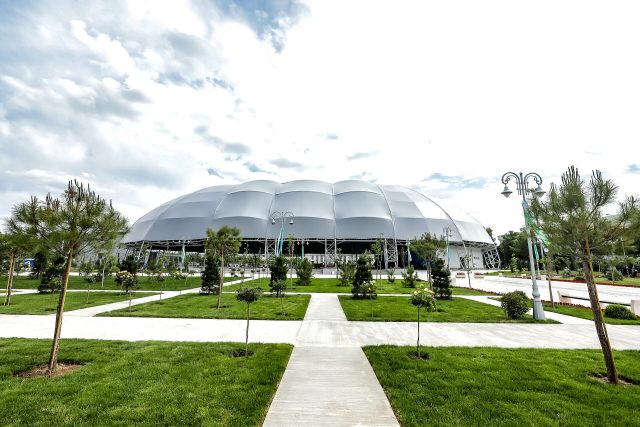
Guards’ Square in Kazakhstan is one of those quiet places where the rhythm of life still follows its own unhurried pace, far from the noise of big cities. At its heart stands the House of Culture, a building that has quietly become the soul of the settlement. Built during the Soviet era, it was designed not just as a venue for performances or gatherings, but as a space where the community could come together—whether to celebrate, remember, or simply spend time in each other’s company. In small towns and villages across the former Soviet Union, such buildings often outgrew their original purpose, becoming symbols of shared history and collective memory.
The architecture of the House of Culture is unassuming yet familiar, a typical example of mid-20th-century public buildings found in countless settlements. Its wide windows let in plenty of light, while the facade, though modest, carries a few decorative touches that give it a sense of identity. Inside, the main hall is spacious, with a balcony for additional seating, a foyer where people can gather before events, and smaller rooms for rehearsals or club meetings. Everything about the design speaks to its original function: a place built for people, where performances, dances, and gatherings could unfold without pretension.
Guards’ Square itself has roots in military history, and the House of Culture has long been tied to that legacy. Over the decades, it hosted concerts for servicemen, veterans’ meetings, and commemorations of Victory Day and other significant dates. Even now, when the settlement’s military ties have faded, the building retains a sense of continuity. The walls may still hold faded photographs or plaques bearing the names of those who once lived and served here, though time has softened their presence.
Today, the House of Culture remains a living part of the community. Local ensembles perform here, children put on holiday shows, and folk art evenings draw crowds. In places like Guards’ Square, where theaters and concert halls are rare, such venues take on a special role. They offer a stage for self-expression, a way to keep traditions alive, and a break from the monotony of daily life. The pace here is slower than in the cities, but the cultural life is no less rich—just more intimate.
What makes places like this remarkable is how they reveal the true character of a region. The House of Culture isn’t a museum or a tourist attraction; it’s a place where culture exists for its own sake, not for show. You might walk in and find a group of children practicing a dance, or elderly residents gathered for tea and songs. There’s no grand spectacle, just the quiet, genuine effort to preserve what matters to the people who call this place home.
Many similar buildings across the country have either closed or been repurposed, but the House of Culture in Guards’ Square endures. Perhaps it’s because the settlement is small, and people need a place to gather. Or maybe it’s because the building itself carries the echoes of the past—of music played, laughter shared, and performances by artists who traveled from distant cities. Whatever the reason, it continues to serve its purpose, even if the crowds aren’t as large as they once were.
For visitors, the House of Culture might seem like just another Soviet-era public building, one of many scattered across the country. But if you linger, you begin to sense its unique atmosphere. This is where the past and present intersect, where traditions aren’t just remembered but lived. There are no tourist crowds here, just the steady presence of people for whom this building is a part of their own story. It’s a place where history isn’t confined to plaques or exhibits but unfolds in the everyday lives of those who walk through its doors.