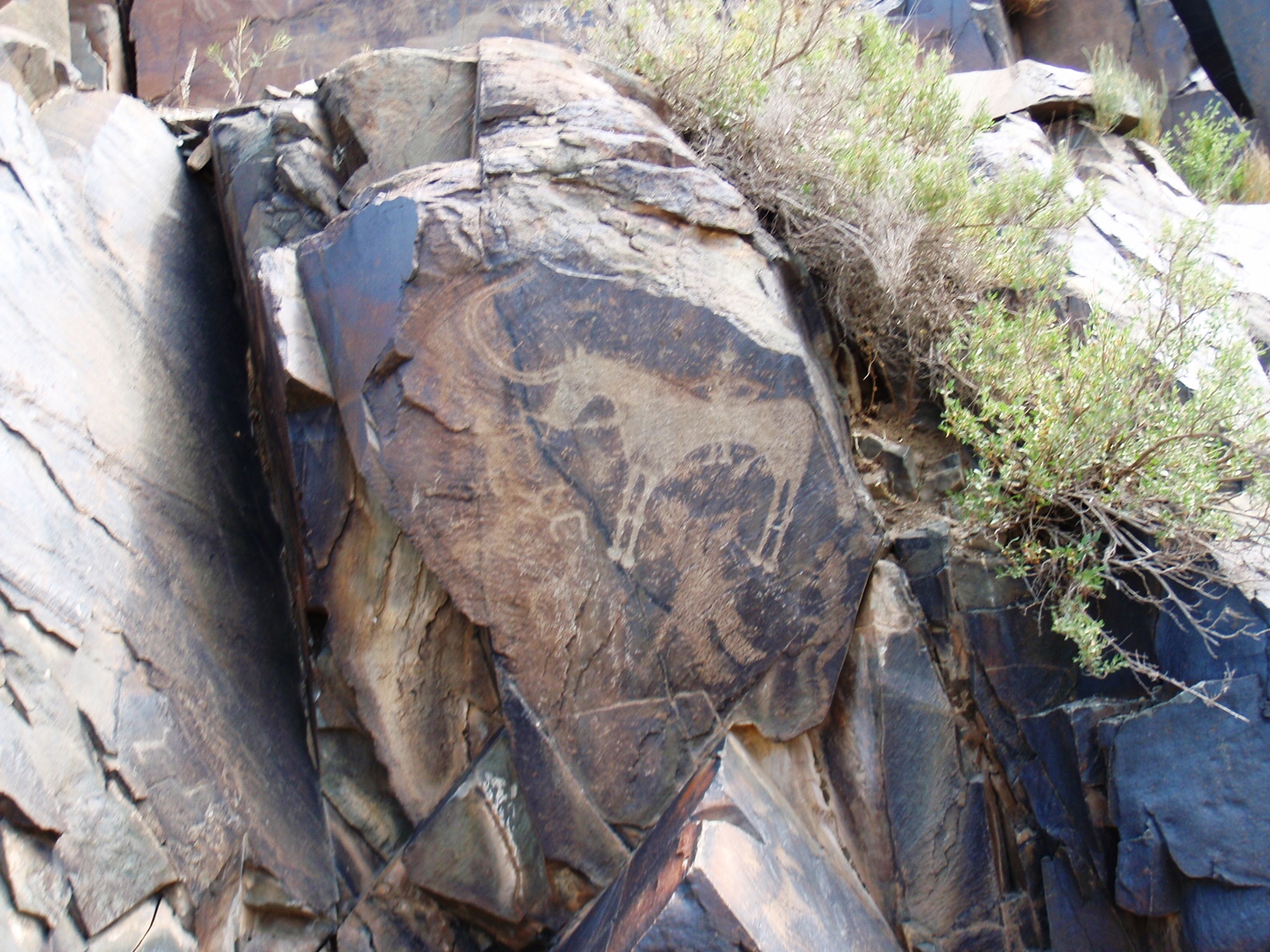
Tamgaly sits in a valley carved by the Tamgaly River, where rocks preserve the memories of people who lived here thousands of years ago. The Zailiysky Alatau foothills frame the site, known for its petroglyphs—ancient carvings among Central Asia’s most significant. Dry steppes and rugged cliffs shape a landscape where the past lingers. The carvings show sun-headed deities, hunting scenes, dances, and moments from nomadic life, created over millennia by cultures that once lived here.
The valley’s history begins in the Bronze Age, about four thousand years ago, when tribes first settled here. They left petroglyphs, burial mounds, altars, and remnants of settlements. Later, the Saka and Wusun tribes kept the valley as a cultural and spiritual center. The carvings reveal their worldview—their beliefs in supernatural forces, their bond with nature, and their wish to leave a lasting mark. Some images are so detailed you can see clothing patterns or weapon shapes, showing the skill of their creators.
The name Tamgaly comes from the Turkic *tamga*, meaning a mark or seal. Nomads used such symbols to claim livestock or land. Here, the marks became part of a sacred landscape. The site holds several petroglyph clusters, but the most striking lie in a natural amphitheater formed by cliffs. That’s where you’ll find sun gods with radiating crowns, processions, camels, and ritual sacrifice scenes.
Tamgaly isn’t a checklist destination.
The valley is ringed by low mountains, their slopes sparse with vegetation. The wind rustles through the grass, breaking the silence. On clear days, the view stretches across steppes that were once nomadic herding grounds. The landscape has barely changed, making Tamgaly feel like a direct link to the past. No crowds, just those who come for a quiet connection to history.
Archaeologists began work here in the mid-20th century. Since then, they’ve documented over five thousand petroglyphs, along with ancient dwellings and ritual sites. In 2004, UNESCO recognized the site’s global significance. Yet Tamgaly remains open to anyone willing to visit. No museum halls or plaques—just rocks, wind, and stories carved into stone. You’re left to interpret the past yourself, guided by the carvings and your curiosity.
A sun deity with a crown of rays stands out on a central rock face. This figure symbolizes the solar cult common among Central Asia’s nomads. Nearby, hunting scenes show ibex and gazelles pursued by archers, while chariot depictions hint at advanced ancient skills. Some carvings are so precise they resemble parchment drawings. The craftsmanship suggests these were deliberate creations, meant to endure.
Visit in early morning or late afternoon. Shadows make the petroglyphs clearer then. The site is a two-hour drive from Almaty, and the journey matters. The road crosses open steppe, then rolling hills, then rocky gorges. Bring water and wear sturdy shoes—the terrain is uneven. No modern distractions here, just the sense of stepping back in time.
Tamgaly isn’t an open-air museum. It’s where history feels present. No grand narratives, just the quiet past. Each petroglyph is a message from a distant era. Standing before them, you wonder: What were their lives like? What did they hope for, fear? Tamgaly doesn’t answer. It invites you to ask—and to feel time pressing against the rocks.