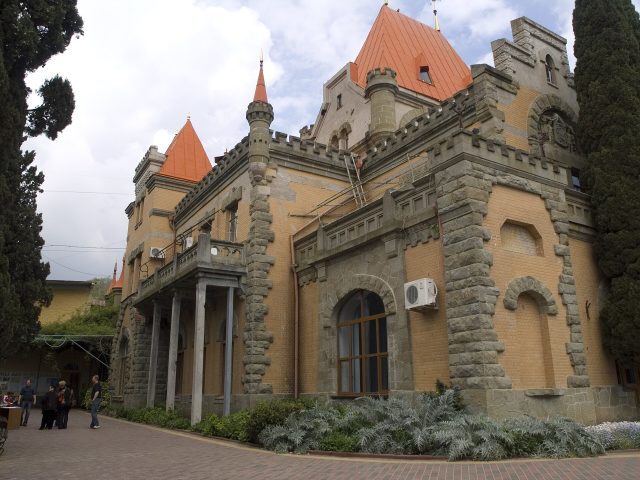
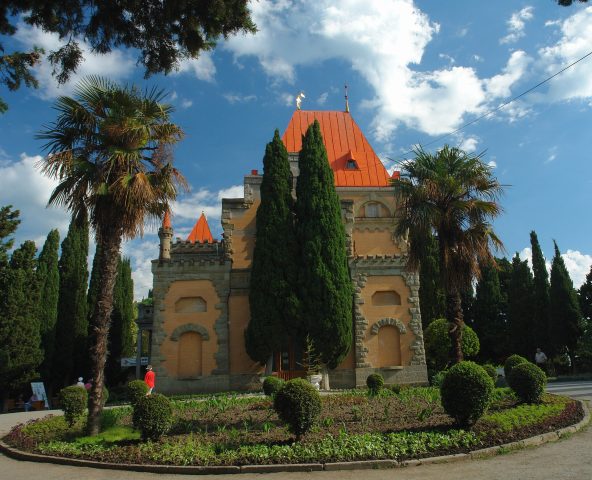
The Chekhov House-Museum in Crimea is one of those rare places where time seems to pause, allowing you to step into a moment that feels both distant and strangely familiar. Perched on a low cliff overlooking the Black Sea, this unassuming summer house was where Anton Chekhov spent several seasons in the late 1890s, seeking relief from his failing health in the warm Crimean climate. It was here, between the rustling trees and the sound of waves below, that some of his most enduring works took shape. The house itself is modest, a two-story structure with a wide veranda, built not for grandeur but for comfort—a place where a writer could work, rest, and entertain friends without pretension.
Chekhov rented the house in 1898, when his tuberculosis had already begun to limit his travels. The Crimea of that era was a retreat for artists, intellectuals, and the ailing, drawn by its mild winters and the quiet beauty of its coastline. The house was nothing extraordinary by the standards of the time—just another summer dacha among many—but it suited Chekhov perfectly. Downstairs, the living room, dining area, and study were arranged for practicality, while the bedrooms upstairs offered simple refuge. He often wrote on the veranda, where the breeze carried the scent of pine and saltwater, and the only distractions were the cries of gulls and the distant murmur of the sea.
The interiors have been carefully restored based on photographs and the recollections of those who visited Chekhov here. The study still holds his desk, cluttered with papers and an inkwell as if he had just stepped away. In the living room, a piano stands where he sometimes played, though music was never his primary passion. The walls are lined with photographs and reproductions of artworks that evoke the atmosphere of the house during his time. But it’s the veranda that feels most alive—a space where Chekhov hosted fellow writers like Maxim Gorky and Ivan Bunin, where conversations about literature, politics, and life unfolded over tea or a shared meal.
The garden surrounding the house is small but lush, a testament to Chekhov’s love of nature. He often walked its paths, turning over ideas for stories or simply enjoying the quiet. Today, the garden remains much as it was: cypress and pine trees cast dappled shade, magnolias bloom in season, and the air is thick with the scent of herbs and flowers. A well near the house, still functional, was where Chekhov drew water for the plants, and a small pond once home to ducks adds to the sense of stepping back in time. On warm evenings, the garden is a peaceful place to sit, listening to the rustle of leaves and the distant lap of waves against the shore.
For Chekhov, this corner of Crimea was more than just a place to recover—it was a wellspring of inspiration. The landscape seeped into his work, from the coastal setting of *The Lady with the Dog* to the restless longing of *Three Sisters*. He wandered the nearby hills, visited the Livadia Palace, and spoke with locals, absorbing the rhythms of life on the southern coast. The sea, the mountains, and the play of light on the water all found their way into his stories, not as mere backdrop but as living elements of his narratives. Even the people he met here—fishermen, servants, fellow visitors—became part of his literary world.
Today, the house-museum is a quiet monument to Chekhov’s life and legacy, far removed from the bustle of Crimea’s more famous resorts. It’s a place where visitors can wander the rooms, sit in the garden, or stand on the veranda and imagine the conversations that once filled the air. The museum hosts occasional literary events and exhibitions, but there’s no sense of spectacle here—just the quiet preservation of a space that mattered deeply to one of Russia’s greatest writers. The house feels lived-in, not like a shrine, and that’s perhaps why it resonates so strongly. It’s easy to picture Chekhov here, pen in hand, glancing up from his work to watch the sunlight dance on the water.
The village of Utyos, where the house stands, is a world away from the crowded beaches of Yalta. There are no grand hotels or souvenir stalls, just a handful of quiet lanes leading down to the sea. The surrounding hills offer gentle walks with sweeping views of the coastline, and the air carries the same crispness that Chekhov would have known. For those who come here, the experience is less about ticking off a tourist site and more about connecting with the past in an intimate way. You leave with the sense that literature isn’t just something to be read—it’s something that happens in places like this, where the boundaries between life and art blur.
Visiting the Chekhov House-Museum isn’t like touring a grand estate or a meticulously curated gallery. There’s no pomp, no overbearing narrative—just a house, a garden, and the sea beyond. It’s the kind of place where you half-expect the writer to walk in at any moment, shaking his head at the fuss made over his memory. That simplicity is what makes it special. The house doesn’t try to impress; it simply exists, much as it did when Chekhov lived here, a quiet witness to the creative process. And in that quiet, you begin to understand why this place mattered so much—not just to him, but to the generations of readers who have found their way here since.